
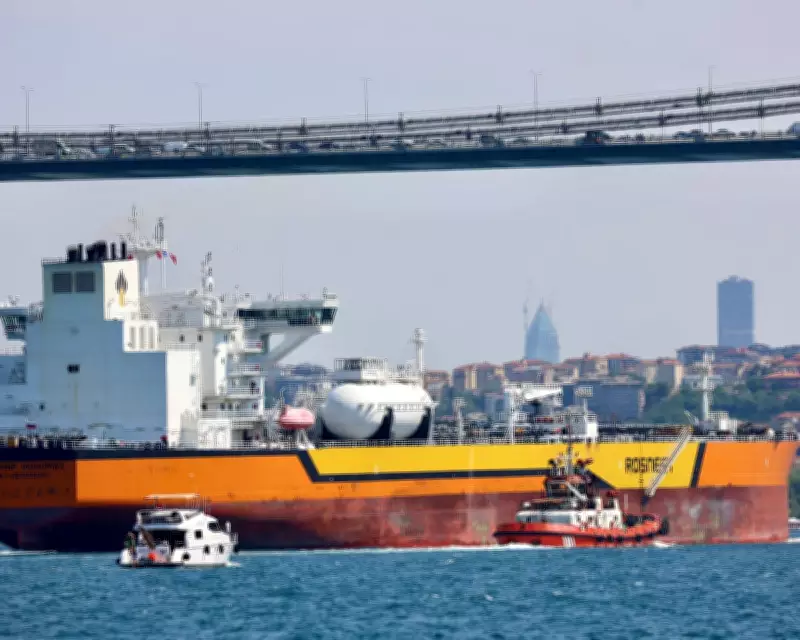
The United Kingdom has delayed the implementation of certain sanctions on Russian oil and liquefied natural gas (LNG) in an effort to mitigate soaring energy prices exacerbated by the ongoing conflict in the Middle East. A trade licence issued on Wednesday permits the import of jet fuel and diesel refined from Russian crude in third countries, while another waiver lifts restrictions on shipping LNG from two Russian terminals.
Government Justification
Prime Minister Keir Starmer denied that postponing the full force of the restrictions—originally announced in October last year—would reduce pressure on Moscow. He pledged to continue working with allies on further sanctions. Starmer told the House of Commons that the “short-term” waivers are intended to protect consumers from the impact of the crisis and are part of a “phase-in” of tougher new penalties targeting the Kremlin. “This is not a question of lifting existing sanctions in any way whatsoever, and we will continue to work with our allies on further sanction packages,” he stated.
Business minister Chris Bryant informed MPs that the upcoming sanctions would be crucial in “ratcheting up the pressure on the Russian regime,” but the government is implementing them “in a phased way” due to energy market instability caused by the Middle East conflict. Bryant added that the UK decision aligns with approaches taken by Canada and Australia and will be reviewed “as soon as possible.”
Political Reactions
Opposition politicians condemned the decision. Conservative leader Kemi Badenoch posted on X: “After 18 months of ‘standing up to Putin’ the Labour govt quietly issued a licence allowing imports of Russian oil refined in third countries. Yesterday Labour MPs voted against UK oil and gas licences. We are now importing from Russia instead of drilling in the North Sea. Insane.”
The UK has been at the forefront of international efforts to economically pressure Moscow over its war in Ukraine. On Tuesday, it signed a G7 statement reaffirming an “unwavering commitment” to imposing “severe costs” on Russia. Previously, the UK announced it would block Russian oil refined in other countries to “further restrict the flow of funds to the Kremlin.”
Impact on Energy Markets
The decision follows similar moves from the US as Iran’s blockade on the Strait of Hormuz continues to disrupt global energy supply, deepening concerns about dwindling spare energy capacity. US Treasury Secretary Scott Bessent extended a 30-day sanctions waiver allowing the purchase of Russian oil shipments already at sea, stating the extension would “provide additional flexibility, and we will work with these nations to provide specific licences as needed.”
On Tuesday, the RAC reported that the average price of a litre of petrol at UK forecourts stood at 158.5p, the highest since December 2022. Several major airlines have been forced to cancel flights and raise prices due to surging jet fuel costs since the Middle East war began, a region that previously supplied about a third of Europe’s jet fuel.
Starmer also confirmed a widely expected extension of the temporary 5p cut in fuel duty, freezing it until the end of the year, along with a vehicle tax break for the haulage industry. He described these measures as a necessary response to cost-of-living pressures.
Imports from Third Countries
Relaxing sanctions will allow imports of jet fuel from India, a former significant supplier to the UK and Europe. Russian crude is also refined in large quantities in Turkey, which will now be permitted for import under the new licence.
Emily Thornberry, chair of the foreign affairs committee, criticized the timing of the relaxation. She told BBC Radio 4’s Today programme: “I’ve heard from people in Ukraine overnight and I know that they are very disappointed and have been asking me why it is that Britain is doing this.” Thornberry added that every time Vladimir Putin comes to the negotiating table “he just takes the mickey.” “He needs to really feel the impact of continuing to be involved in the war in Ukraine and we should not take a foot off the pressure now,” she said.




