
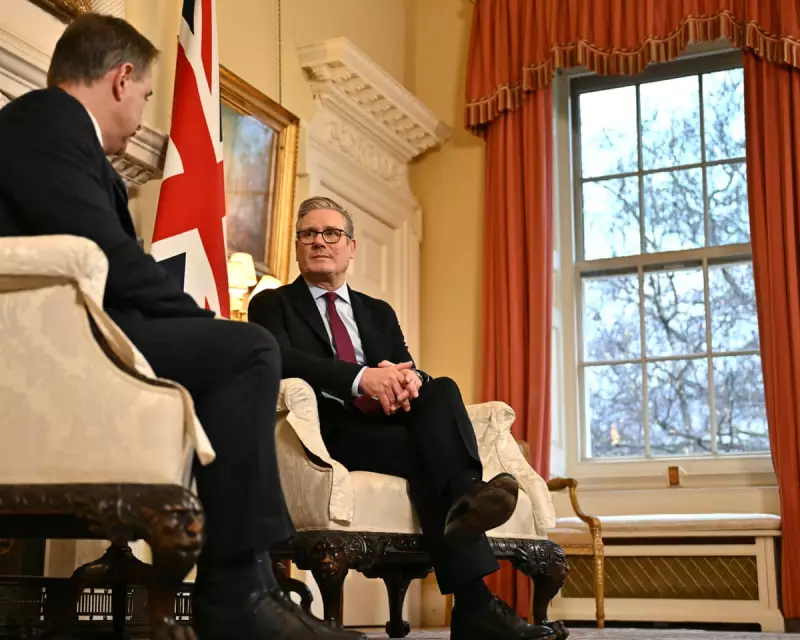
Prime Minister Keir Starmer is facing a stark political warning drawn from his own history, as internal party pressures mount over his government's approach to Brexit and relations with Europe.
The 2018 Conference Moment
Seven years ago, a single line in a speech electrified the Labour Party conference and signalled deep discontent with then-leader Jeremy Corbyn. Keir Starmer, then the shadow Brexit secretary, departed from his agreed text to declare, "Nobody is ruling out remain as an option." The hall erupted in spontaneous cheers, briefly transforming the grey-suited spokesman into a risk-taker championing the pro-European instincts of most Labour MPs, members, and voters.
That moment in 2018 laid down a gauntlet to Corbyn and foreshadowed Starmer's eventual ascent to the leadership. However, upon replacing Corbyn in 2020, one of Starmer's first acts was to declare the Brexit issue settled. In the recent election, he emphasised manifesto "red lines" ruling out re-joining the EU, the single market, or a customs union.
The Growing Internal Pressure
Despite this, the political lid kept tightly sealed on Europe for five years is beginning to rattle. Both Starmer and Chancellor Rachel Reeves have intensified rhetoric about the economic damage caused by leaving the EU, with some estimates suggesting the UK economy is between 6% and 8% smaller than if it had remained a member.
Within the cabinet, significant figures are pushing for a closer relationship. Chancellor Reeves is attempting to overcome Home Office resistance to an expansive youth mobility scheme with the EU. Deputy Prime Minister David Lammy has spoken openly about the "self-evident" benefits of a customs union. Furthermore, a dozen Labour MPs recently voted for a Liberal Democrat motion on joining one.
While the minister for EU policy, Nick Thomas-Symonds, insists the government's red lines remain, ideas are circulating for bypassing them. One proposal is to announce negotiations now on a bolder future deal, for inclusion in the next manifesto, to be implemented only if Labour wins a fresh mandate.
Starmer's Scepticism and the Leadership Challenge
Prime Minister Starmer, however, has recently sought to dampen expectations. He warned that a return to a European customs area could "unravel" trade pacts with the US, which he views as signature achievements of his premiership.
Sources suggest his scepticism is rooted in three key factors: the difficulty of a customs union after deliberate de-alignment from EU rules; a belief that EU partners are disinterested in special deals for Britain; and a view that the new US national security strategy suggests Britain should keep its distance from the EU.
The political danger for Starmer is clear. If he rules out meaningful steps towards a closer EU relationship, he cedes ground to potential rivals. Figures like Health Secretary Wes Streeting and Deputy PM Angela Rayner, both seen as likely leadership contenders, are among those associated with wanting to go further on Europe.
The lesson from 2018 is that a few well-chosen words can shift the political landscape. The question now is whether Starmer will prise open the options for a boffer on Europe himself, or risk someone else making that offer their own.




