
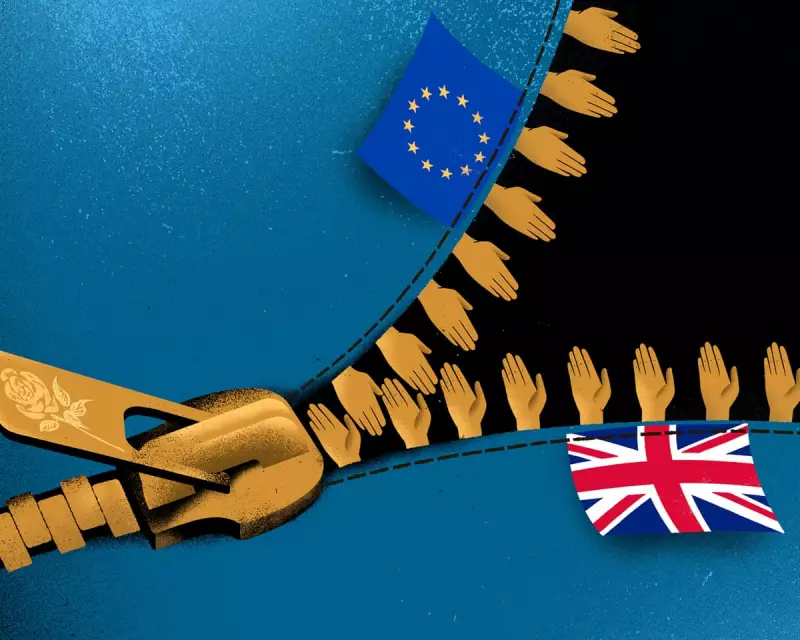
Chancellor Rachel Reeves approaches this week's budget like a reluctant swimmer entering freezing water, attempting to manage the discomfort through gradual exposure to harsh economic realities.
The Budget Dilemma
The Treasury chief began testing the waters around insufficient revenue problems at summer's end, initially refusing to confirm that last year's tax rises would be the final increases. "The world has changed," she declared, signalling a shift from previous positions.
Earlier this month, Reeves took a more significant step into challenging territory with a speech pledging to "do what is necessary" to fund public services and control borrowing costs. Downing Street allowed speculation to flourish that this meant abandoning Labour's 2024 manifesto commitment against income tax increases.
However, within ten days, the Treasury retreated from this position, reaffirming the manifesto promise. This hesitant approach has proven politically damaging, extending the period of uncertainty rather than providing clear direction.
Brexit's Economic Consequences
The chancellor now faces an impossible choice between breaking explicit campaign pledges or implementing numerous smaller tax increases. The political cost may ultimately prove identical, though spreading the pain over time allows hope that economic growth might provide an escape route.
Hope has consistently failed as a government strategy. Prime Minister Keir Starmer's election campaign relied on the unrealistic expectation of improving public services without reversing Conservative tax cuts. When revenue shortfalls became undeniable, the Treasury hoped affluent pensioners would voluntarily surrender winter fuel payments and that employers would accept national insurance increases without significant protest.
Neither Starmer nor Reeves has successfully articulated a compelling national purpose to justify these difficult decisions. Their communication style—often stilted and reserved—pushes audiences away rather than engaging them.
Europe's Shadow Over UK Recovery
The deeper problem stems from an election strategy that promised change through continuity, including acceptance of Boris Johnson's Brexit settlement. Political fears dictated avoiding any suggestion that Reeves favoured tax-and-spend policies or that Starmer harboured remainer sympathies.
Just as pressure for public service investment forced tax rise admissions, economic growth imperatives make it increasingly difficult to ignore the costs of detachment from European single market access.
The government has begun tentative steps toward European realignment with proposals to reduce agricultural customs checks and youth mobility schemes. Energy, defence and security cooperation discussions have progressed further, though no substantive agreements have been reached.
Negotiations have stalled without clear direction from Number 10. The European Commission maintains that single-market access requires budget contributions—a position UK ministers understand but fear presenting publicly given potential backlash from figures like Nigel Farage.
Economic reality has prompted some change in Labour's European rhetoric. Reeves now identifies Brexit alongside the pandemic as economic damage requiring Treasury repair efforts. Other ministers have followed, carefully blaming "a bad Brexit deal" or "the way we left the EU" rather than Brexit itself.
This distinction proves crucial. A poorly negotiated deal might be replaced with superior terms, allowing the prime minister to claim progress. What he never explains is why Johnson's deal failed so dramatically—that its fundamental flaws represent the very features its architect celebrated as virtues.
The Brexit legacy extends beyond declining trade volumes when many original campaigners now align with a US administration that undermines rule of law and constitutional foundations. Britain's European relationship cannot be reduced to technical adjustments when the entire geopolitical landscape undergoes turbulent transformation.
Given developments since 2016—the referendum year and Donald Trump's first election victory—fundamental questions remain relevant: Did leaving the EU serve British interests? And which foreign power benefited most from fracturing Europe's democratic alliances? Vladimir Putin's Russia continues working against Western unity.
These uncomfortable truths about Britain's position in volatile international waters understandably cause hesitation in government leadership. Confronting them directly would take ministers far beyond their depth into currents they dare not swim against. Instead, they continue pacing the shoreline nervously, hoping the tide might soon turn in their favour.




