
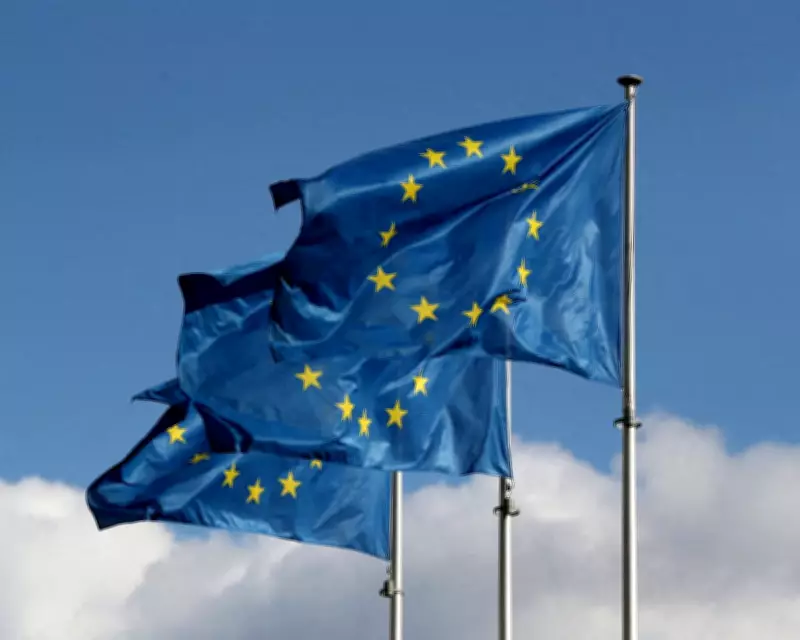
The European Union is considering a plan to deny future member states veto rights for several years after accession, aiming to make enlargement more politically acceptable as the bloc pushes to admit new countries before the end of the decade. According to four EU sources, the European Commission is exploring safeguards that would prevent new members from automatically blocking foreign policy decisions or other issues requiring unanimity, such as taxation.
Montenegro as a Test Case
This idea is particularly relevant for Montenegro, the frontrunner among nine official EU candidate countries. The former Yugoslav republic of 624,000 people is vying to become the EU's 28th member state by 2028. A technical group tasked with drafting Montenegro's accession treaty met for the first time this month, signaling that 14-year negotiations are entering their final stages. A time-limited ban on veto powers could be written into Montenegro's accession treaty, which would serve as a template for other candidate countries.
Background and Urgency
EU enlargement had almost ground to a halt until Russia's full-scale invasion of Ukraine in 2022 injected new urgency into membership talks with eastern neighbors. The commission stated last year that it could admit new members by 2030, identifying Montenegro and Albania as frontrunners, while praising Moldova's fast progress and suggesting that EU membership could serve as a security guarantee for Ukraine.
The proposed safeguard emerged after a bruising experience with Hungary, whose previous pro-Russian government led by Viktor Orbán vetoed several major EU decisions, notably a €90bn loan for Ukraine. EU officials argue that such measures are necessary to prevent a single member state from blocking key decisions.
Legal and Political Considerations
The safeguard is considered legally borderline and could only be introduced temporarily to avoid creating second-class EU members. Existing member states must unanimously agree on admitting new countries, and officials are particularly concerned about ratification in France, where presidential elections will be held in 2027. A recent Eurobarometer survey found that only 43% of French respondents favor EU enlargement, while 48% are against.
EU sources emphasize the need for creative thinking to make enlargement happen, especially in the western Balkans, a region of 17.4 million people where Russia and China are trying to gain influence. One EU diplomat described delaying veto rights as one of several "constructive solutions" being considered. A second diplomat noted: "There is a debate on how to ensure that a larger enlargement would be beneficial for both the candidate countries and the EU itself."
Germany's Role and Ukraine's Situation
Germany has led efforts for internal EU reform, such as abolishing vetoes in foreign policy, fearing that an unreformed union of 35 or more countries would lead to gridlock. German Chancellor Friedrich Merz recently wrote to EU leaders calling for "innovative solutions" to accelerate EU accession for western Balkan countries, describing enlargement as a "geopolitical necessity." He also proposed "associate membership for Ukraine," which would mean participation in EU meetings without voting rights, reflecting Ukraine's situation as a country at war and facilitating ongoing peace talks.
Ukrainian President Volodymyr Zelenskyy rejected this idea, stating on social media: "Ukraine's place in the European Union must also be complete – full and equal." Ukraine is considered distinct due to its size, war with Russia, and vast reconstruction costs, estimated at $588bn as of December 2025. EU officials believe Ukraine could technically complete its accession process in four years, but the entry date remains a political question tied to a peace settlement.
Expert and Government Perspectives
Engjellushe Morina, a senior policy fellow at the European Council on Foreign Relations, said a temporary block on veto powers is "not so drastic" and would be used by politicians to sell enlargement. She added that such a measure could insulate the union from a new member state that takes a drastically different direction after accession, such as the election of a pro-Russian government in Montenegro. The commission and member states want to "waterproof the union from these hypothetical situations," she said.
A source from the Montenegrin government stated that the country's goal remains full EU membership "with all the rights and responsibilities that come with being an equal member state," while adding that Montenegro "does not oppose safeguard mechanisms and believes they can play a constructive role in ensuring the sustainability of reforms even after accession."




