
As Chancellor Rachel Reeves prepares to deliver her crucial autumn budget, Britain's economic house remains fundamentally damaged by a Brexit-shaped hole in its roof that no amount of financial mopping can properly repair.
The Flooded House Analogy
Britain resembles a family living in a constantly flooding house, desperately trying new heating systems and even considering AI solutions while ignoring the gaping hole above their heads. The sodden carpets represent our struggling public services - from overcrowded prisons to underfunded NHS facilities - while the hole remains the 2016 decision to leave the European Union.
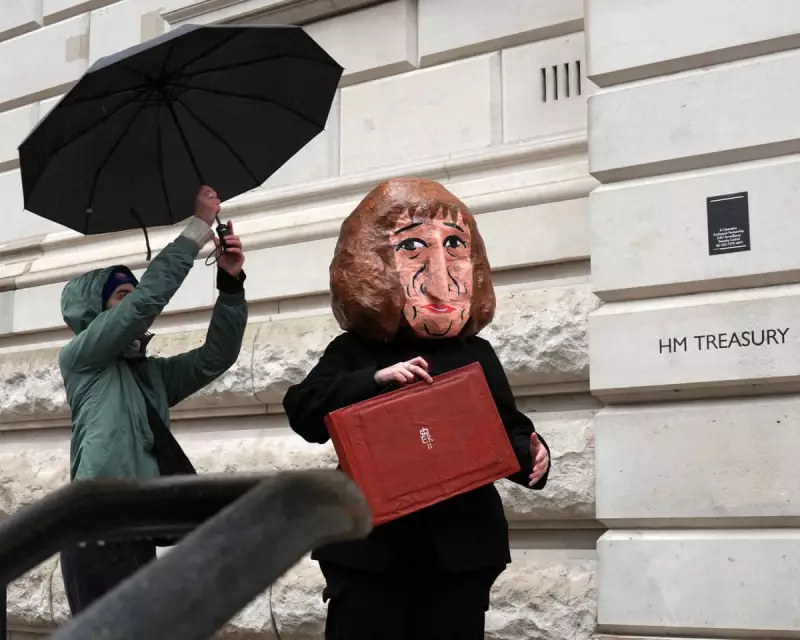
On Wednesday 19th November 2025, as a protester wearing a mask of Rachel Reeves stood outside the Treasury, the Chancellor was finalising a budget that most observers believe will determine the fate of Labour's struggling government. Despite floating and then retracting income tax increases, the fundamental reality remains unchanged: Britain simply doesn't have enough money to fund the public services it needs.
The Economic Reality Check
Recent analysis by economists John Springford and Andrew Sissons reveals the core problem: Britain lacks sufficient internationally successful industries, leaving many regions without well-paid jobs or adequate income. The root cause? Since Brexit, Britain has actively undermined its own economic model, which historically thrived on openness to trade, ideas and people.
The numbers paint a stark picture. Britain has experienced the biggest slowdown in productivity growth in the G7 over nearly two decades. Real wages have barely moved in 17 years. While the 2008 financial crisis affected everyone, Britain's recovery has been notably weaker than comparable nations.
The goods export sector has been particularly hard hit, with the fall in goods exports draining more than one percentage point from GDP each year since losing frictionless access to the EU single market. Even the services sector, where Britain traditionally excelled, has frequently lagged behind Germany, France, Spain and Italy during the Brexit era.
London's Fall from Grace
Perhaps most startling is the decline of London, once the powerhouse that helped subsidise the rest of the country. The capital has now become Britain's worst-performing region for productivity growth. The City of London, previously a financial services money machine, has lost its easy access to EU clients, with business shifting to Frankfurt, Dublin, Amsterdam, Madrid, Milan and Paris.
Official institutions recognise the problem. The Bank of England governor recently warned that Brexit would negatively impact the UK economy for the "foreseeable future", while the Office for Budget Responsibility estimated that leaving the EU would reduce Britain's long-term productivity by approximately 4%.
Yet political leaders continue working around these facts rather than addressing them directly. While Reeves has acknowledged Brexit as contributing to her fiscal challenges and promised to "unashamedly" rebuild EU relations,实际行动 remains timid.
The Road Not Taken
The recently negotiated EU trade deal, forecast to yield just £9bn by 2040, represents small change for a multi-trillion pound economy. Experts Springford and Sissons propose more radical solutions: rejoining the single market for goods or the customs union, which could address the estimated £30bn annual cost of being outside these arrangements.
Such moves would involve minimal sovereignty sacrifice for goods, where UK regulations largely align with EU standards anyway. While Labour's manifesto ruled out customs union membership, Reeves has shown willingness to break tax pledges when necessary. A U-turn on EU relations would likely cause less political damage than tax increases while generating substantially greater economic benefits.
Seasoned Europe-watchers suggest that bold British proposals for deeper cooperation would likely receive warmer reception in European capitals than the current piecemeal approach. As former foreign secretary David Miliband noted this week, putting "more cards on the table to build political momentum" could encourage EU leaders to bypass bureaucratic hurdles and negotiate a more substantial deal.
The political case for reconsidering Brexit has strengthened given the radically changed global context, including Donald Trump's threat to impose tariffs that could further destabilise international trade. With Britain struggling as "the sick man outside Europe" and public finances stretched to breaking point, the argument that Brexit represents a luxury the nation can no longer afford grows stronger by the day.
As Reeves stands at the despatch box, charged with stewardship of Britain's public finances, the evidence suggests she should point to the obvious source of so much economic trouble. The roof repair cannot be postponed indefinitely when the structural damage continues to worsen with every passing budget.




