
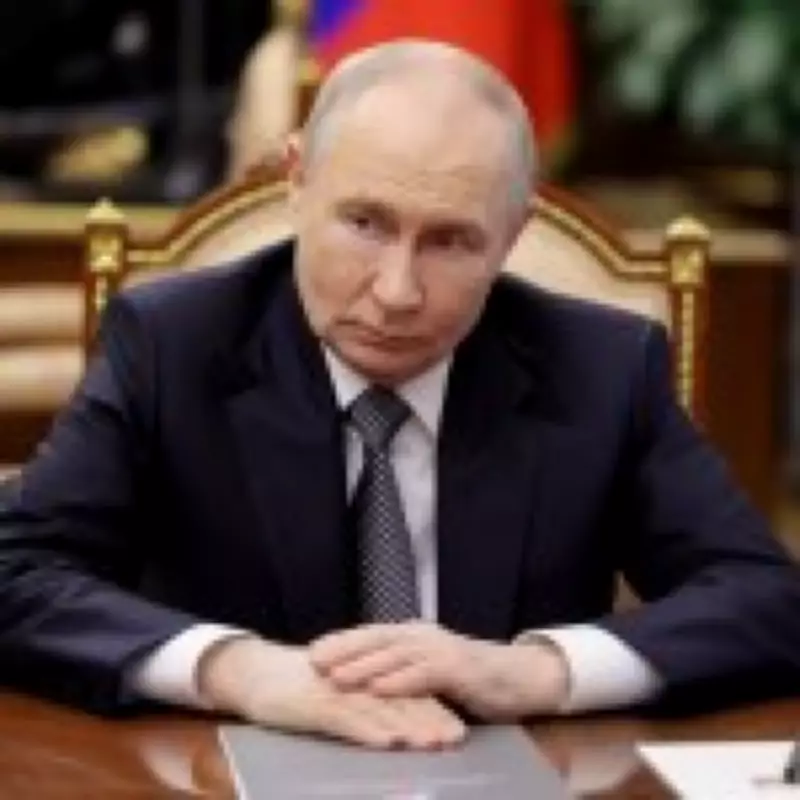
A defense expert has warned of a 'serious possibility' that Belarus could invade Ukraine, dragging another European country into the ongoing conflict. Vladimir Putin is said to be 'actively pressuring' Belarusian dictator Aleksandr Lukashenko to enter the war on his side, according to UK Defence Journal editor George Allison.
Military Buildup on Belarus-Ukraine Border
Allison spoke days after Russia, which invaded Ukraine in February 2022, held major joint nuclear drills in Belarus. At the same time, work on key infrastructure which would be key for an invasion, like roads and artillery positions, has been ongoing in the former Soviet state along its border with northern Ukraine for months. All this has sparked fears that Belarus, whose leader has been closely wedded with Putin for decades, is prepared to go beyond vocally supporting Russia to take an active part in the conflict.
Speaking from around 50 miles (70km) from the Belarusian border, Allison told Metro: 'Ukraine has warned repeatedly this year that Russia is building up military infrastructure in Belarus, including new roads and artillery positions along the northern border. Kyiv says Moscow has been actively pressuring Lukashenko to commit Belarusian forces to the conflict, and claims to have details of direct conversations between Putin and the Belarusian leader.'
Joint Nuclear Exercises and Strategic Concerns
'Russia has already been using Belarusian territory to enhance its drone strike operations against Ukraine, and just days ago conducted joint nuclear exercises on Belarusian soil involving Iskander-M missile launchers,' Allison added. 'Western leaders are watching closely, with French President Macron having spoken to Lukashenko by phone this week.'
Ukrainian military assessments have long argued that Minsk's primary role has been to stretch Kyiv's defences across multiple fronts, but intelligence now points to something more direct. Zelensky says Ukraine is war-gaming scenarios in which Russia uses Belarus to strike toward Chernihiv and Kyiv, or potentially a NATO member state.
Analysts say a full ground offensive would require Russia to redeploy forces it cannot currently spare from the front line, but the roads, logistics routes and artillery positions going up now mean that could change. 'This is, I believe, a real and serious possibility. It seems likely to me that the pressure on Lukashenko will only grow,' Allison said.
Internal Pressure on Putin to End War
Allison spoke amid increasing pressure from within Russia to end the war, which has cost the country dearly on the battlefield and economically. Russia's military has suffered around 1.2 million casualties since Putin ordered the invasion more than four years ago, according to thinktank the Centre for Strategic and International Studies. Its economy has suffered badly too, as the then US President Joe Biden joined leaders from across the West to launch what amounted to an economic war on Russia immediately after the invasion.
This included a raft of sanctions, European countries rapidly reducing their reliance on cheap Russian gas, and it being thrown off the international payment system Swift. While it rode this economic isolation and partially plugged the gap by selling increasing amounts of oil to India and China, it has still had an effect. The recent loosening of some sanctions, including by the UK and US, amid the conflict between Iran and America, provided rare positive economic news.
Despite this, even the country's own Ministry of Economic Development, usually the Kremlin's in-house optimist, has conceded the country faces at least two more years of stagnation. Amid this growing discontent, usually loyal Putin supporters have started to voice their concerns.
Elite Dissatisfaction and Growing Discontent
A well-connected business leader told the Guardian that there was 'a growing sense that some kind of catastrophe is looming'. 'There's definitely been a shift in mood among the elites this year ... there is profound disappointment in Putin,' they added. 'No one believes everything will suddenly collapse tomorrow. But there is a growing realisation that utterly senseless, self-destructive decisions keep being made. People who once defended Putin no longer do. Any sense of a future has disappeared.'
This pressure may have prompted Putin to use a speech he gave earlier this month on Victory Day, which commemorates the Soviet Union's defeat of Nazi Germany, to say the war 'was coming to an end'. How this plays out remains to be seen.




