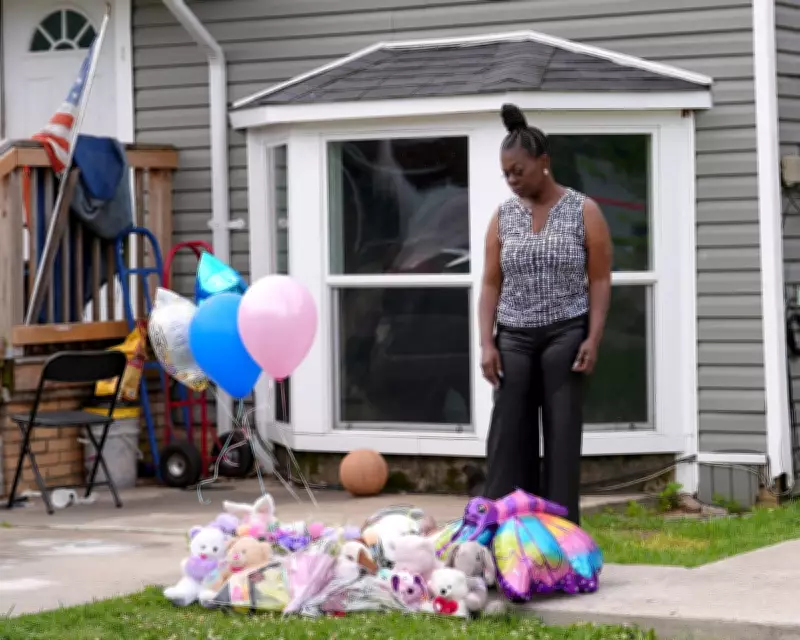
Shreveport Shooting Exposes Domestic Violence Crisis for Black Women and Children
A makeshift memorial with balloons and stuffed animals has appeared outside the house in Shreveport, Louisiana, where a tragic shooting occurred, highlighting the devastating impact of domestic violence. This incident, which resulted in the deaths of eight children, underscores a broader pattern of violence disproportionately affecting Black women and children across the United States.
Deadly Mass Shooting in Louisiana
On Sunday, a gunman, identified as the father of seven of the victims and a cousin to another, carried out the deadliest mass shooting in the US in nearly two years. Eight children were killed, and three others were injured, including the shooter's wife, the mother of his other children, and a 13-year-old boy. This horrific event follows the recent high-profile killings of Black women Cerina Fairfax in Virginia and Nancy Metayer in Florida, both murdered by their husbands.
These cases emphasize the increased risk of death and injury that women and children, particularly those from Black communities, face from domestic and gun violence. While domestic and gender-based violence is a global issue, the accessibility of firearms in the US often turns traumatic situations deadly. According to the US Centers for Disease Control and Prevention, more than half of female homicide victims in the US are killed by a man they know, such as a husband or boyfriend.

Statistics and Research on Violence
A 2026 FBI report indicates that over 2,500 people died in domestic violence incidents on average between 2020 and 2024, with firearms used in more than half of these killings, as noted in a 2023 study from Cambridge University Press. Cheryl Neely, a sociology professor at Oakland Community College in Michigan, explains that Black women face a higher risk of being killed, both inside and outside the home, compared to white women.
Neely's research reveals that deaths of Black women are least likely to generate media attention, public outrage, or calls for policy changes aimed at keeping guns away from abusers and helping women escape dangerous situations. Instead, these tragedies often lead to scrutiny of Black families and criticisms of women's relationship choices, rather than focusing on gun control measures.
Impact on Children and Political Silence
Since 2020, gunshot wounds have become the primary cause of death for children and teenagers in the US. A 2023 study from the American Academy of Pediatrics shows that older teens are most likely to be killed in their neighborhoods due to interpersonal conflicts, while younger children often die as a result of domestic violence. Despite this, neither the White House nor Donald Trump has commented on the Shreveport killings or the deaths of Cerina Fairfax and Nancy Metayer.
Neely notes that this silence is unsurprising, especially given the Trump administration's history of targeting funding for gun violence programs that benefit Black Americans. The White House did not respond to requests for comment on the Shreveport rampage, reflecting a broader neglect of issues affecting marginalized communities.
This pattern of violence against Black women and children calls for urgent action, including stronger gun control laws and support systems to protect vulnerable individuals from domestic abuse.