
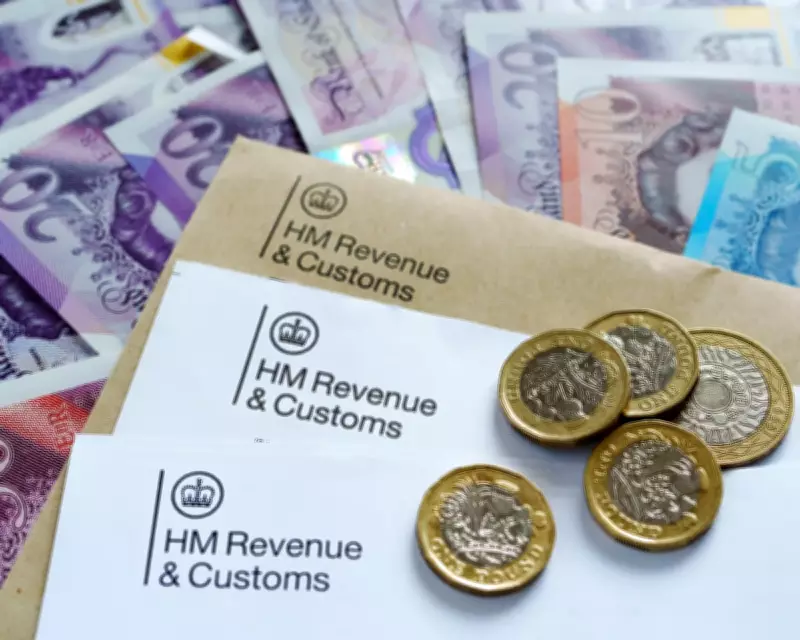
HMRC charges taxpayers 4% interest on late payments, plus fines, but pays only 1% on late refunds. This disparity has caused significant distress for many individuals waiting for money owed by the tax office.
Case of the 86-Year-Old Father
When CJ's mother died, a four-year delay in probate occurred due to financial complexities. During this time, his father paid inheritance tax (IHT) on his solicitor's advice to prevent interest accruing. However, the solicitor's estimate was wildly inaccurate.
His father applied for a rebate a year ago. Eight months later, HMRC confirmed he was owed £153,500, but two more months passed without payment. CJ expressed concern that HMRC might be hoping his 86-year-old father would die before paying. His father had used all his savings and sold a field to pay the estimated tax, leaving him short of money.
Three days after the case was raised with HMRC, his father received a call from a representative, and the money, plus accrued interest, was paid into his account that afternoon. HMRC blamed a “handling error” for the delay. CJ said, “I’ve never heard my father so jubilant.”
Interest Rate Disparity
HMRC charges taxpayers the Bank of England base rate (now 3.75%) plus 4% on late payments, plus fines. In contrast, it pays only 1% below the base rate on late refunds. This means taxpayers pay 7.75% interest while receiving just 2.75%.
Case of the UK Employee in Spain
CK, who lives in Spain and works for a UK company, faced a 13-month wait for a refund caused by HMRC's error. She wanted to backpay National Insurance (NI) to increase her state pension. However, HMRC registered her for class 3 contributions instead of class 2, costing her £180,000 compared to £3,000.
After a five-month wait, she received a calculation still based on class 3 and an order to pay within a week. Panicked, she emptied her savings to pay over £8,000. HMRC later admitted the mistake and said she was due a refund of £5,094. That was in October 2025, and she heard nothing until March 2026, when she was told to expect her refund in November 2026. Her employer is cutting the workforce, and she used all her savings on the overpayment.
HMRC claimed the refund was processed before the case was questioned, approving the payment on the day contact was made. The cheque arrived three weeks later.
Case of the Polish Applicant
NS, living in Poland, has been trying for a year to pay up to £10,000 in voluntary NI contributions. His forms were met with silence. He was told the team was small and still dealing with cases from 14 months prior, requiring up to a year for a calculation. He said, “It seems crazy to have people willing to pay millions into the UK pot but not have the resources to facilitate receiving this money.”
HMRC claims the “vast majority” of contributions are processed in five working days, but blames a surge in applications for delays. They have now issued him with a calculation and a redress payment.
Case of the 83-Year-Old Woman
JI, 83, featured in January, received £63,872 of overpaid tax she applied for in April last year, five months after the case was raised with HMRC.
HMRC admits the government has instructed it to improve, and it has recruited hundreds of extra staff to speed up response times. However, these cases highlight ongoing issues with delays and interest rate imbalances.




