
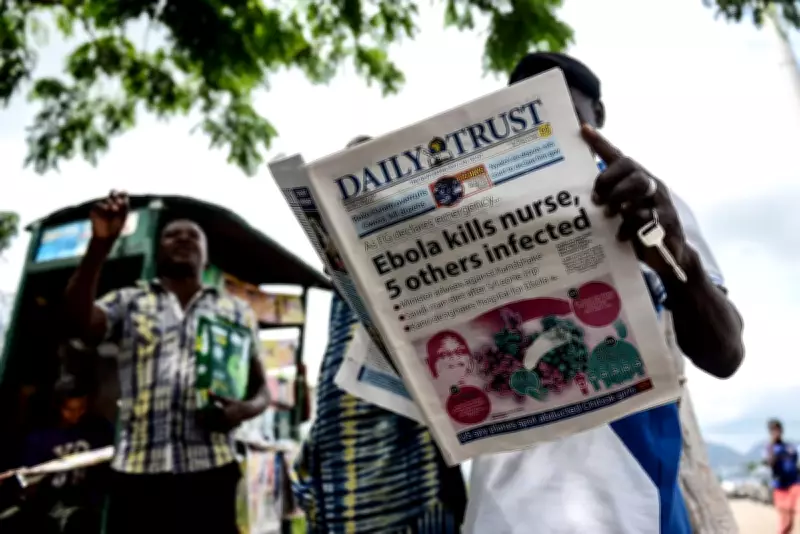
The World Health Organization (WHO) has declared the Ebola outbreak in the Democratic Republic of Congo and Uganda a "public health emergency of international concern." The announcement came on Sunday, as the WHO noted that the outbreak, caused by the Bundibugyo virus, does not meet the criteria for a pandemic emergency.
Current Situation
As of Saturday, the UN health agency reported 80 suspected deaths, eight laboratory-confirmed cases, and 246 suspected cases in the DRC's Ituri province. The cases span at least three health zones: Bunia, Rwampara, and Mongbwalu. The DRC health ministry confirmed on Friday that 80 people had died in this new outbreak in the eastern province.
Spread to Uganda and Kinshasa
In Uganda's capital, Kampala, two apparently unrelated laboratory-confirmed cases, including one death, were reported on Friday and Saturday. Both individuals had traveled from the DRC. Additionally, a laboratory-confirmed case was reported in Kinshasa, the DRC capital, from a person returning from Ituri. This spread has prompted the Africa CDC to warn of "active community transmission" as health workers intensify screening and contact tracing efforts.
Local Impact
Journalists from the Associated Press in Bunia, the capital of Ituri, interviewed residents who expressed their fears and described constant burials. "Every day, people are dying … and this has been going on for about a week. In a single day, we bury two, three or even more people," said Jean Marc Asimwe, a Bunia resident. "At this point, we don't really know what kind of disease it is."
Ebola Transmission and Severity
Ebola is highly contagious and can be contracted through bodily fluids such as vomit, blood, or semen. The disease it causes is rare but severe and often fatal. Officials first announced the latest outbreak in Congo on Friday, with 65 deaths and 246 suspected cases.
Challenges in Containment
At an online briefing on Saturday, Africa CDC Director-General Dr. Jean Kaseya said the first cases were reported in the Mongwalu health zone, a high-traffic mining area. "Cases subsequently migrated to Rwampara and Bunia as patients sought medical care, enabling spread across three health zones," he explained. A high number of active cases remain within the local community, particularly in Mongwalu, significantly complicating containment and contact tracing efforts.
Insecurity in Ituri
Insecurity in Ituri, where Islamic State-backed militants carry out rampant deadly attacks, continues to restrict surveillance and rapid response operations. Congo has experience managing Ebola outbreaks but often faces logistical challenges in delivering expertise and supplies to affected regions. As Africa's second-largest country by land area, Congo's provinces are far from one another and mostly battling conflict. Ituri, for instance, is about 1,000 kilometers (620 miles) from the nation's capital, Kinshasa, and is ravaged by violence from Islamic State-backed militants.




