
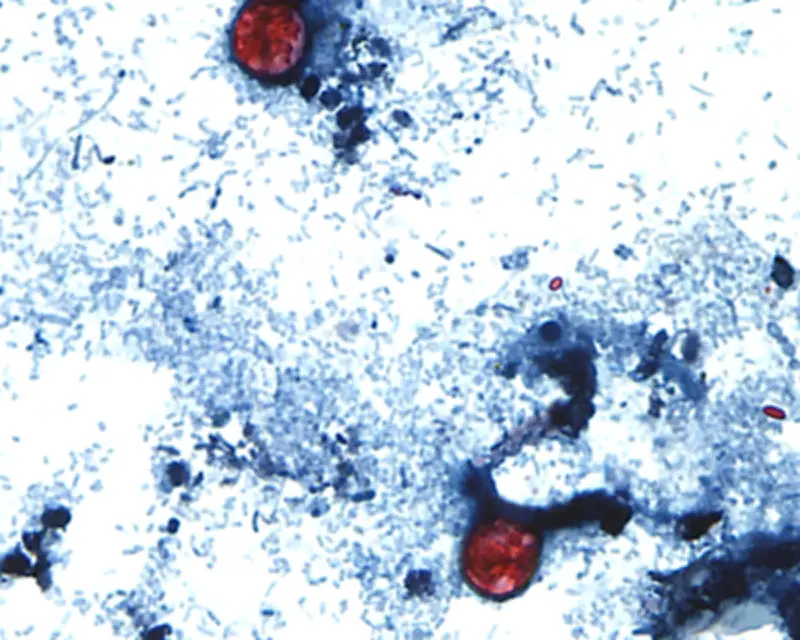
State health officials in Michigan and Ohio are reporting thousands of cases of cyclosporiasis, a parasitic infection that causes watery diarrhea, loss of appetite, and weight loss. The outbreak of more than 2,800 cases comes a year after the Trump administration cut funding to state and local health departments and reduced the remit of a program dedicated to coordinating information on foodborne illness, including cyclospora.
Outbreak Details and Impact
The Centers for Disease Control and Prevention (CDC) reported 843 confirmed cases and 1,500 suspected cases of cyclospora across 31 states on Friday. Eighty-six people have been hospitalized, with no deaths reported. The CDC expects the federal case count to rise, partly due to delays typical in disease investigation. Michigan appears especially hard-hit, with health officials reporting 2,640 cases. Over the border, Ohio officials report 177 cases. Health departments have not identified a source of the outbreak.
The Michigan health department is urging restaurants and commercial kitchens in the southeast to thoroughly wash leafy greens, snow peas, some herbs, and raspberries, or ideally, to cook them.
Challenges in Investigation
Cyclospora has a two-week incubation period, and the CDC assumes a six-week reporting lag between illness onset and receiving a case report. Investigating a disease with a long incubation period is tricky: to find potential links between cases, such as eating at the same restaurant or shopping at the same store, epidemiologists interview everyone with a lab-confirmed case. Those interviews often take place two to four weeks after infection, making it difficult for people to recall what they ate. Despite these challenges, Michigan’s chief medical executive, Dr. Natasha Bagdasarian, told the Associated Press, “there is clearly a linked outbreak happening right now.”
Impact of Funding Cuts
In an era of funding cuts, Barbara Kowalcyk, an associate professor at the George Washington University Milken Institute of Public Health and director of the university’s Institute for Food Safety and Nutrition Security, said typical delays have likely been exacerbated. “Have the funding cuts to public health impacted the current activities related to the cyclospora outbreak? I think they have,” Kowalcyk said. “If you’re understaffed, you might be interviewing [patients] after 6-8 weeks.” Delays have been exacerbated by the Trump administration’s funding cuts, Kowalcyk said, citing both grant cuts to state and local health departments and changes to federal surveillance systems that make it harder to get “the whole picture.”
The Trump administration cut $11.4 billion in grants to state and local health departments in March 2025. Although those grants were earmarked for pandemic activities, Kowalcyk said they also built out local health department capacity. Michigan public health labs alone lost $5.5 million, according to Bridge Michigan, a local news outlet. “In state and local health departments, you might have people who are funded by three to four different funding sources,” said Kowalcyk. “If you take one away, you have to have people go part-time or you have to reduce your staff. There’s not a lot of choice, which means your capacity to scale up during an outbreak is limited.”
FoodNet Program Reduced
In July 2025, the Trump administration also reduced the scope of a program called FoodNet, which actively monitored for foodborne outbreaks. FoodNet’s remit was winnowed from eight foodborne pathogens, including cyclospora, to shiga toxin-producing E. coli and salmonella alone. FoodNet helped coordinate information across states and developed the oft-cited statistic that 48 million people in the US are sickened with foodborne illness each year, 128,000 are hospitalized, and 3,000 die.
“Despite what the current HHS administration believes, ignoring a problem doesn’t make it go away,” public health and veterinary consultant Gail Hansen told the University of Minnesota’s Center for Infectious Disease Research and Policy (CIDRAP) in August 2025. “States do not have the ability to coordinate information and data across states, and this cut will bring us back to a time before FoodNet.” The administration has broadly defended the change in FoodNet’s scope as reducing duplicative efforts and said foodborne pathogen investigations are not impacted by the change. “Narrowing FoodNet’s reporting requirements is, in part, because the surveillance landscape has changed since the collaboration began in 1995,” said a CDC website updated in April. “Today, other surveillance systems monitor for infection with FoodNet pathogens.” A reporter for The Guardian reached out to HHS for comment but did not immediately receive a response.




