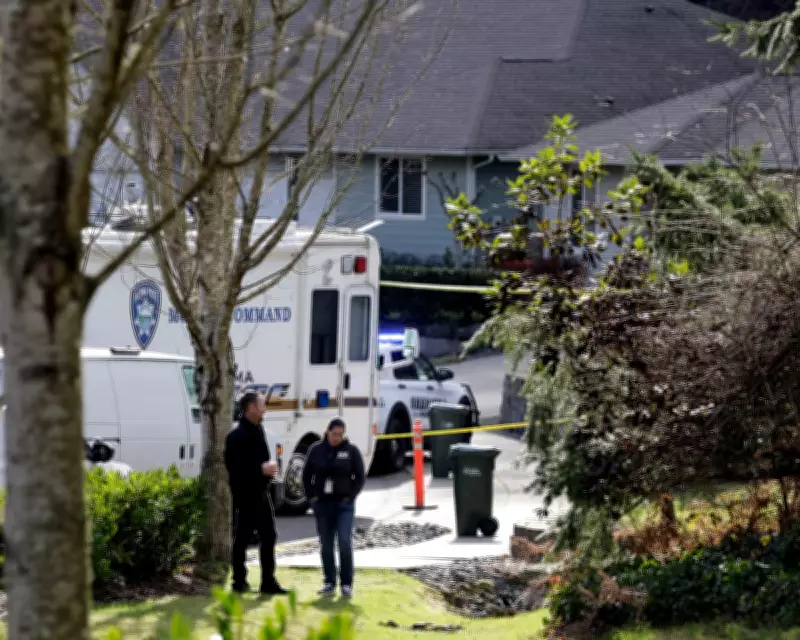
A horrific stabbing attack in Gig Harbor, Washington, has left four people dead, with authorities revealing the 32-year-old perpetrator had a long history of mental health issues and was subject to domestic violence protection orders. The incident occurred on the morning of February 24, 2026, outside the attacker's mother's home, ending when a Pierce County sheriff's deputy shot and killed him.
Violent History and Protection Orders
Records obtained by Associated Press show the attacker's mother had obtained a 12-month protection order against her son in May, detailing years of threatening behavior, substance abuse, and disturbing occult activities. The order noted he had threatened his mother by saying her "grave has been already dug up," and the elderly, disabled woman reported her son had been "threatening me, abusing me both mentally and emotionally."
Failed Intervention and Tragic Outcome
Despite court-ordered protections requiring the man to leave his mother's home, maintain distance, and follow a mental health treatment plan, deputies were attempting to serve the protection notice when the stabbing occurred. Reports came in around 9:30 a.m., and the attacker was killed by 9:33 a.m. The Seattle Times reported the mother had sought protection orders since December 2020, with earlier orders documenting mental health problems and knife threats against her daughter.
In an April petition to Pierce County Superior Court, the mother described her son as delusional, believing himself to be "an Egyptian god." She returned home to find her cat missing and destroyed wall pictures. The court had explicitly banned him from possessing weapons and required compliance with a medication-based treatment plan.
Investigation and Unanswered Questions
A specialist force from Pierce County is investigating why the protection order appears not to have been properly served on the attacker, which initially drew deputies to the scene. The tragic event highlights critical gaps in mental health intervention and domestic violence protection enforcement, raising questions about systemic failures that allowed this violent individual to remain a threat despite documented dangers.
The victims have not yet been identified, and authorities continue to piece together the sequence of events that led to this devastating loss of life in what should have been a protected environment.