A Teen's Daily Battle: The Vile Misogyny Flooding Social Media Feeds
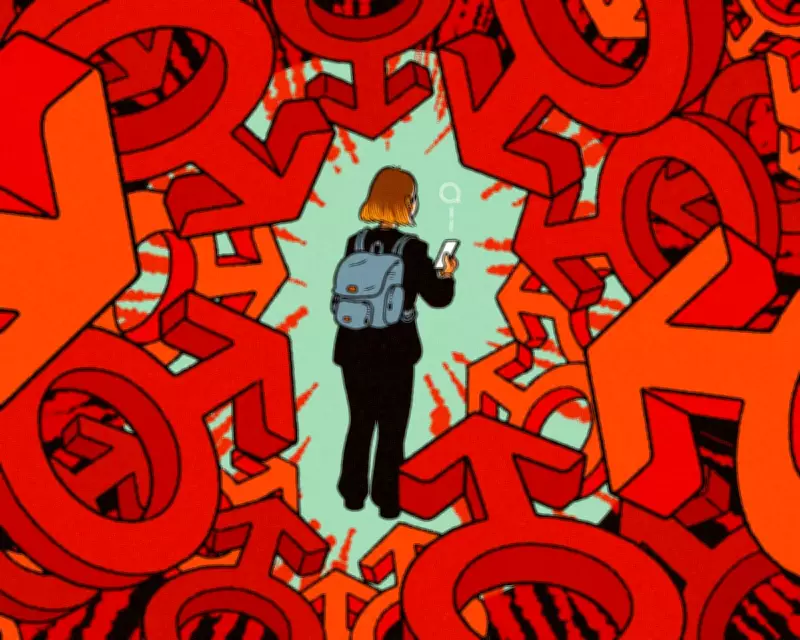
As a 15-year-old schoolgirl, I spend much of my free time on social media, just like my friends. But what I encounter daily is a relentless tide of misogyny that poisons my experience. Politicians debate online abuse with good intentions, but to truly grasp its impact, they need to witness the vile content that confronts me.
The Unavoidable Onslaught of Degrading Language
Even when I try to avoid it, hateful posts invade my feeds. Recently, an Instagram reel from a 19-year-old man asked, "Do y’all females ever tell ur homegirls ‘Sis chill you letting too many dudes hit?’" This translates to calling women whores for having multiple partners. The comments that followed were pure misogyny, with one stating, "Women see body count as a leaderboard and they try to outdo each other," implying all women are competitively promiscuous.
The use of "female" in these contexts is not neutral; it's a term of abuse used by teenage boys to degrade girls, equating us to animals. Boys are never called "males," but we are labeled "females"—like sows or calves, less than human. Other slurs include "thots" (whores), "community pussy," and "bops" (meaning "been over passed," a derogatory term for girls deemed too sexually active). Sexual equality has vanished online: boys are praised for sex, while girls are called worthless objects.
Trivializing Trauma and Promoting Objectification
Misogyny isn't just about language; it trivializes serious issues. I saw an Instagram reel where a young woman shared her rape survival story, only to have comments from men like, "Well at least you had some," or "No way, she’s unrapeable." These remarks, with thousands of likes, made me feel sick.
If a girl my age posts any video, the comments section fills with objectifying hate, regardless of the topic. Revealing clothing or larger breasts invite abuse and sexualization. Unprompted, hundreds might rate her attractiveness or insult her features. Terms like "Sub5" (below 5/10 in attractiveness) are common, and I've seen boys tell unattractive people to end their lives.
The Contradictory Demands on Female Purity
Despite the sexualization, there's an extreme emphasis on female purity. Sex is often called "cracking," where men do the cracking and women get cracked. "Body count" is used solely to degrade women; a high count means she's "used up" and valueless. One boy posted, "You can always tell if she’s ran through." It feels like we're hated not just for being sexual, but for existing.
I've seen boys post things like, "Men are objectively superior in pretty much every conceivable metric," and "They are just devils that imitate feelings so we feel empathy." Words like "bitch" are mild compared to "foid," a term from incel culture that dehumanizes women as less-than-human female humanoids.
The Devastating Impact on Mental Health and Self-Esteem
Spending just 10 minutes on Instagram leaves me disheartened and unhappy about being a girl. Comment sections on videos of girls my age are filled with disgusting, objectifying remarks about their bodies, making me feel deeply uncomfortable in my own skin. I compare myself to others, especially if beautiful girls are deemed unattractive.
Endless emphasis on beauty as worth and videos criticizing specific features—some of which I have—have made me loathe my own face. The worst part is knowing the sheer hate from men and boys for all women and girls, including me. Social media has ruined my self-esteem and my relationship with being female, fostering daily hatred toward my gender, appearance, or even teenage boys as a category.
A Growing Divide and a Call for Action
The misogyny I see online, echoed in real life, has made me resentful and bitter toward boys my age. I often wonder if any boys are not misogynistic to some extent, and I question whether I can find love in the future. While boys are also victims of harmful content and learn this behavior from adults, a strong divide now exists between girls and boys in my generation.
I can't speak for every girl, but I frequently feel objectified, dehumanized, and disgusted by the online hate toward women. Most of my friends would agree. A social media ban for under-16s might prevent young boys from consuming content that treats women with contempt. Boys at this age are susceptible to the "cool and funny" framing of relentless misogyny. A ban might not fix the problem, but it would show societal disapproval. If we can't stop it, we can at least condemn it.