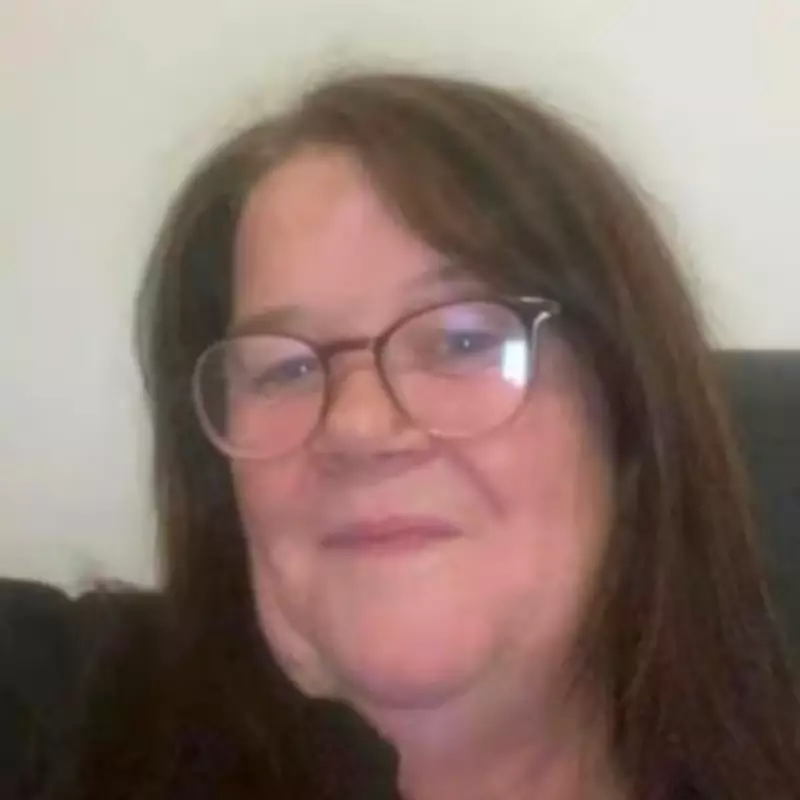
Tragic Discovery After Night Out Leads to Medical Negligence Investigation
A teenage girl made the heartbreaking discovery of her mother dead in bed just hours after the 54-year-old had enjoyed a night out celebrating a friend's birthday. Tracey McGrann from Birkenhead was found by her 16-year-old daughter Alisha, who immediately called paramedics to the scene.
The tragedy struck just four months after the teenager's father had died from severe pneumonia, leaving the family devastated by consecutive losses. The mother-of-three passed away in May 2024, only three months after seeking medical attention for concerning chest pains.
Missed Warning Signs in Hospital ECG
Tracey had visited St Catherine's Health Centre where she underwent an electrocardiogram (ECG) test. Within days, she received a text message instructing her to proceed immediately to Arrowe Park Hospital's emergency department, regardless of whether she was experiencing symptoms at that moment.
Her daughter Leah recalled: "My mum was someone who was scared of dying and terrified of hospitals, so for her to pluck up the courage and go was huge."
During her hospital visit, Tracey took a photograph of her ECG results on her mobile phone before being discharged. Though she believed she had received a clean bill of health, her family later discovered that doctors had failed to properly review and sign off on the test, which had actually flagged significant abnormalities.
Family Life Uprooted by Unexpected Loss
On the morning of May 26, 2024, Alisha discovered her mother deceased in bed. Leah, then 23, received the devastating call from her younger sister. "My little sister called me up in hysterics to say, 'I found mum dead'. I didn't believe her, and she said, 'Leah, the paramedics confirmed she's dead'," Leah recounted.
The loss created immediate practical challenges for the surviving family. Leah took on custody of her grieving teenage sister, uprooting her life in Prenton to move into her mother's house. She also had to care for her own young children, aged three and five, while giving up her job as a bar manager since her mother was no longer available to provide childcare during unsociable hours.
"This has had a complete domino effect on her children's and grandchildren's lives," Leah explained. "I've had to force my now-17-year-old sister to go into college because if she doesn't go in, we won't get that bursary. What I've learned out of this is you've got to get on with it, so I haven't had time to grieve."
Critical Evidence Discovered on Mobile Phone
An inquest concluded that Tracey died from ischemic heart disease (IHD), a condition that causes narrowing of the arteries. Initially, Leah questioned why this hadn't been detected during the previous ECG, with the coroner explaining that such tests might not catch IHD unless symptoms were actively present during the examination.
However, a crucial piece of evidence emerged months later when Leah noticed a "memory" notification on her mother's old iPhone. The automated feature displayed a photograph Tracey had taken of her ECG results during her February 2024 hospital visit.
"I was paying my mum's contract, and saw that she took a photo of the ECG on the day she went to A&E - it popped up on her iPhone's memories," Leah said. "I feel like my mum was watching over me and she sent that memory to me so that I would see it. On her ECG it read - 'moderate T-wave abnormality, consider anterior ischemia'."
The date stamp confirmed the image was captured on February 9, 2024 - the same day Tracey received the text message from her GP instructing her to visit the emergency department. The ECG clearly indicated potential ischemia, the very condition that ultimately caused her death.
Hospital Trust Admits Documentation Failure
Leah contacted Rachel Donovan, a senior medical negligence solicitor at JF Law, who helped arrange a meeting between the family and directors of Wirral University Teaching Hospital NHS Foundation Trust, which operates Arrowe Park Hospital.
During the meeting, trust representatives showed Leah a form indicating that the ECG should have been signed electronically, but no signature was present. "I asked the medical professionals what duty of care did they give to my mum - they replied they didn't," Leah recalled. "I asked them why was my mum discharged within minutes of doing that ECG - they had no response."
Hospital officials explained that they don't retain copies of ECG results, creating no paper trail for review. The only record existed because Tracey had photographed her own results. One director, described as a top medical professional, stated that if he had been on duty that night, Tracey would have been admitted and transferred directly to cardiology.
"This trust said that their own GP had caused her unnecessary stress," Leah noted. "She was the only person to actually listen to her and give my mum the duty of care she deserved. In the meeting my mum was reduced to a 'mistake'. How many other 'mistakes' have there been?"
National Pattern of Misdiagnosis Claims Emerges
Leah's case against Wirral University Teaching Hospital NHS Foundation Trust remains ongoing. Her solicitor Rachel Donovan emphasized: "The tragedy about this case is that it was so preventable. Tracey did everything right. This has caused the family to lose their mother and grandmother, and a loved sister and friend. Lessons need to be learnt."
New figures obtained through Freedom of Information requests by Medical Negligence Assist reveal a troubling national pattern. NHS trusts across England have paid out more than £1.2 billion in misdiagnosis-related medical negligence claims over the past six years.
Nearly 10,000 misdiagnosis claims were lodged against NHS trusts between 2019/20 and 2024/25. While numbers dipped during the height of the COVID-19 pandemic, they have surged to a six-year high of 1,922 new claims in the 2024/25 financial year.
Of the total claims lodged during this period, 7,500 were settled - meaning three in four claimants received compensation. The total damages paid reached £1,236,646,418, averaging £164,886 per successful claimant.
A spokesperson for Wirral University Teaching Hospital stated: "The Trust cares for hundreds of thousands of patients every year across emergency, specialist and community services and the provision of safe care is our top priority. When issues are identified or on the rare occasion that things do go wrong, we ensure learning is embedded into our patient safety and learning processes."
The hospital trust emphasized that incidents are investigated according to national NHS processes and with NHS Resolution, which manages clinical negligence claims on behalf of NHS organizations. They noted that claims data should not be interpreted as trends or league tables, as organizations vary significantly in size, complexity, and services provided.