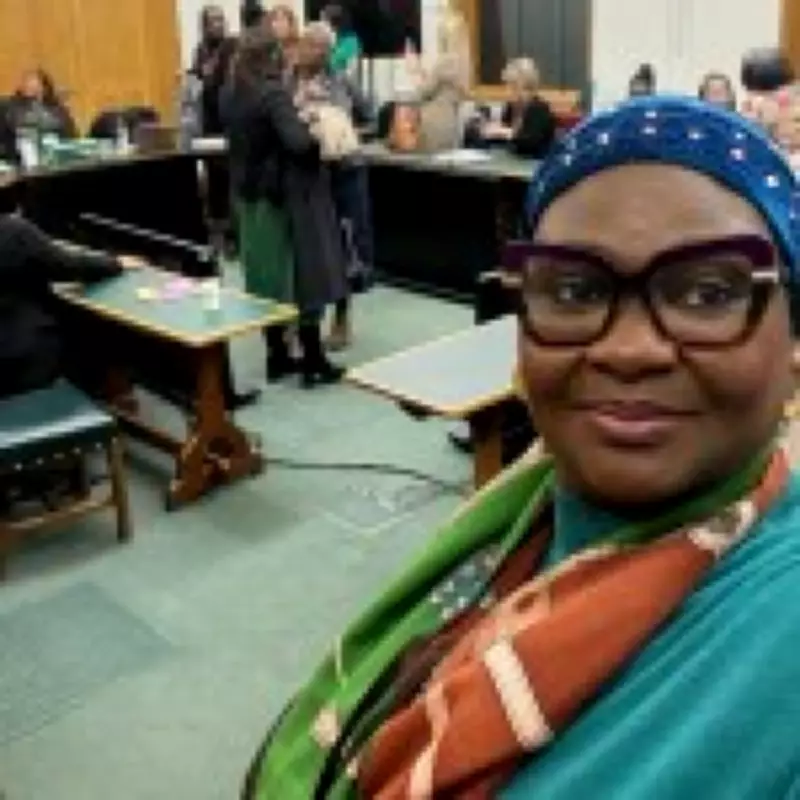
Valerie Lolomari, founder of the UK-based organisation Women of Grace, has been appointed an MBE in the 2026 New Year's Honours list. This recognition comes after decades of advocacy against female genital mutilation (FGM) and all forms of gender-based violence, work rooted in her own traumatic childhood experience.
A Childhood Betrayal in Lagos
Born in Lagos, Nigeria to young parents, Valerie was raised primarily by her grandmother, who she describes as her "mother, comfort, and everything." At sixteen, her grandmother announced they were going on holiday, a dream come true for Valerie. However, the journey took a dark turn when they stopped at a strange house.
The Room of Knives
"I walked into a room and saw knives – I knew what was about to happen," Valerie recalls. Following her grandmother through the unfamiliar home, a growing sense of unease culminated in a dark, silent room containing only a table. Laid out were knives, razors, and a bowl of oil, with two women staring at her. In that moment, she understood she was there to be cut.
Despite having heard whispers about "being cut," Valerie didn't fully comprehend the reality of female genital mutilation. She knew her grandmother had undergone the procedure, but it was treated as a silent rite of passage. "My grandmother told me it was necessary – that it was something done to make me a woman in our culture, and it was done out of love," she says. "The heartbreaking truth is that she really believed that."
The Brutal Reality of FGM
Valerie fought desperately, screaming and kicking, but was overpowered. Restrained on the floor, she endured the cutting with a piece of blunt metal. "The pain was unimaginable," she states. Through her tears, she saw her grandmother crying at the door, a moment she believes broke her grandmother's heart too.
The immediate aftermath involved severe bleeding, pain, and a two-day confinement in the house. Longer term, Valerie suffered constant infections and urinary issues, alongside profound psychological scars. "I was changed – I felt isolated and ashamed," she describes, withdrawing from friends and her previous life.
Understanding and Moving Forward
Her relationship with her grandmother was irrevocably altered, though with time came understanding. "I came to understand that she didn't do it out of cruelty, it was misguided love," Valerie explains. This realisation allowed her to find peace, though the memory remains.
Her life took a positive turn at university where she met her future husband, who offered non-judgmental support when she explained her past. They moved to London in 1998 and had three children, a blessing Valerie never takes for granted, promising her daughters would never be cut.
Founding Women of Grace
In 2021, Valerie channelled her experience into action by founding Women of Grace, a survivor-led organisation based in the UK. The group provides crucial support through trauma-informed counselling, safe spaces, and legal guidance for survivors.
Their work extends to preventative education, training frontline workers, teachers, doctors, and social workers to identify girls at risk and respond with sensitivity. They also advocate for policy change both domestically and globally, ensuring survivor voices lead the conversation.
A Global Problem Requiring Action
Despite a 2008 World Health Organization resolution to eliminate FGM, the practice persists in over 30 countries across Africa, the Middle East, and Asia, placing an estimated 4 million girls at risk annually. Valerie is unequivocal in her condemnation: "FGM is not tradition. It's not care. It is violence rooted in inequality. It is a denial of girls' rights to their bodies, their choices and their futures."
However, she emphasises that change is possible. "It can be stopped, and we are stopping it – one conversation, one intervention, one girl at a time."
An MBE and a Legacy of Hope
The arrival of the MBE notification letter was a profoundly emotional moment. "I felt overwhelmed with gratitude and emotion," Valerie shares. "It was humbling, affirming, and deeply moving not just for me, but for everyone who has walked this journey with me."
This honour underscores the vital importance of her work. "No girl or woman should have to suffer like I did," she asserts. "And because of Women of Grace, many never will." Her story transforms personal trauma into a powerful force for protection, education, and hope for countless women and girls.