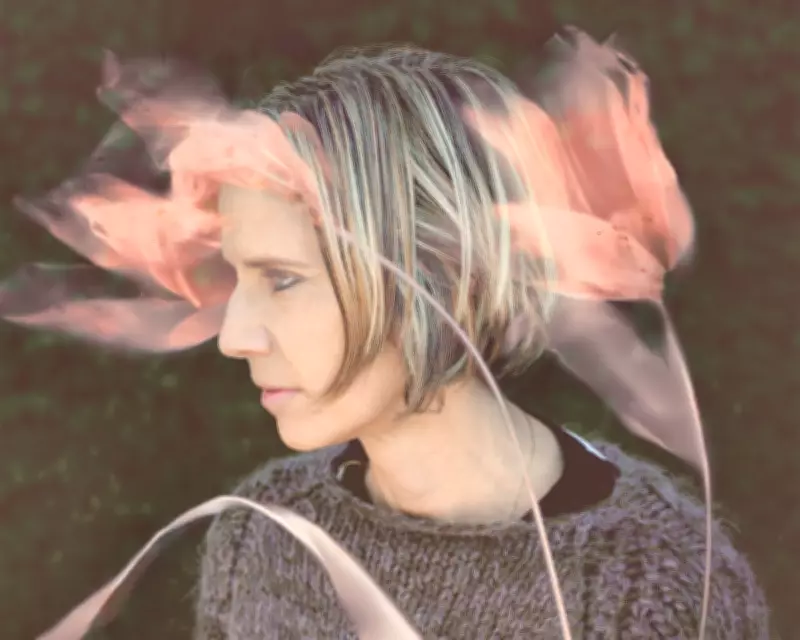
Darcey Steinke's Journey Through Chronic Pain and Its Profound Impact
Chronic pain possesses a unique ability to dismantle and reconstruct a person's existence. In her powerful memoir, This Is the Door, acclaimed writer Darcey Steinke delves into this transformative experience, moving beyond narratives focused solely on recovery to explore how pain fundamentally alters identity and perception.
The Catalyst: A Herniated Disc and Eight Months of Agony
Steinke's exploration began with personal suffering—eight excruciating months of pain from a herniated disc. "I could barely think because it was so bad," she recalls. During the height of the opioid crisis, treatment options were limited to physical therapy, rosé wine, and extra-strength Tylenol. The pain forced dramatic lifestyle changes: she could no longer sit comfortably, requiring her to teach while standing and socialize exclusively at bar-height tables.
"Pain, like failure, breaks into our everyday lives and upsets who we thought we were and what we thought we could do," Steinke writes. Emotionally, she describes feeling "roiling, anxious, fragmented"—a rollercoaster that prompted deep existential questioning about mortality, priorities, and life's purpose.
Researching Pain: From Neighborhood Signs to Historical Artifacts
Determined to create a work that wasn't merely about overcoming pain, Steinke embarked on extensive research. She posted signs in her neighborhood, solicited interviews with friends, and ultimately spoke with approximately 80 individuals about their pain experiences. Her investigation extended to historical artifacts, including rare 17th-century medical texts and cadavers studied by anatomy students.
"To be able to express your pain and to hear others' pain is really hard," Steinke observes. "But when it's done with authenticity and generosity, it's really amazing." This collective exploration revealed that many interviewees found pain "realigned their relationship with the universe," ultimately leaving them feeling "more connected with reality."
Pain's Unexpected Gifts: Enhanced Empathy and Spiritual Awakening
One of pain's most profound effects, Steinke discovered, is its capacity to generate deeper empathy. "When I see people with mobility issues on the street, I used to think, they have a little limp. Now I know they're also in pain," she explains. This heightened awareness extends beyond physical suffering to emotional and spiritual dimensions.
Steinke describes pain as both corporal and spiritual, though not necessarily in conventional religious terms. During her recovery, she found herself spending hours observing squirrels from her window—six distinct individuals, including one with a nicked tail—an activity that became unexpectedly meditative. "In a way that doesn't seem spiritual, but in a way, it is," she reflects. "I had the time to see what their lives are like."
For many of her interviewees, intense pain marked "the beginning of the end of their conventional faith," leading instead to more personalized theologies. Whether through art practice, community involvement, or ocean swimming, people discovered rituals that helped contextualize their suffering within something larger.
Artistic Responses to Pain: From Frida Kahlo to Kurt Cobain
Steinke examines how artists have historically channeled pain into creative expression. Frida Kahlo, who endured over 30 surgeries following a devastating bus accident, "was able to make this incredibly big life for herself," pioneering depictions of the female body in pain rather than as merely sexual objects.
Similarly, Steinke recalls interviewing Kurt Cobain shortly before In Utero's release. "He's the rare rock star who, instead of putting forward sexiness, really centered his sick body," she notes, describing how he immediately discussed his back pain and demonstrated exercises on the floor.
"I never want to say that pain is good, and no one should seek out suffering," Steinke clarifies. "But everyone's going to go through it. The artists helped me show that pain is a part of a life, and how you can make things that can be pain relievers for others."
Confronting Mortality and the Pilgrimage to Lourdes
Pain inevitably brings mortality into sharp focus. "People don't want to think about it, but pain naturally makes people think about mortality," Steinke observes. Many interviewees expressed that while they didn't fear death itself, they dreaded dying in pain—a sentiment capturing pain's isolating, death-like quality.
Steinke concludes her memoir with a visit to Lourdes, the French pilgrimage site renowned for healing. Despite her skepticism, she found herself deeply moved by the experience. "Lourdes has no stairs anywhere," she notes. "So any person in any wheelchair or rolling bed can move around there. The bathrooms are huge and they each have several trained attendants. There's no place on earth like that."
After observing healing rituals, she was invited to participate directly. "I could see the way they were actually suffering in their bodies, the way they moved," she describes. "The thing that surprised me the most was how quickly people are moved to tears... they really felt like they were part of something bigger."
Through This Is the Door, Darcey Steinke offers not just a memoir of suffering, but a nuanced examination of pain's transformative potential—how it fractures identities, fosters empathy, and unexpectedly connects us to deeper spiritual and human experiences.