Emma the Social Robot: A Glimpse into AI-Powered Elderly Companionship
In July 2025, photographer Paula Hornickel arrived in the tranquil town of Albershausen in south-west Germany, home to approximately 4,000 residents. Her destination was a local care home piloting an innovative social robot named Emma. This encounter resulted in a poignant photograph that later earned Hornickel the prestigious World Press Photo award in 2026, capturing a moment that speaks volumes about technology's evolving role in human connection.
A Robot with Personality and a Knitted Hat
Emma, standing at the height of a toddler, features large, expressive googly eyes and wears a charming red hat knitted by one of the careworkers. During Hornickel's visit, a group of residents sat in a circle with Emma positioned at the center. The robot was first introduced to a resident named Peter, leading to a humorous misunderstanding: Emma subsequently assumed all residents were named Peter, eliciting laughter from everyone. However, the illusion of seamless interaction was momentarily shattered when Emma experienced a technical breakdown, reminding observers of her mechanical nature.
A Calm Moment of Connection Between Human and Machine
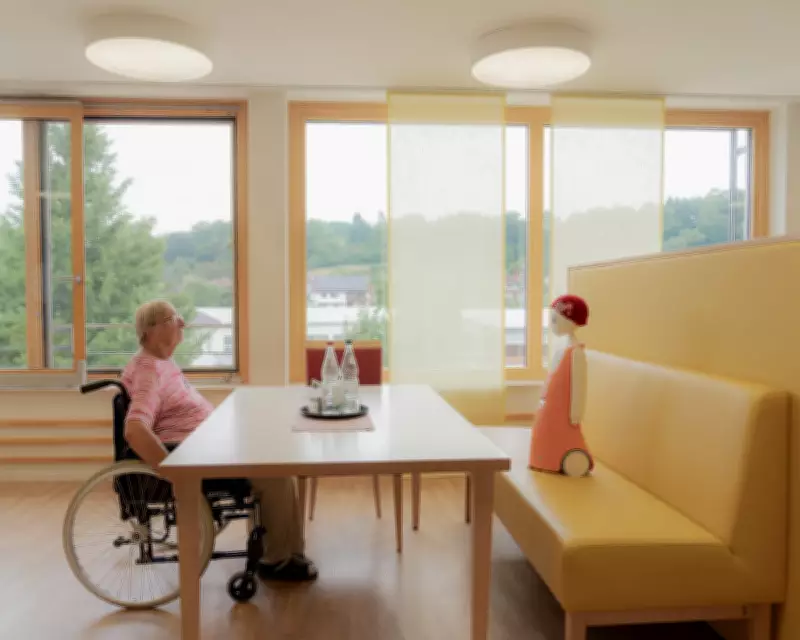
Later, Hornickel found Emma fully operational in the dining room, engaged with resident Waltraud. The photographer carefully arranged them facing each other at eye level, capturing a serene and focused interaction. Soft light filled the room, emphasizing their mutual presence. The image presents striking contrasts: large windows reveal the natural landscape outside, while the interior setting appears orderly and clinical. At its heart, the photograph depicts an elderly woman and a machine designed for companionship, bridging the gap between humanity and technology.
Conversations About Flowers and the Limits of AI
Waltraud and Emma conversed about picking flowers, a topic of passion for Waltraud. Thanks to her artificial intelligence, Emma possesses extensive knowledge and can recall past conversations and recognize faces. However, Waltraud initially expressed skepticism about the robot, having never encountered such technology before. Over time, she developed a relationship with Emma, viewing it primarily as entertainment—Emma can tell jokes, for instance. Yet Waltraud emphasized that human contact remains irreplaceable, poignantly noting, "You wouldn't believe how lonely people are in care homes." This remark underscores a deeper social issue that the image subtly addresses.
Exploring the Anthrobocene: Human-Robot Encounters in Germany
This photograph is part of Hornickel's photo essay titled Anthrobocene, which explores human-robot interactions in everyday German life. The care home pilot was one of two such initiatives involving robots developed by a Munich-based startup. These robots are deployed in settings facing shortages of skilled workers, aiming to stimulate conversation among residents and alleviate the monotony often experienced in care homes.
The Broader Implications of Social Robots in Society
Hornickel's interest in photographing robots began after a hospital in her hometown started using them to assist overburdened staff. She has since visited various institutions grappling with staff shortages, including fire departments, research centers, and even an inclusive theatre dance company incorporating a robot performer. Through these experiences, she learned that creating humanoid robots is challenging and time-consuming, despite rapid advancements in AI.
Interviewees consistently emphasized that robots should supplement, not replace, human roles. Emma operates based on data and probability, always presenting as positive and attentive—a convincing simulation of care. However, she lacks consciousness and lived experience, raising intriguing questions about how such simulations affect human interactions. Hornickel observed that residents were remarkably engaged and open to Emma, suggesting that growing pressures on care systems, worker exhaustion, and the loneliness epidemic may drive increased reliance on robotic support.
Reflecting on Technological Integration and Human Needs
This award-winning image not only reflects the realities of the care sector but also visualizes broader societal interactions with technology, such as chatbots. It prompts viewers to consider what happens when robots transition from practical tools to companions and what it means as they become more human-like. Hornickel's work invites contemplation on balancing technological innovation with the irreplaceable value of human connection, making it a powerful commentary on contemporary life.