From Film Effects to Lifesaving Limbs: The Nigerian Brothers Revolutionizing Prosthetics
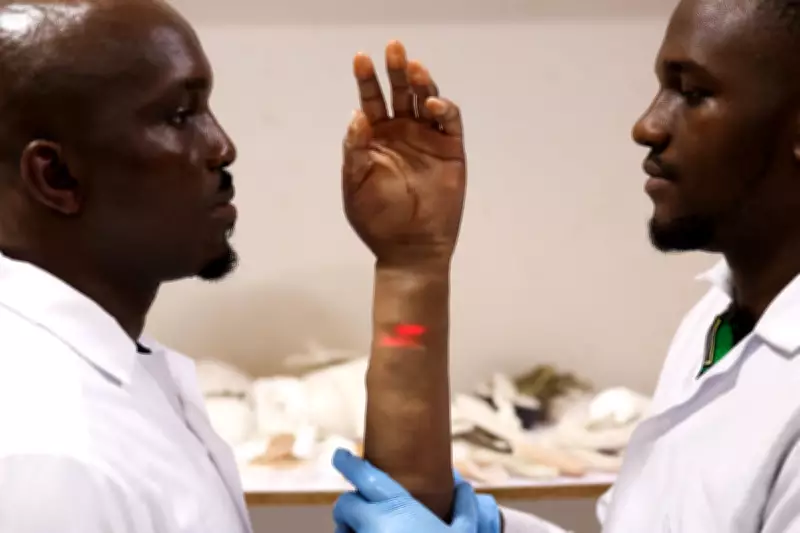
On a humid morning in Uyo, Nigeria, Ubokobong Amanam proudly displays his prosthetic hand, a marvel of realism with tiny wrinkles and naturally shaped nails. Seven years ago, a devastating firework accident claimed his fingers, plunging him into a world of inadequate prosthetic options that were clumsy, ill-fitting, and designed for Western body types. "At first, it was deeply disappointing to realise there were no hyper-realistic or even realistic African-style prosthetics," he recalls. "That discovery made me feel worse and intensified my depression."
A Personal Crisis Sparks a Groundbreaking Innovation
Ubokobong's brother, John Amanam, a skilled special effects artist for films and theatre, saw an opportunity to blend artistry with necessity. Together, they embarked on a mission to create a prosthetic hand that did not yet exist—one crafted specifically for Africans by Africans. Their collaboration birthed the Ubokobong Bionic Arm after three years of dedicated research, leading to the establishment of Immortal Cosmetic Art, a thriving business now at the forefront of lifelike prosthetics across the continent.
The need is staggering: unofficial estimates suggest up to 2 million people in Nigeria alone require prosthetic limbs. Globally, the World Health Organization's 2022 report on assistive technology reveals that nine out of ten individuals needing devices like prosthetics lack access, with low- and middle-income countries hit hardest. Imported limbs can cost $2,000 to $3,000, placing them out of reach for many. "The first thing I discovered is that prosthetics aren't really made for people like us," Ubokobong explains, highlighting issues with color mismatches, costly repairs, and limited availability.
Artistry Meets Technology: Crafting Realism and Function
John Amanam employs his artistic expertise to incorporate intricate details—wrinkles, veins, fingernails, and fingerprints—using silicone moulds from each user's body. Their prosthetics, such as those for customer Emediong Bassey, who lost her lower right leg in a 2010 accident, are celebrated for their comfort and seamless integration. "It feels like my real leg," Bassey says. "Most people don't even realise it's not my real leg because it so closely resembles my other leg in colour and shape."
Beyond aesthetics, Immortal Cosmetic Art is advancing into bionic prosthetics that use electromyography to read muscle signals, enabling controlled movement. Each bionic limb costs about $7,000—cheaper than many Western alternatives but still unaffordable for most Africans. To bridge this gap, the brothers are seeking support from governments and NGOs, having already provided free prosthetics to over 10 clients, including Bassey.
Global Implications and Community-Driven Solutions
Dr. Natasha Layton, an occupational therapist and associate professor at Monash University in Australia, critiques the global prosthetics gap as a policy failure. "Assistive technology has often been treated as an optional extra rather than a core part of health services," she argues. "But it is essential for access to education, employment, and social inclusion." She notes that underinvestment has prioritized acute healthcare over long-term support, leaving many without independence.
Experts like Opeoluwa Akinola, co-founder of the Accesstech Innovation and Research Centre, emphasize the importance of locally driven design. "Assistive technology is often designed far from the people who will use it, leading to solutions that are costly, culturally mismatched, and hard to maintain," he says. Akinola, who lost his sight as a child, advocates for inclusive technological solutions rooted in community needs, enabling sustainability and accessibility.
Scaling Impact and Redefining Global Health Technology
Immortal Cosmetic Art has produced approximately 5,000 prosthetics for clients in countries like Ghana, Côte d'Ivoire, and the African diaspora in the US. Dr. Layton sees this as part of a broader shift: "Traditionally, advances have flowed from high-income to low-income countries. Now the trend is reversing, as innovations emerge from countries that must think creatively under constraints." She believes such creativity could disrupt the global prosthetics industry by offering affordable, high-quality alternatives.
The Amanam brothers' journey—from personal tragedy to entrepreneurial success—symbolizes a transformative approach to technology. "When the people closest to a problem design the solutions, those solutions are fundamentally different," Akinola concludes. Their work not only restores dignity and function but also challenges global inequalities, paving the way for a future where innovation is a two-way street and prosthetics are accessible tools of independence for all.