
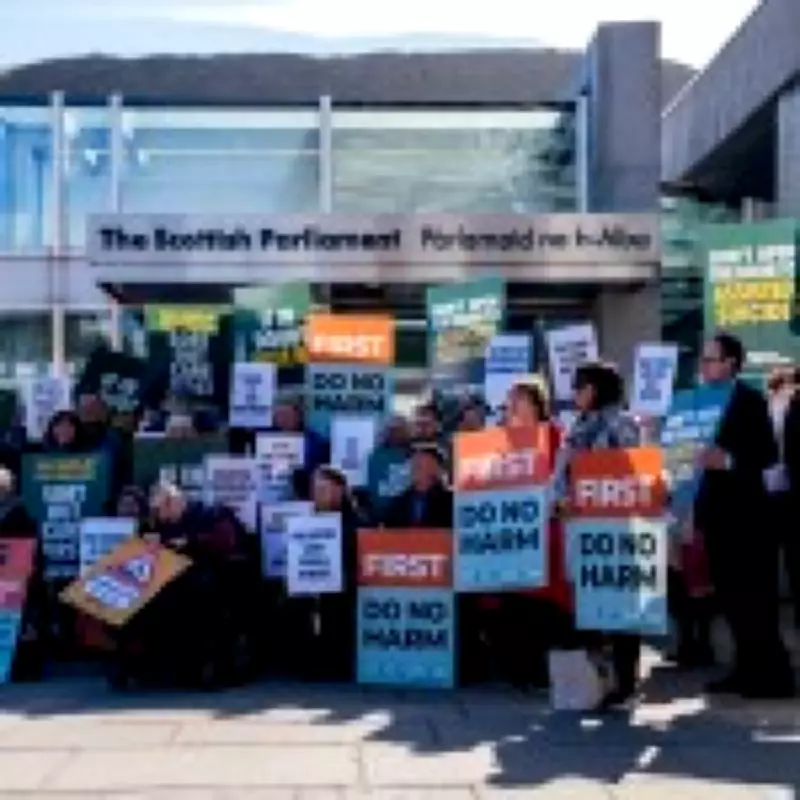
Scotland Could Become First UK Country to Legalize Assisted Dying in Landmark Vote
A historic vote scheduled for this evening could see Scotland become the first country within the United Kingdom to officially back the legalization of assisted dying. Members of the Scottish Parliament at Holyrood are set to decide on the fate of Liberal Democrat MSP Liam McArthur's Assisted Dying for Terminally Ill Adults (Scotland) Bill, with the outcome appearing exceptionally close just hours before the final debate commences.
The Bill's Content and Criteria
The proposed legislation, in its current form, would permit individuals to receive assistance in ending their own lives provided they meet specific stringent criteria. These conditions include being at least eighteen years old, having a terminal illness with a reasonable expectation of death within six months, and having resided in Scotland for a minimum of twelve months prior to making an initial declaration. Additionally, applicants must possess the mental capacity to request assistance and secure approval from two independent doctors. Crucially, the individual would be required to self-administer the lethal substance at the conclusion of the process.
Shifting Support and Political Landscape
When MSPs last voted on this bill in May 2025, the tally stood at 70 in favor and 56 opposed. However, political dynamics have evolved significantly since that time, with support levels likely fluctuating. The bill itself has undergone substantial revisions, incorporating a remarkable 175 amendments in the past week alone. This rapid evolution has led some key organizations, including the Royal College of Psychiatrists in Scotland and the Royal Pharmaceutical Society in Scotland, to withdraw their backing due to concerns over specific changes.
Liam McArthur's initiative represents the third attempt by the Scottish Parliament to consider legalizing assisted dying, with previous bills being defeated by substantial margins. McArthur asserts that his proposals enjoy "overwhelming support of a significant majority of Scots regardless of religious affiliation, political party or disability status." Despite this claim, the bill faces opposition from several influential figures within Holyrood, including First Minister John Swinney, Scottish Labour leader Anas Sarwar, and Scottish Conservatives leader Russell Findlay. Notably, Findlay has reversed his previous stance, expressing concerns about potential coercion risks.
Broader UK Context and International Comparisons
The vote occurs against a backdrop of controversy surrounding similar legislative efforts elsewhere in the UK. In England and Wales, MPs in the House of Commons voted to support legalization in June of last year, but progress has stalled in the House of Lords where peers are deliberating over more than 1,200 amendments. Supporters of Kim Leadbeater's Terminally Ill Adults (End of Life) Bill now believe it is almost certain to fail due to insufficient time for debate before the King's Speech in May, prompting calls for Prime Minister Keir Starmer to prioritize the issue in the new parliamentary session.
Internationally, the Isle of Man and Jersey have both already voted in favor of legalizing assisted dying, positioning them as the first regions within the British Isles to adopt such measures. This places additional pressure on Scotland's decision, as it could become the first constituent country of the UK to follow suit.
Timing and Implications
The final vote is anticipated to take place around 10 PM tonight, following several hours of intense debate. This landmark decision could redefine end-of-life care and personal autonomy in Scotland, setting a precedent for the rest of the United Kingdom. The outcome will be closely watched by advocates, medical professionals, and policymakers across the nation, marking a pivotal moment in the ongoing discourse surrounding assisted dying legislation.




