Greater Manchester Police (GMP) recorded its busiest month ever in July, with 152,000 contacts from the public, as heatwaves and the World Cup placed unprecedented strain on the force. Officers made 54 arrests in Tameside during Operation Avro, a monthly crackdown on local crime, and response times for the most serious incidents averaged seven minutes and 54 seconds.
Record Demand and Arrests in Tameside
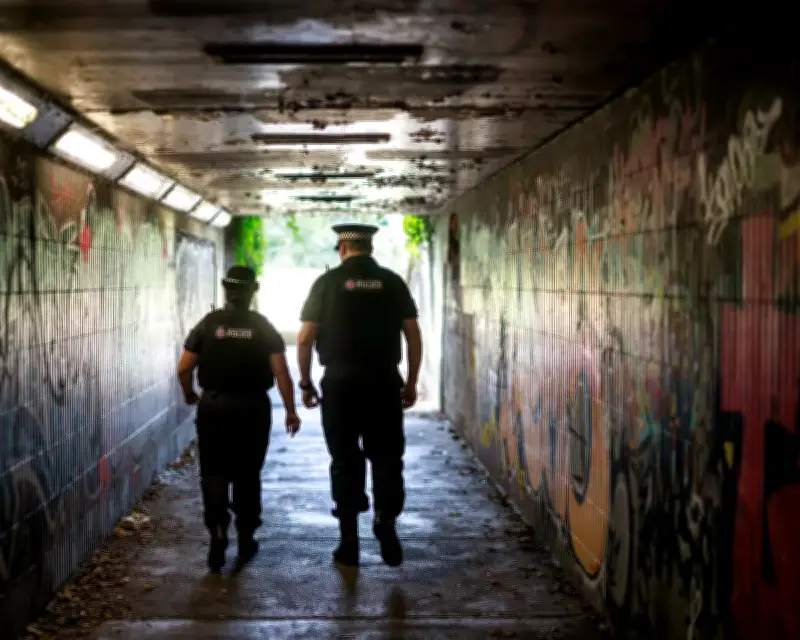
On England's hottest day of the year so far, Ashton-under-Lyne in Greater Manchester was thronging with pedestrians, many clutching ice-creams or cold drinks as they passed through the town centre. Officers from GMP were also out in force, some in plainclothes, some stationed by a facial-recognition van, apprehending wanted suspects and stopping persons of interest. In total, officers made 54 arrests across the borough of Tameside as part of Operation Avro, GMP's monthly blitz on local crime.
For the past two months, the demand on officers has been greater than ever. GMP received a record-breaking 152,000 contacts from the public in July – the highest number ever recorded by the force in a single month. The World Cup likely played a part, but the main driver, officers said, was the continued hot weather, which is putting added strain not just on health services but also on the criminal justice system.
National Trends and Contributing Factors
GMP is not alone. According to data from the National Police Chiefs' Council, which includes all Home Office forces, British Transport Police, and Police Scotland, emergency call volumes increased by about 11.5% year on year during July. Digital contact with the public also increased, with online reports submitted through Single Online Home, the platform used by most police forces, rising by about 10% year on year.
The Met Office confirmed that July was the hottest and driest month on record, with heatwaves continuing into August. “These factors bring people outside, there’s an increase in alcohol consumption, an increase in people going into reservoirs, into water,” said Tameside's neighbourhood chief inspector, James Grundy. “So that does increase the demand for police.” Grundy noted an increase in calls about off-road bike use, antisocial behaviour, and people taking disposable barbecues to locations prone to wildfires.
Impact on Officers and Response Times
“It is challenging,” Grundy said. “Obviously we have to attend incidents based on the threat, harm and risk, so we have to prioritise certain incidents over others, which means that some people don’t often receive the level of response that they deserve. We have officers that are pulled from different areas to support that demand on the frontline at times.”
“At the moment in Greater Manchester police every day is a busy period,” said Tameside neighbourhood police sergeant Rob Froggatt. “Every day police officers are being run ragged.” He said his neighbourhood officers were often pulled on to response policing when those teams needed more support to do their jobs safely. “It’s a fine balance,” he said, “but I’d say we deal with it quite well.”
Response officer PC Daniel Bragg, who has been in his job for seven years, said that except for perhaps New Year's Eve, this summer had been the busiest he had ever known. “Over the last few months, obviously with the World Cup, the sun, it’s just non-stop,” he said. “Due to the football you have more people jumping in cars after pubs, so we had a lot more crashes. When it gets warm, naturally with older people you have a lot more deaths occurring.” Bragg added that domestic incidents and mental health crises were also big drivers of 999 calls. “It was absolutely manic again last week, non-stop,” he said, noting that senior officers were being sent out on jobs to meet response targets.
In July, officers attended 14,991 grade 1 incidents (immediate emergencies), achieving an average response time of seven minutes and 54 seconds, and 10,266 grade 2 incidents (serious but not immediately dangerous), with an average response time of one hour and two minutes. Bragg said the team had been responding to up to 40 calls in a night shift, typically 10 to 20. “You’re doubling or quadrupling that in one night,” he said. “You are out of the station from 9 o’clock when a job comes in, and then you’re coming back in at 7 o’clock really, just going job to job.”
Future Challenges and Additional Strains
With more hot summers on the horizon, Bragg said: “I do think if it continues like this over the years to come, there would have to be a change just in terms of staffing. It’s kind of impossible to police what we’re policing at the minute.”
“When I look at the three-month period and compare it to the same three months last year, it’s been a really significant increase,” said Tameside district superintendent Arif Nawaz. “We’re looking at around an extra 572 grade 2 incidents and an extra 272 grade 1 incidents. So that effectively means my response teams have to deal with an extra seven grade 1s and 2s every single day.”
Nawaz also pointed to Manchester's rapid development as a contributing factor. “The economic development around Manchester is brilliant for the region but it’s also contributing. The Co-op Arena is a new site attracting 20,000 people each event. That’s in addition to the AO Arena. So that’s just one simple example of something that’s great for the economy, but there’s a policing demand.”
The repeated heatwaves were, Nawaz said, “a very serious issue that as a society we need to consider, as a police service we need to consider.” “The government’s looking at it as well, so who knows what the future will bring?” he added. “Clearly it is in our thinking around how we prepare ourselves for this.”