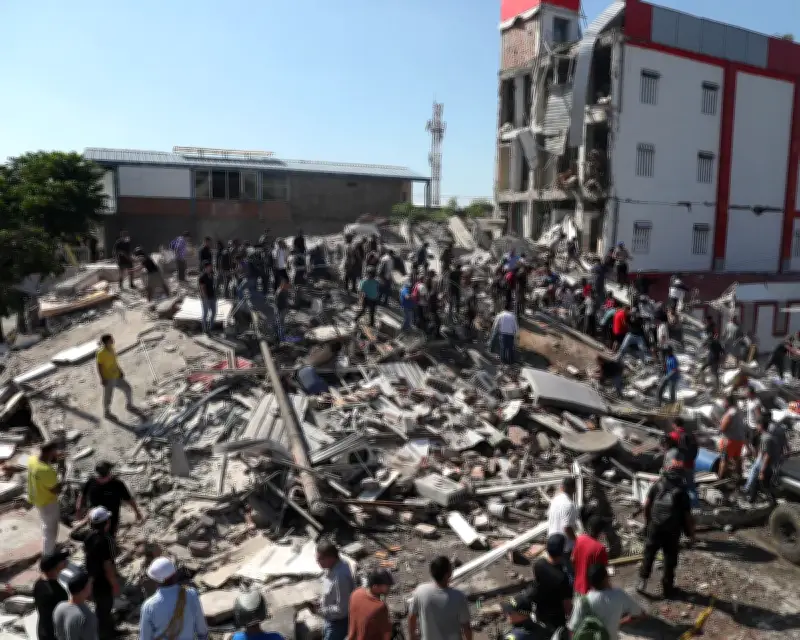
A magnitude 5.8 earthquake struck western Colombia on Monday, August 10, 2026, rattling major cities including Cali, Pereira, and the Chocó region. According to the Colombian Geological Service (SGC), the quake occurred at 10:23 a.m. local time at a depth of 45 kilometers, with the epicenter located near the municipality of El Cairo in the Valle del Cauca department.
Immediate Impact and Response
Local authorities reported at least 12 injuries, mostly minor, from falling debris and panic-related accidents. No fatalities have been confirmed, but rescue teams are conducting thorough searches in affected areas. In Cali, the largest city near the epicenter with a population of over 2.2 million, several buildings were evacuated as a precaution, and some older structures sustained cracks and broken windows.
In Pereira, a key coffee-region hub, landslides were reported on roads connecting the city to nearby towns, temporarily blocking traffic. The Chocó region, known for its rugged terrain and heavy rainfall, experienced power outages in several municipalities, affecting about 5,000 residents.
Seismic Context and Preparedness
Colombia sits on the Pacific Ring of Fire, making it prone to seismic activity. The SGC recorded at least 20 aftershocks within hours of the main quake, the strongest measuring 4.2. Local seismologists emphasize that the shallow depth of the quake increased shaking intensity, but the moderate magnitude limited widespread destruction.
Emergency services in Valle del Cauca and Risaralda activated response protocols, and the national disaster management unit (UNGRD) deployed assessment teams to evaluate infrastructure damage. Hospitals in the affected regions reported no major structural issues, and medical facilities remained operational.
Community Response and Official Statements
Residents in Cali described the shaking as "strong but brief," with many taking to social media to share videos of swaying buildings and toppled shelves. Local schools and businesses closed for the day as a safety measure, and public events were suspended.
Colombian President Gustavo Petro, in a statement on X (formerly Twitter), urged calm and assured citizens that the government is monitoring the situation. "We are in constant communication with local authorities to ensure the safety of all Colombians," he wrote. The mayor of Cali, Alejandro Eder, announced that damage assessments are ongoing and that temporary shelters have been set up for those whose homes were affected.
Looking Ahead
The SGC continues to monitor seismic activity and advises residents to follow safety guidelines, including securing heavy furniture and having an emergency kit ready. Aftershocks are expected in the coming days, and authorities recommend staying alert but not alarmed.
This earthquake serves as a reminder of the region's vulnerability, but also highlights the effectiveness of Colombia's preparedness measures, which have improved significantly since the 1999 Armenia earthquake that killed over 1,000 people. The quick response and low casualty count reflect ongoing efforts to strengthen building codes and public awareness.