
Disabled Worker's Support Hours Slashed: 'We're Not Lazy, Barriers Must Go'
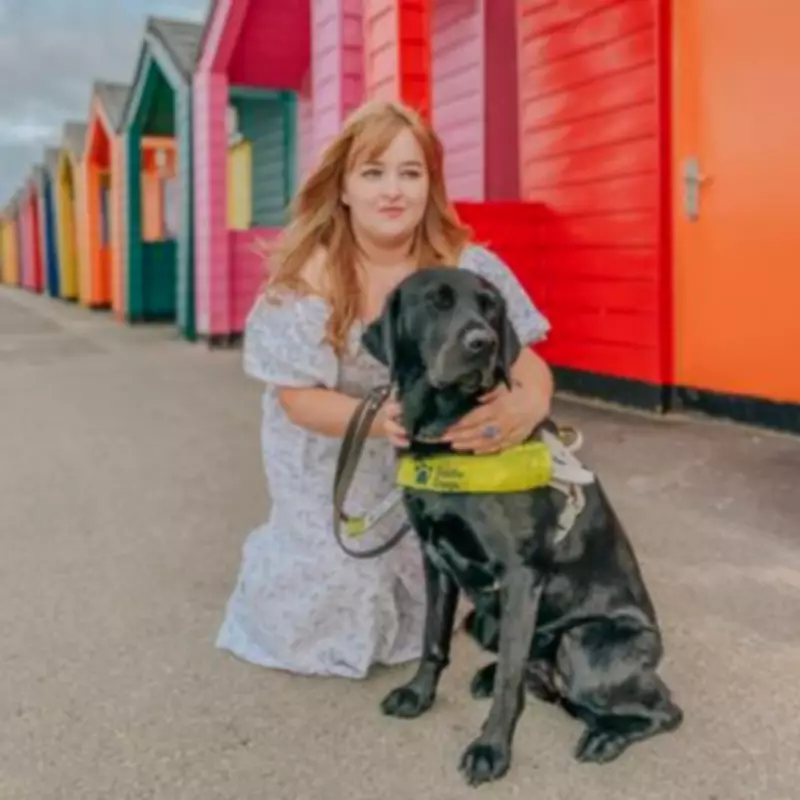
Emily Davidson, a sight-impaired journalist, has been left shocked and deeply uncertain after her support worker hours through the Department for Work and Pensions' Access to Work scheme were dramatically cut from 37 to just eight per week. The 30-year-old, who has severe visual impairments including no vision in her right eye and limited sight in her left, told MyLondon: "My needs had not changed so I was shocked."
The Access to Work Crisis
Access to Work is designed to help people with physical or mental conditions find and maintain employment by providing grants for support workers, technology, and other assistance. However, recent DWP data reveals new applicants face waits of around nine months for support, with some reports indicating delays of six months to two years.
Emily applied for reconsideration after the December cuts but received a letter during the making of this article confirming the DWP would not reverse their decision. "Disabled people do want to work," she emphasized, "but if the support system is not there to help them get into work and stay there, what are they supposed to do?"
Professional Impact and Emotional Toll
Working full-time as a journalist with Newsquest, Emily relied on her support worker for tasks including checking social media, spreadsheets, and maps that aren't accessible to her. Following the cuts, she has had to adapt her workload significantly.
"I am still doing my best, but I have had to limit the kinds of stories I can cover," she explained. "That is very demoralising, because I used to feel proud that I could take on almost any story my colleagues could. Now I have had to scale that back."
The emotional impact extends beyond professional limitations. Emily expressed concern for her support worker, Glenn, who has lost his income and had to seek other employment. "I have also lost not only my support worker but a working partner and friend of almost four years," she said. "It has caused severe anxiety, and I am now receiving counselling."
A Personal Journey to Employment
Despite holding a degree, a Master's degree, and experience as a freelance journalist, Emily found it incredibly difficult to secure stable employment before joining Newsquest London in November 2022. "Access to Work played a huge role in making that possible," she acknowledged.
Her visual impairments include nystagmus and septo-optic dysplasia, which also affects her endocrine system. These conditions have been present since birth and haven't changed since she first claimed Access to Work support in 2022.
Charity Response and Government Position
Roisin Jacklin, policy lead for education, employment and welfare at sight loss charity RNIB, stated: "We know difficulties with Access to Work is the biggest issue that blind and partially sighted job seekers and employees are coming to RNIB for help with. The scheme is plagued with significant delays."
She added: "Support worker hours and rates have also been cut when support has been renewed, which is a major concern too for those in work. Cuts to Access to Work won't deliver the government's aim to support disabled people into work."
A DWP spokesperson responded: "No changes have been made to Access to Work policy, and we will announce any future changes prior to them being implemented. Access to Work supports thousands of sick or disabled people to start or stay in work, and support provided by the scheme has nearly doubled in five years."
The spokesperson acknowledged: "We understand that problems in the scheme we inherited are failing employees and employers, which is why we're working with disabled people and their organisations to improve it."
Call for Awareness and Action
Emily is now working to raise awareness of the issue with charities like RNIB and urging non-disabled people to educate themselves about workplace barriers facing disabled individuals.
"This is still quite a niche issue, and because it affects a specific group of disabled people, many people do not realise what is happening," she noted. "Non-disabled people can inform themselves about what is happening. They need to understand that disabled people face real barriers in the workplace, and that we are not lazy. In most cases, there is simply a barrier that needs to be removed."
She concluded with a powerful message: "Ultimately, many disabled people want to work. The government needs to think seriously about what it is going to do to remove those barriers."
While Emily's other Access to Work support, including funding for travel to the office, has been maintained, the reduction in support worker hours represents what she describes as "a catch-22" for disabled workers seeking employment while navigating an increasingly challenging support system.




