Sutton Council Greenlights Major Cancer Research Hub Expansion
Sutton Council has granted approval for a monumental £1 billion expansion of the London Cancer Hub (LCH) in Belmont, a project poised to establish a world-leading centre for cancer research, treatment, and education. The ambitious scheme, however, has been met with significant local opposition concerning increased traffic congestion and the partial removal of a century-old allotment site.
Transformative Vision for Cancer Innovation
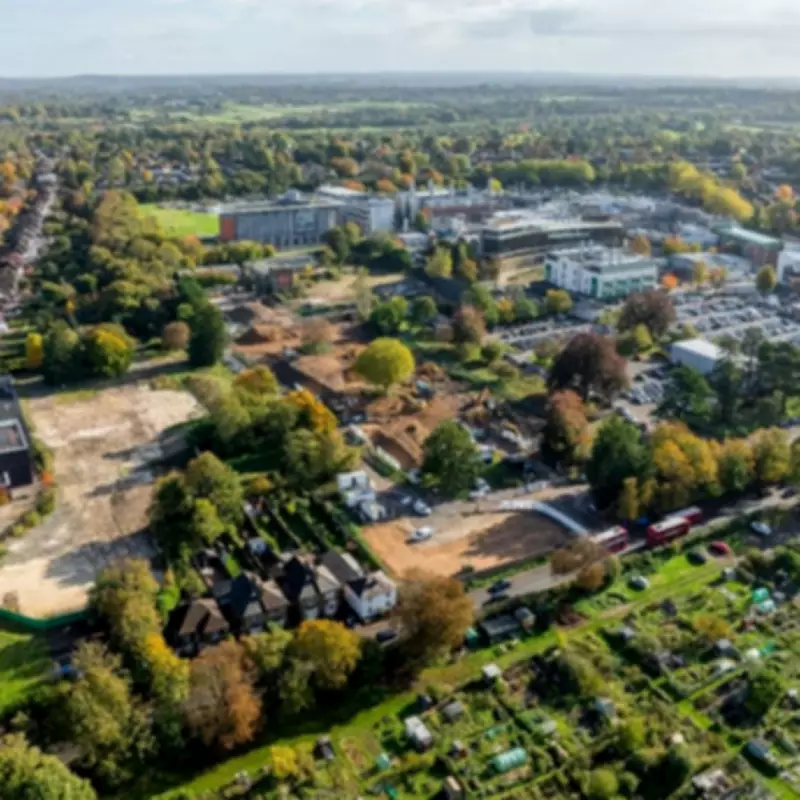
The approved plans, led by development partners Aviva Capital Partners and Socius, will transform a 12-acre site adjacent to The Royal Marsden Hospital and the Institute of Cancer Research. The expansion will deliver approximately one million square feet of new laboratory and research space across three life sciences buildings, ranging from four to seven storeys in height. The development also includes provision for around 220 affordable homes designated for key workers, emphasising sustainable design principles and net-zero carbon features.
According to economic analysis commissioned by Sutton Council, the completed hub is projected to support approximately 13,000 jobs and contribute an estimated £1.2 billion in Gross Value Added to the UK economy. Councillor Barry Lewis, Leader of Sutton's Liberal Democrat-led council, described the decision as "hugely significant" for both the borough and the national life sciences sector, highlighting its potential to deliver economic growth and health innovations.
Contentious Allotment Displacement
The most controversial aspect of the development centres on proposals for a new link road that would require partial removal of the historic Belmont Allotments. Sutton Council acknowledged this as the "most contentious and frequently raised objection" during the planning process. The road would connect Cotswold Road to Brighton Road, acting as a relief route for increased traffic.
Stephen Phillips, speaking on behalf of the Belmont Allotment Association, warned that the proposals threatened both a long-established community and local biodiversity. "The site is a century old, with a thriving community of tenants from hugely diverse backgrounds," he stated. "It is also a biodiversity hotspot, containing protected species not even found on the nearby common."
Developers have committed that no works can commence on the relief road until replacement allotments are provided, though these are not expected to be available until around 2032. The timetable is linked to the future delivery of a Specialist Emergency Care Hospital on the site, now scheduled for no earlier than 2036.
Transport and Traffic Concerns Dominate Debate
Transportation issues formed the other major flashpoint during a lengthy and sometimes heated planning meeting. The project's transport assessment assumes a significant "modal shift" in travel behaviour, aiming to limit private car journeys to no more than 20% of trips. However, councillors and residents questioned the realism of these targets given the site's location and existing congestion problems.
Conservative Councillor Patrick Magnus warned that the arrival of thousands of new workers would cause "gridlock" in the area, while Independent Councillor Tim Foster questioned where the proposed change in travel behaviour would materialise, pointing to existing parking queues at nearby facilities. Residents' groups argued that the provision of just 300 parking spaces for approximately 3,000 employees was "inadequate" and would inevitably lead to significant overspill parking on nearby residential streets.
The parking allocation was originally capped at 500 spaces but was reduced following intervention from Transport for London to align with car-light objectives. Some councillors criticised the emphasis on cycling provision, with Conservative Councillor David Hicks describing expectations for mass bicycle commuting as "the most ridiculous on Earth."
Infrastructure Improvements and Community Benefits
Despite these concerns, the development includes substantial infrastructure improvements. Active travel and public transport form key components of the design, with 1,150 cycle parking spaces planned alongside a new north-south pedestrian and cycle route linking the hub to Chiltern Road. The key worker accommodation will be car-free, with parking limited to Blue Badge holders only.
Rail services from nearby Belmont station are set to increase from two to four trains per hour into London, enabled by a £14.1 million investment from the government's Levelling Up Fund. Developers have also proposed a shuttle bus service to improve visitor access, though the specific route remains to be confirmed.
Daniel May, Director of Socius, emphasised the broader vision behind the project: "The LCH is about more than buildings. We are delivering the next phase of investment into a world-class cancer district, creating a catalyst for private investment and long-term growth. By working closely with our partners, we are building a vibrant ecosystem where collaboration drives discovery and ultimately improves patient outcomes."
Approval with Conditions and Future Oversight
The outline hybrid planning approval, granted symbolically on World Cancer Day, allows the project to progress on matters of land use, access, height, and landscaping. However, developers must return to the council for further approvals as more detailed proposals are developed. The approval covers only the first phase of what is envisioned as a multi-stage development.
Sophie White, Sector Head of Regeneration at Aviva Capital Partners, called the planning consent a "landmark moment" for the scheme, stating that it would "provide critical science infrastructure for the UK, creating an environment where innovation can flourish and lifesaving research can accelerate."
The decision represents a delicate balance between ambitious scientific advancement and legitimate community concerns, setting the stage for ongoing dialogue between developers, council officials, and Sutton residents as the project moves forward.