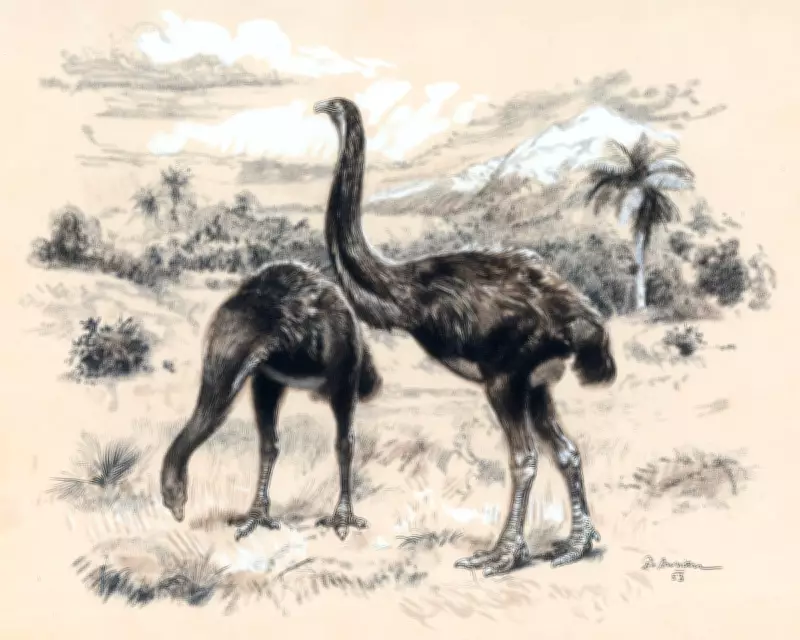
Scientists have developed an artificial eggshell that could help bring back the giant flightless moa bird from extinction. The breakthrough, published in the journal Science Advances, describes a synthetic shell that can incubate embryos of the extinct bird, which weighed up to 230 kilograms and stood 3.6 meters tall.
Reviving the Moa
The moa, native to New Zealand, was hunted to extinction by the 15th century. De-extinction efforts have focused on reconstructing its genome from ancient DNA and inserting it into the eggs of its closest living relative, the emu. However, emu eggs are too small to support a moa embryo, prompting the need for an artificial shell.
How the Artificial Eggshell Works
The artificial shell is made from a biocompatible polymer that mimics the porous structure of natural eggshells, allowing gas exchange and temperature regulation. Researchers successfully incubated a chicken embryo in the synthetic shell for 10 days, proving the concept. Next steps involve using the shell for moa embryos created via genetic engineering.

Ethical and Practical Challenges
Critics question the ethics of de-extinction, arguing that resources could be better spent conserving endangered species. Supporters say the technology could help restore lost biodiversity. The team aims to produce a living moa within a decade, pending funding and regulatory approval.
Implications for Conservation
If successful, the artificial eggshell could also aid conservation of other birds, such as the cassowary or kiwi, whose eggs are difficult to incubate naturally. The research opens new avenues for saving species on the brink of extinction.