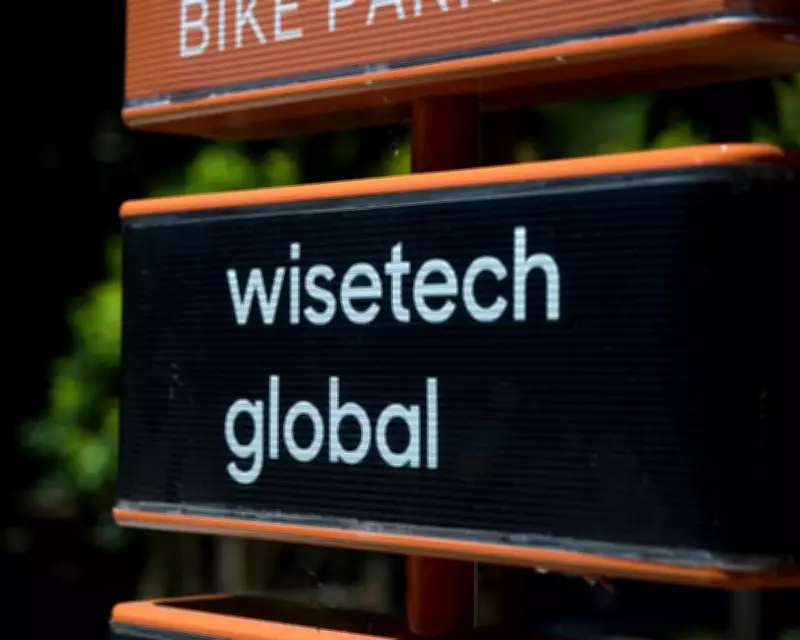
Staff at WiseTech have been waiting almost three months to be told if they are among the 2,000 employees the logistics software company plans to cut due to advances in artificial intelligence. Workers have criticized the prolonged wait as stressful and "ridiculous."
AI Capabilities and Job Losses
The comments come as WiseTech's founder told investors on Tuesday that an AI agent could learn a human's job in just 15 minutes, according to the Australian Financial Review. The Australian Stock Exchange-listed company announced in late February that it would lay off nearly 30% of its workforce across 40 countries, with 2,000 of the 7,000 jobs set to go over the next 18 months.
Some areas will be hit harder than others. Product and development teams, as well as customer service teams, are expected to be reduced by up to 50%, Chief Executive Zubin Appoo told an investor briefing in February. "The era of manually writing code as the core act of engineering is over," Appoo said.

Uncertainty and Stress for Employees
Unlike other companies such as Block and Atlassian, which informed affected staff at the time of announcement, WiseTech employees remain uncertain about their future. A WiseTech spokesperson said in April that the company was consulting teams in a "structured and phased" manner. "Because this is real organizational transformation, and not a cost-cutting exercise, it takes time to work through the process," the spokesperson said. "At this stage, no final decisions have been made about individual roles."
The process has left staff feeling uneasy. "People are being told to keep delivering as usual, while also helping roll out the AI tools that are supposedly meant to replace them," one Sydney worker, Bruce, said. "All of this while everyone's left waiting to find out if they're in the 50%." Bruce described working under "serious stress and uncertainty," checking his email every morning while hearing public commentary from Zubin that the era of manually writing code is over. "Coding isn't the core act of engineering, it's one part of it, but it's all about what it feels like to hear someone tell the market your craft is obsolete, and then be expected to come in the next day and keep shipping."
Petition for Fair Treatment
This week, a petition was launched on the union-backed platform Megaphone, calling on WiseTech to treat employees fairly and transparently during the restructure. The petition, backed by Professionals Australia, demands fair and competitive redundancy packages and safe ways for employees to raise concerns. "Right now, many employees are being asked to maintain performance while facing unclear expectations about their roles and direction," the petition states. "A fair and competitive redundancy package is not just a cost. It is a signal of respect, responsibility, and leadership."
The petition had more than 300 signatures at the time of reporting. Several signatories complained about the drawn-out process. "This is getting ridiculous," one stated. "I haven't heard of a company announcing redundancies, and then keeping employees in a limbo for months. They have no idea how much stress they are causing." Another said they had worked through prolonged uncertainty and expected fairness, respect, and dignity in return.
Future Outlook
For staff who remain, the future may be equally uncertain. Appoo told investors in February that as AI capability continues to advance, "we expect further efficiency gains over time." WiseTech has reframed itself as an AI-led company. Its co-founder, Richard White, unveiled an "AI agent credo" written by an AI agent that can undertake tasks for a human. The credo states: "Capacity is no longer constrained by people or time." White and Appoo reportedly did not address the redundancies at a Macquarie conference in Sydney on Tuesday, where White reportedly claimed AI agents could learn a human's job in 15 minutes and, in two to three hours, perform just as well.

A National Bureau of Economic Research working paper in February surveyed 6,000 US, UK, German, and Australian firms and found that 69% were already using AI. However, the effect on productivity was minimal, with more than 90% reporting it had not affected employment over the past three years, and 89% reporting no impact on labor productivity. A small percentage of executives reported a positive effect on productivity.