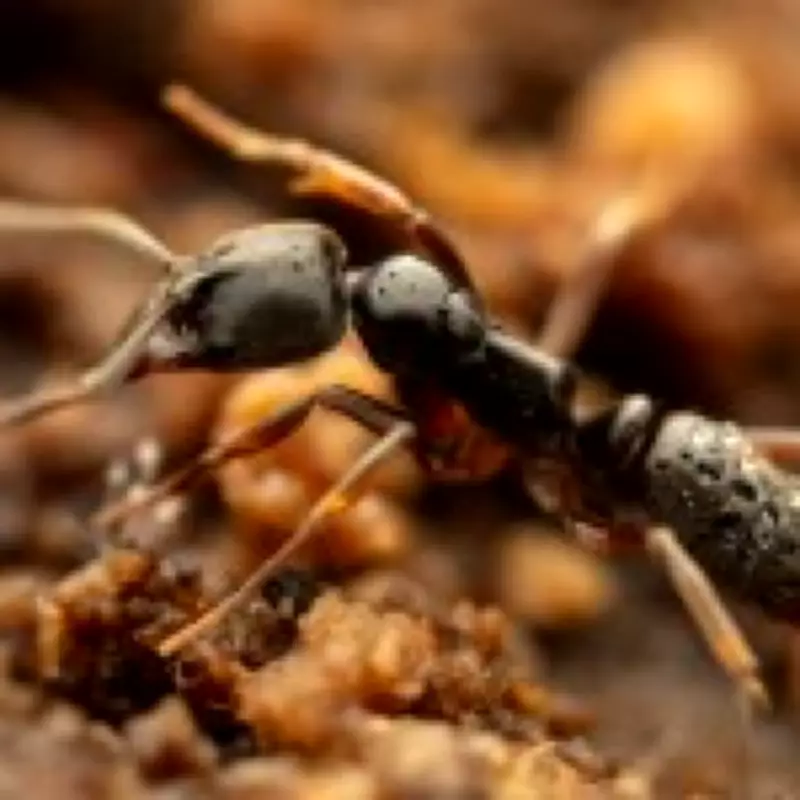
The United States is facing a growing threat from venomous Asian needle ants, which have now spread to at least 20 states, according to officials. Originally from China, these insects were first reported in the US over 90 years ago, likely arriving through international trade. However, recent reports indicate a significant surge in their population and geographic distribution.
States Affected by Asian Needle Ants
The ants have been documented in Massachusetts, Wisconsin, Florida, Georgia, Ohio, New York, Virginia, Alabama, Mississippi, Arkansas, Tennessee, North Carolina, South Carolina, Kentucky, Pennsylvania, Maryland, Connecticut, Rhode Island, Washington state, and Texas. The US Department of Agriculture (USDA) has commented on the outbreak, noting that while the ants are not considered highly aggressive, their stings are often painful and can cause severe allergic reactions.
Health Risks and Ecological Impact
The USDA warns that Asian needle ant stings can lead to anaphylaxis and, in extreme cases, death. Beyond the threat to humans, these ants pose significant ecological risks. They displace native ant species that are critical for seed dispersal, potentially causing long-term negative effects on forest ecosystems. Dan Suiter, an entomologist with the University of Georgia’s extension service, explained to Georgia Public Broadcasting (GPB) that Asian needle ants out-compete other ant species for food, driving them to local extinction.

Identifying Asian Needle Ants
Asian needle ants are small to medium in size, with workers and queens appearing dark brown to black. Their antennae and legs are a lighter orange-brown. Unlike many ants, they do not build anthills but prefer nesting in enclosed spaces such as logs, debris, under stones, and in leaf litter. They have also been found in human structures, including beneath pavers, landscape timbers, and mulch. A 2025 study discovered a thriving colony in a community mulch pile in Watkinsville, Georgia, suggesting that gardeners may inadvertently contribute to their spread.
Prevention and Protection Measures
Scott Baker, a Bedford extension agent with the Virginia Cooperative Extension, advised that anyone clearing rotten wood should be aware of potential nests and wear gloves for protection. Suiter emphasized that cleaning up yard debris can minimize needle ant populations. He noted that these ants do not form long trails like other species; instead, they wander individually, making them less noticeable.
Distinguishing Needle Ant Stings from Fire Ant Stings
Asian needle ant stings produce small red dots surrounded by swelling, whereas fire ant stings appear as small spots with a white pustule. Recognizing the difference is crucial for seeking appropriate medical care.
Anaphylaxis Symptoms and Emergency Response
The Mayo Clinic describes anaphylaxis as a severe, life-threatening allergic reaction that can occur within seconds or minutes of exposure to an allergen. Symptoms include a rapid, weak pulse, skin rash, and nausea or vomiting. Anaphylaxis requires an immediate injection of epinephrine and a follow-up visit to an emergency room. Without treatment, it can be fatal.