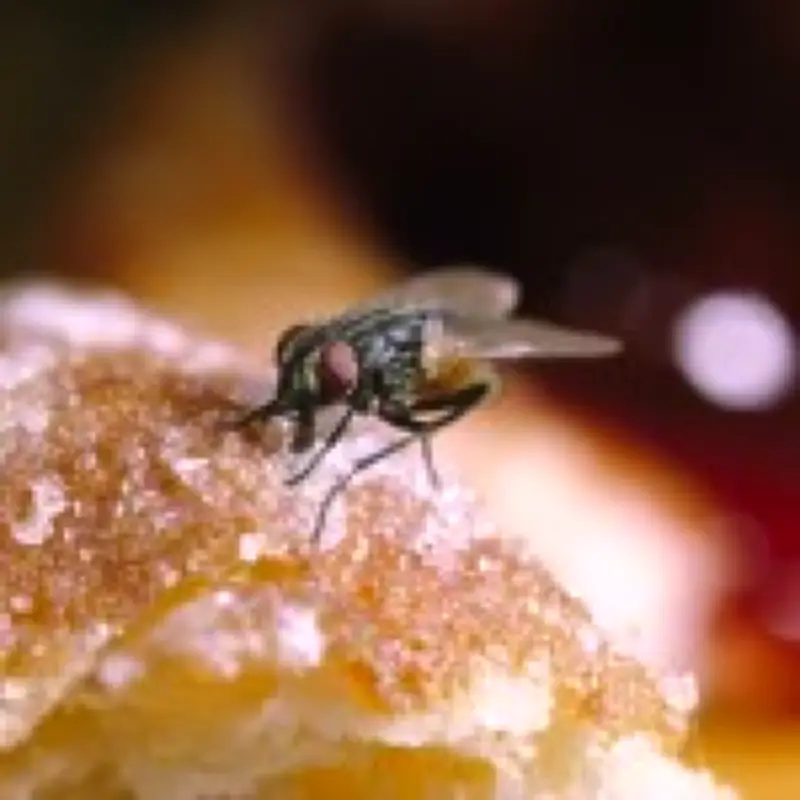
Why flies are invading UK homes
As the UK experiences its fourth heatwave of 2026, a surge in fly populations is driving the insects into homes across the country. Warmer temperatures accelerate fly egg hatching, reducing the time needed by more than half. Additionally, flies are cold-blooded and seek cool, moist environments to lay eggs, making homes ideal breeding grounds. A single female fly can produce up to 500 eggs in her 30-day lifespan, quickly leading to infestations.
Maintain hygiene to deter breeding
While flies do not necessarily indicate a dirty home, good hygiene is crucial to prevent them from breeding. Flies lay eggs on moist substances, so dirty dishes, open bin bags, and exposed food are prime targets. Paul Blackhurst, head of technical academy at Rentokil Pest Control, advises: 'To help prevent infestations, it’s important to dispose of food waste quickly, cover food compost caddies, and keep kitchen doors and windows screened properly or closed.'
‘Binfluencer’ No1 Binman recommends keeping food waste containers out of direct sunlight. 'When it starts cooking and heating up, it attracts more flies because of the smell of it, so try and put in the shade,' he said in a recent Instagram video. 'And if you want to get rid of some of them, you can put salt in your bin — it’ll also stop the maggots.'

Identify and eliminate moisture sources
Flies thrive on moisture, so they often congregate around condensation on windows, leaky taps, or damp areas. Removing these moisture sources makes the environment less attractive. Sophie Thorogood, technical training manager at Pest-Stop, suggests 'sealing gaps around windows, and fixing cracks in brickwork' to block entry points. Fly screens can also be effective.
DIY vinegar trap
A simple trap can be made using vinegar. Fill a shallow dish with an inch of apple cider vinegar, add a tablespoon of sugar and a squirt of fruit-scented washing-up liquid. Leave it uncovered or cover with cling film and poke holes. Flies are attracted by the scent and become trapped.
Electric traps and pesticides
Electric fly zappers are an effective shop-bought solution. Place them four to six feet high, away from windows, for best results. When using pesticides, caution is needed, especially around pets and children. Some flies may be resistant to certain chemicals. Paul Blackhurst advises consulting a pest control specialist for tailored advice.
When to call professionals
While occasional flies are a nuisance, large swarms may indicate a more serious pest problem. In such cases, professional pest control services should be contacted to identify and address the issue.