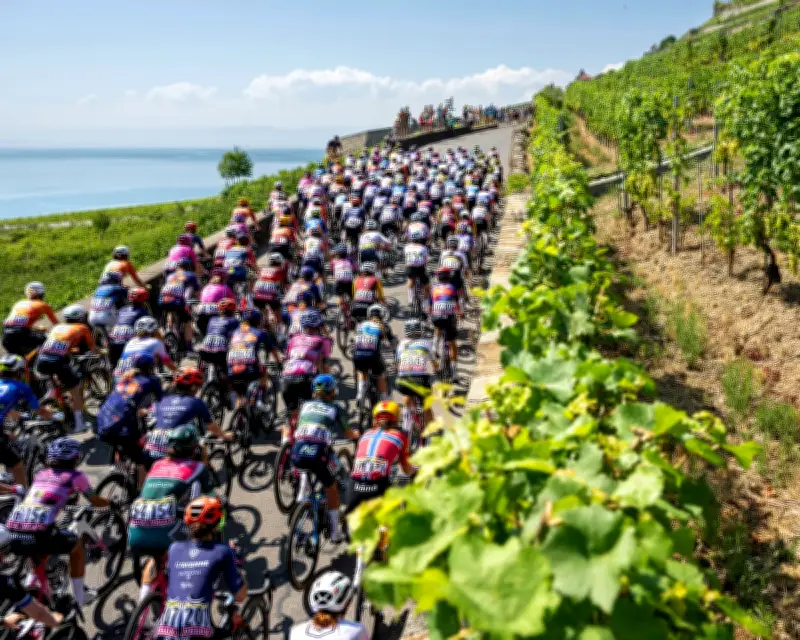
UCI commissaires conducted pre-race inspections of riders in the Tour de France Femmes on Tuesday, targeting hidden chest fairings designed to enhance aerodynamics. The checks, which took place before the stage four time trial to Dijon, were prompted by suspicions that some cyclists were using padded inserts to artificially smooth airflow around their torsos, a practice banned under International Cycling Union (UCI) regulations.
What happened
The inspections were announced in a directive to teams, stating that "particular attention" would be paid to ensure compliance with rules prohibiting "non-essential items or other accessories worn by a rider that could alter their physique." The move follows the disqualification of Dutch rider Jan-Willem van Schip in June for placing a water bottle in his jersey during a French race, which officials deemed an aerodynamic aid.
According to the UCI, changes to body morphology for aerodynamic gain are strictly forbidden. The crackdown was initiated after several teams reported noticing unusual physical changes in riders prior to time trials.

Team reactions
Stijn Steels, director of AG Insurance-Soudal, first observed suspicious padding at the 2024 Paris Olympics. "There was a rider who suddenly had huge breasts," Steels told Belgian newspaper Het Laatste Nieuws. "Last year, many riders filled their bust area completely with ice or other items to create a larger volume, which gives a much better aerodynamic effect. It's only a few watts difference, but a few watts matter a lot in a time trial."
Stephen Delcourt, manager of FDJ-United Suez, which fields race favourite Demi Vollering, denied any wrongdoing: "We never play with the rules like this. If they want to have controls for this, it's because someone is doing it. Every season everybody does more work in wind tunnels and looks at equipment, but we don't play with the rules, we are always transparent."
Support and criticism
Former world champion Marianne Vos, riding for Visma-Lease a Bike, backed the checks. "It's good that they try to enforce the rules," Vos said. "Everybody is looking for the best aerodynamics, so there are some games. But there are rules to live by." She added, "I don't think it's really body searching, so I don't have a problem with it, as long as it's not too invasive."
Rolf Aldag, manager of Kasia Niewiadoma's team, drew parallels with doping controls. "You have to enforce the rules," Aldag said. "Otherwise, don't make them. If there's something to check, then it should be checked. They do that every time they do a doping control. So do we question doping controls?"
Scientific perspective
Bert Blocken, professor of aerodynamics at Heriot-Watt University, explained the potential advantage. "You don't gain tens of seconds on a time trial, but over 20-30km, it can make a decisive difference," Blocken said, estimating a gain of 0.78 seconds per kilometre.
Sexism accusations
The UCI's directive sparked accusations of sexism, as no similar checks were conducted during the men's Tour de France time trial on 21 July. Philip Roodhooft, manager of Fenix-Premier Tech, which won three stages in the men's race, said, "I'm not surprised that people are exploring it. When you see that the men try things with water bottles placed in strategic spots, then I can imagine that women are thinking about it as well. Still, it's not good that it happens because it's still cheating."