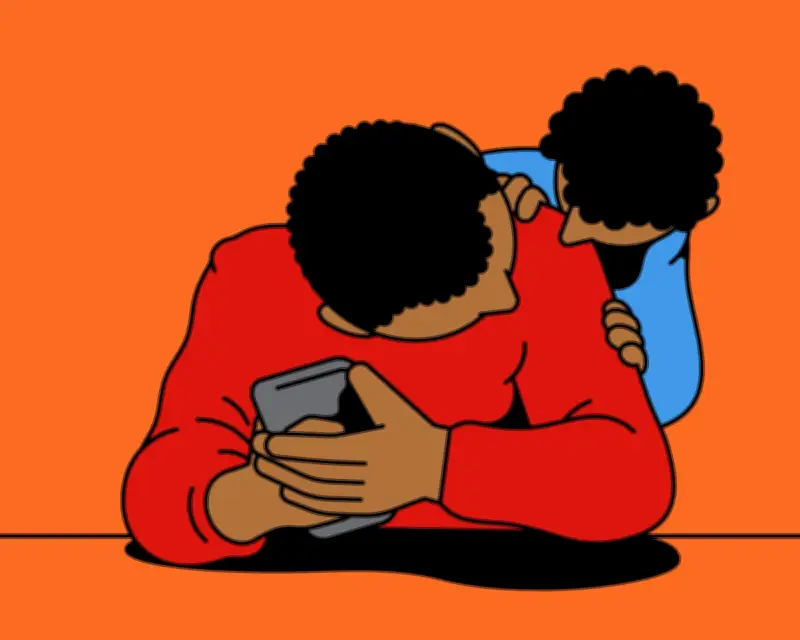
In a candid reflection on modern parenting, Dave Schilling describes a dystopian yet familiar scene: he and his son, both glued to screens, engaging in what he calls 'parallel play' in the digital age. Despite his awareness of the problem, Schilling admits the battle against social media addiction may already be lost. 'When do I not have my iPhone out, desperately scrolling through a suite of apps, hoping they'll offer me some manner of comfort from the security of my living room couch?' he writes.
UK proposes social media ban for under-16s
Against this backdrop, UK Prime Minister Keir Starmer announced a comprehensive ban on social media for children under 16, covering platforms like Instagram, Facebook, TikTok, X, Snapchat, and YouTube (excluding the kids' version). The policy, described as 'Australia-plus' by Starmer, mirrors a similar ban in Australia that has already seen teenagers finding workarounds. Schilling notes, 'When I was 15, if I wanted a six-pack of Budweiser or some of those tiny airplane liquor bottles, I could figure it out.'
Parental hypocrisy and shared addiction
Schilling acknowledges his own role in the problem. 'I suppose I could model better behavior for him. I could put my phone away. I could drag him outside for an aimless walk. I could force him into some elaborate arts-and-crafts project,' he writes. Instead, he finds himself sharing clips on Instagram, hoping for validation. His son, in turn, peers over to see what is so important, leading to moments of shame and transparency. 'Perhaps the only thing that will break the cycle of social media addiction isn't an elaborate law, but the basic shame of transparency,' Schilling suggests.
YouTube reshapes financial understanding
The impact of online video on Schilling's son extends beyond screen time. He observes that YouTube has distorted his son's understanding of capitalism. 'When I was his age, I understood that money comes from work... YouTube has obliterated the concept of financial hierarchy. It says: you can have whatever you want in life as long as you have enough rizz, that you farm the requisite amount of aura.' This shift, Schilling argues, ties success to clout rather than labor.
Dystopian bonding in the digital age
Despite the grim picture, Schilling finds a silver lining in their shared viewing. 'We watch YouTube on TV, which means no easily visible comments section, no trolls. Just a lean-back TV watching experience,' he explains. This ritual, he suggests, is a modern version of his own childhood, when his parents watched Star Trek: The Next Generation with him. 'Watching YouTube with my son might be the 21st-century version of that,' he adds, even if the content is far from classic—like watching a man get hit in the groin with a Slim Jim-branded baseball bat to win $15,000.
Schilling concludes with a moment of connection: whenever his son asks what he is doing on his phone, he is jolted back to reality, feeling embarrassment and putting the device away. 'The lure of the infinite void of the internet will come back soon enough, but for at least a moment, my son and I can share a bit of joy,' he writes.