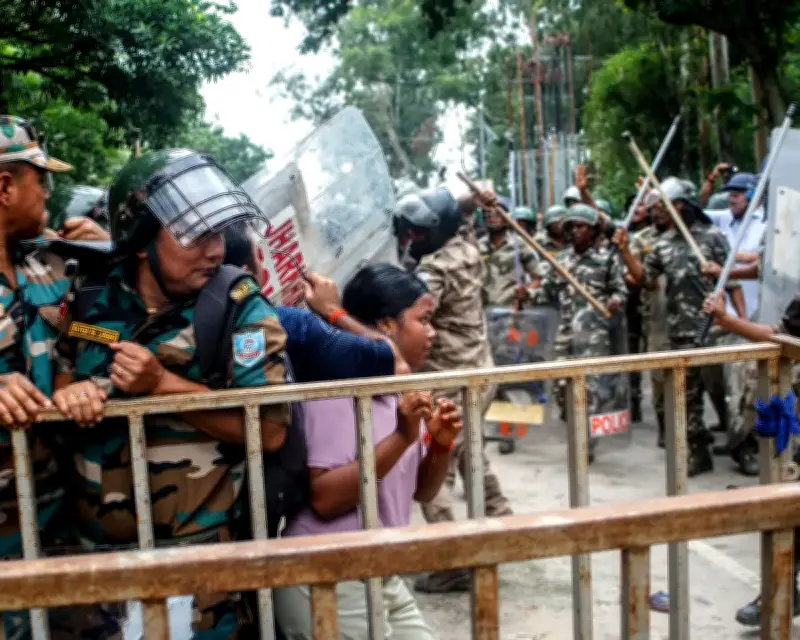
Police in Jharkhand, one of India's poorest states, fired teargas and water cannon and swung batons on Monday as thousands of young job-seekers clashed with them during a march on the state legislature. The protesters, waving flags and chanting slogans, attempted to climb over barricades and surge towards the assembly in Ranchi, the state capital, escalating a weeks-long protest over alleged irregularities in government recruitment exams.
Protest escalation and police response
The confrontation began when police tried to stop the demonstrators from advancing. According to local media, both protesters and police officers were injured in the clashes, though no official figures were released. Some protesters responded to the water cannon by dancing and cheering as jets of water drenched the crowd. The unrest is part of a broader wave of youth-led protests across India against corruption in public examinations and a shortage of good jobs.
Protester Piyush Kumar Soni told the Press Trust of India: “The baton charge was barbaric. We were protesting peacefully, but the government used batons against us.” The demonstrators are demanding an investigation by the Central Bureau of Investigation (CBI), India's premier investigative agency, saying only an independent inquiry can uncover the full extent of alleged wrongdoing in recruitment examinations.
Background: Cockroach movement and national pressure
The Jharkhand protest comes just weeks after the so-called Cockroach movement, a youth-led campaign that began as an online joke and grew into a nationwide outcry over leaks in a national medical entrance examination. That movement put the BJP-led national government under heavy pressure and led to the resignation of the education minister. The current protests in Jharkhand reflect similar frustrations, with accusations of test paper leaks and cheating in public service exams.
Jharkhand has long struggled with high unemployment, making government jobs highly sought after. These posts offer job security, health benefits, and pensions, and competition is intense. In one recent Jharkhand recruitment exercise, nearly 640,000 applications were received for just 2,025 posts. In another, more than 322,000 candidates competed for only 510 vacancies. Many young people spend years preparing for these examinations, and alleged scandals have deprived them of a fair chance.
Government response and political fallout
The state government, led by a regional party allied with the opposition Congress, has sought to defuse the crisis through talks. Officials say most of the protesters' demands have been accepted and that they are open to more negotiations. However, the row has already toppled senior figures: the former Jharkhand public service commission chair was arrested over alleged exam irregularities, and three commission members have resigned.
Congress leader Rahul Gandhi condemned the use of force, saying: “Students have a right to peaceful protest, and only dialogue can yield solutions.” The protests underscore mounting frustration among young Indians over corruption in public examinations and recruitment systems, a shortage of good jobs, and fears that opportunities are being lost to cheating and political influence.
Broader youth unemployment crisis
Nearly two-thirds of Indians are under 35, and the job market has failed to keep pace with the number of educated young people entering it. Official data shows unemployment fell to 9.9% last year, but a 2026 study by Azim Premji University found that nearly 40% of graduates aged 15 to 25 were unemployed. The protests in Jharkhand are a stark reminder of the deep-seated challenges facing India's youth, who are increasingly taking to the streets to demand accountability and opportunity.