Pass Card Game Sweeps Honiara as Economic Lifeline Amid Unemployment Crisis
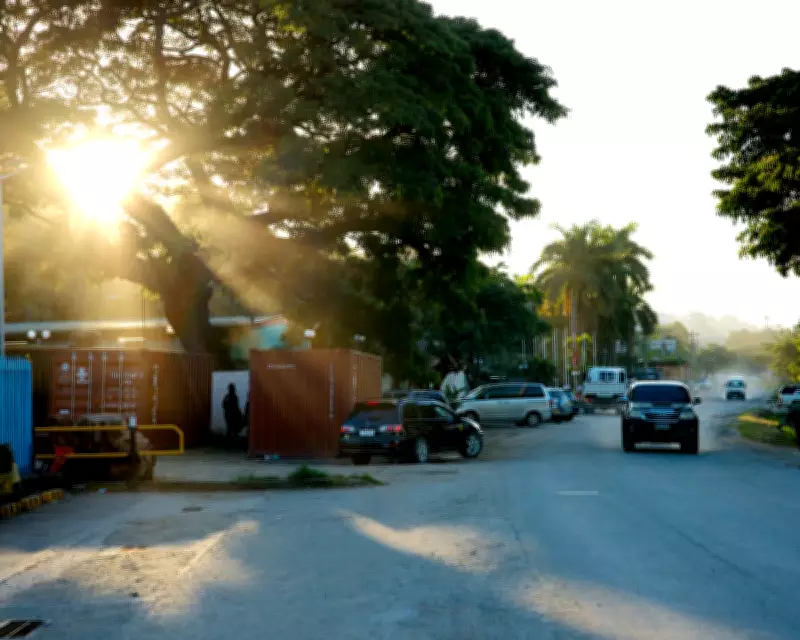
In the bustling capital of Solomon Islands, a fast-paced, illegal street card game called Pass has rapidly gained popularity, transforming into an economic lifeline for many residents facing financial hardship. Business owners, teachers, and young professionals alike are flocking to hidden gambling tables set up in backstreets and smoky shelters across Honiara, drawn by the chance of substantial payouts despite the risk of significant losses.
The Mechanics of Pass: A High-Stakes Game
The game operates with simple yet high-stakes rules. Dealers attract players by shouting bet prices, such as "$20 down!". Each participant receives seven cards, with the dealer placing a number six card on the table. The first player must lay down a five or seven, and the sequence continues with each subsequent player required to play the next sequential card. If unable to do so, they yell "pass!". The first person to discard all their cards wins the round.
The winner collects the entire pot, minus one bet retained as the dealer's fee. With up to thirty rounds played per hour, substantial sums of money can be won or lost within minutes, creating an intense, high-energy atmosphere at the tables.

Personal Stories: Gambling for Survival
Irene, a 43-year-old teacher and single mother of three, exemplifies those turning to Pass for financial support. After her school day ends, she travels to a damp, smoky shelter in a western suburb of Honiara to play. Despite discouraging her children from gambling, Irene acknowledges her dependence on the game, stating her livelihood relies on it. In one week, she earned SBD$500 (approximately $62), nearly matching her $600 monthly teaching salary.
"I don't have money left but I've asked the kids to run me some," Irene confessed after losing several consecutive hands. "Gambling is a bad thing. Sometimes, other people who don't have money steal from mothers. I don't want my kids to play."
Economic Drivers: Unemployment and Informal Income
Phillip Subu, a prominent youth advocate, identifies unemployment as the primary driver behind Pass's proliferation. "It's getting out of hand because a lot of people here in Honiara don't have employment. The biggest cause is unemployment," Subu explains. "It is part of people's survival. When it connects to survival, it is quite hard to remove it."
Official unemployment statistics in Solomon Islands are inconsistent, but youth unemployment in Honiara is estimated between 12% and 15%. As young people migrate to the capital seeking jobs, many find none, pushing them toward informal employment, crime, and gambling.
Dealers and Operators: Lucrative Opportunities
For dealers like Ben, a 19-year-old who began working at age fifteen to cover school fees, Pass provides a steady income of SBD$500 weekly. Operators like Gordon, 29, report even more substantial earnings. Gordon supplies cigarettes and betel nut to loyal gamblers free of charge and manages three tables that collectively turnover SBD$30,000 each week, with individual tables generating up to SBD$12,000 weekly.
Business owners are also capitalizing on the trend. John and Piwen, a married couple who are shopkeepers, opened a small table in eastern Honiara in February 2026. John notes that gamblers often play to pay for "cash power," the local electricity bill. Their dealers are all local women who, according to John, "collect more money than public servants" to cover food and bills.
Social Aspects and Police Response
Beyond financial motives, Pass serves as a social outlet for many. Madlyn, 29, plays every night at the same table, enjoying the camaraderie. "I just won!" she exclaimed during a recent game, receiving cigarettes and two meals wrapped in aluminium foil as rewards.
Despite the giddy energy among players, who joke about running from police, authorities are actively attempting to curb the game. The Royal Solomon Islands Police Force (RSIPF) established Operation Stopem Gambling to address social and family problems linked to gambling, such as domestic violence. The operation has conducted multiple raids, including one in Rove, a western suburb, where thirty-four gamblers were arrested.

Jimson Robo, an assistant commissioner for national capital and crime prevention at RSIPF, stated police are "not slowing down" their efforts. "The issue is illegal, and police are warning the public to refrain from playing Pass," Robo emphasized. "Police are attending to reported cases and making arrests, dismantling tents and tables used for the game."
However, no players have been sentenced, and those caught risk only a conviction and a $100 fine. Consequently, Pass continues to proliferate, with dozens of games dotted across the city and new sites appearing regularly.
A Complex Reality: Survival Versus Regulation
For many Solomon Islanders, Pass represents more than just gambling; it is a vital source of income and community. Irene, pointing to her fellow players, calls them her "wantoks" (friends). As economic challenges persist and formal employment opportunities remain scarce, this illegal card game has embedded itself into the fabric of Honiara's daily life, presenting authorities with a complex dilemma: how to regulate an activity that has become essential for survival.