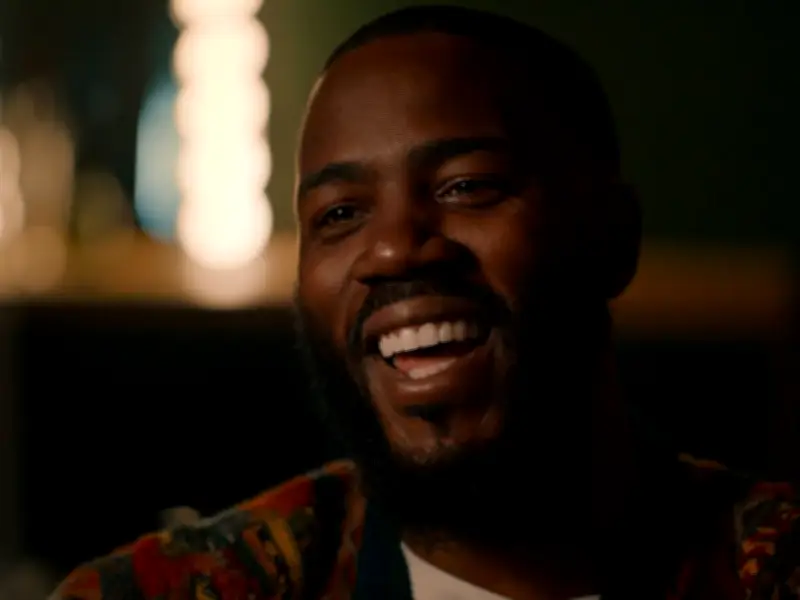
Comedian Mo Gilligan has revealed that eating fried chicken for three meals a day for an entire month for his debut Netflix documentary film, Big Chicken: A Fast Food Conspiracy, left him feeling physically and mentally at rock bottom. The film, produced by Louis Theroux's Mindhouse, explores the dangers of ultra-processed foods, the global obsession with fried chicken, and the hidden costs behind our cravings.
Gilligan, known for his stand-up comedy and appearances on Celebrity Gogglebox, said the experience was "one of the most challenging periods of my life" and something he would never do again. He admitted that the psychological toll was unexpected, as he initially believed the challenge would be more physical.
An Eye-Opening Investigation
In the documentary, Gilligan investigates the historical origins of fried chicken, from south London to the United States, and confronts negative stereotypes associated with the dish. As a black British man, he aims to reframe perceptions by examining how fried chicken has been culturally appropriated and advertised in today's food market.

Gilligan also unveils the social, economic, and industrial forces driving mass consumption, from fast-food chains to large-scale farming, and the impact on health, the planet, and eating habits. Along the way, he uncovers shocking revelations that force him to confront the unsettling realities behind his favourite takeaway.
Physical and Mental Struggles
Throughout the documentary, Gilligan seeks insights from experts and medical professionals who warn him about the potential effects of his food experiment on his physical and mental wellbeing. Despite these warnings, he initially found it difficult to believe that his diet was the sole cause of his low mood.
"My friends would say I'm a very happy-go-lucky guy. When you're on screen, and you've got the cameras there, you get so used to - because I come from a comedy background - switching on the humour and charm," explained Gilligan, who also hosts his podcast Mo Gilligan: Beginning, Middle and End. "But during the documentary, when I had the camera and was by myself, I was able to give my honest opinion of where I was, and how I was feeling in that moment."
He described being left alone with his own thoughts after filming, which was "extremely hard", especially while eating the food. "I also didn't think it was the food making me feel like that. I was in denial because I've not had it long enough. I'd only had it for about 10 days, maybe, and by then it would have been the three-week mark. Until I started meeting professors and experts, and they all told me it was the food that was making me feel like that."
Food Deserts in America
While investigating in America, Gilligan was horrified by the impact of food deserts - areas with limited access to affordable, fresh, and nutritious food, often found in low-income urban and rural communities lacking large supermarkets. Instead, residents rely on convenience stores and fast-food outlets offering heavily processed options.
"It was really eye-opening because knowing that food deserts was a phrase that started here in the UK, sometimes you can be very naive and think this is only a thing that happens over here," said Gilligan. "I'm quite a visual learner, so I could just imagine a small town in America that is in the desert. I don't know why. But when I got to Chicago, and I got to really see and experience what a food desert was, I was surprised."
He described driving around different blocks for about 15-20 minutes without seeing a single corner shop with fruit and vegetables outside. "The minimum would be yams, bananas, eggs, but there was none of that. A lot of people don't have cars there either, and can't afford Uber, so they've got to get on the bus. They say in America groceries are stolen. I didn't think that a place that has so much money and wealth would have people who don't have access to fresh food."

Gilligan, who also serves as a judge on The Masked Singer UK, acknowledged his privilege in being able to choose what he eats. "Processed food is a guilty pleasure, whereas some people don't have that choice; it's all they can afford. It's cheaper. It's more accessible. I understand the position I'm in, but also know that outside of the realm that I'm in, people live a different life, a different experience."
The documentary also features Gilligan's close friend David, who appears throughout. Despite the challenges, Gilligan understood the greater good of the experiment, noting that doctors assured him the effects were reversible. "I could go to the gym. But it was still very, very challenging."
Big Chicken: A Fast Food Conspiracy premieres on Netflix on Wednesday, August 5.