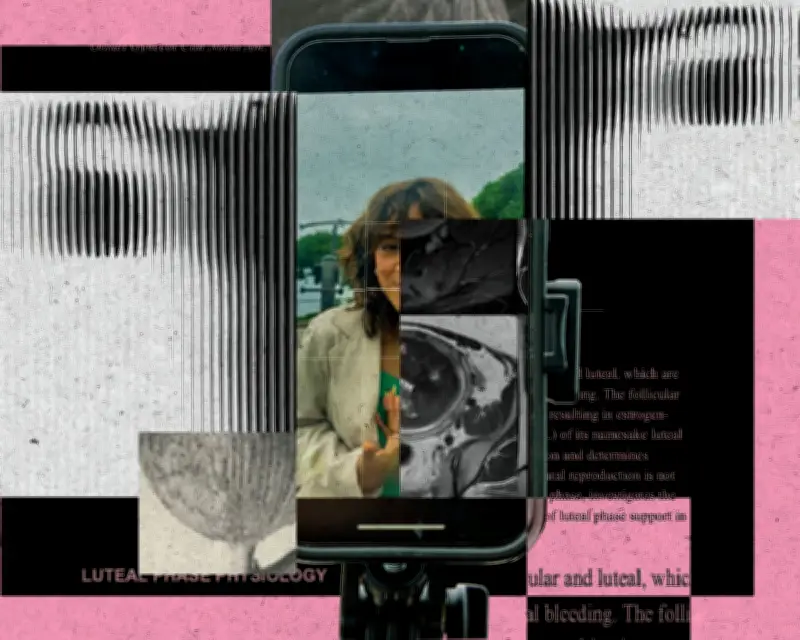
Google searches for the term 'luteal phase' have surged 300% in the past five years, driven by a wave of TikTok videos and social media posts where women share memes and personal stories about the 14-day period between ovulation and menstruation. The trend reflects a growing desire among women to understand their bodies better, but it has also been seized upon by right-wing influencers promoting pronatalist ideologies.
What is the luteal phase?
The luteal phase is the time after ovulation when progesterone rises and estrogen falls, leading to physical and emotional symptoms such as irritability, bloating, and food cravings. 'Explaining what happens in the luteal phase provides a way for people to understand why they feel the way they do,' said Dr Karen Tang, a Pennsylvania gynaecologist. 'It’s about wanting to take control and learn more about their bodies.'
However, the term has been co-opted by figures in the 'Make America Healthy Again' (Maha) movement, such as health coach Emily Rae Detrick and podcaster Alex Clark. Detrick argues that the luteal phase is a time when a woman's body expects to be pregnant, and if not, she becomes irritable. 'During the luteal phase, the reason why your stress threshold is so much lower is because this is the time your body would be incubating a potential baby,' Detrick said on Clark's podcast.

Empowerment or co-optation?
While many women find relief in having a name for their symptoms, experts warn that the luteal phase is being used to push conservative agendas. 'There’s a lot of verbiage and absolutes, as if it were astrology,' Tang said. 'None of this is so absolutely universal that you have to live your life based on these principles.'
Maha influencers often promote getting off hormonal birth control, which eliminates the luteal phase by preventing ovulation. 'If you’re not ovulating, it’s your body telling you: Hey, we’re not feeling good. Like, I don’t feel safe to make a baby,' said content creator Kylah Smook on Clark's podcast. This rhetoric aligns with pronatalist goals of increasing birth rates and returning to traditional family structures.
Impact on women's health
Despite the political exploitation, the increased awareness has helped some women identify serious conditions like premenstrual dysphoric disorder (PMDD), which affects about 6% of menstruating people. A study found that 72% of individuals with PMDD reported lifetime active suicidal ideation. 'It’s wonderful to see those patients go from being absolutely miserable almost a quarter of their life to being themselves again,' Tang said.
Haley Martinez, 29, a former bodybuilder from New Jersey, said learning about the luteal phase helped her understand her emotions after quitting the sport. 'There was a relief having an explanation, but there’s also an anger at not being taught this at all,' she said.
Humor and commercialization
TikTok users often joke about their luteal phase struggles, with videos showing women snapping at partners or feeling ugly. Men also participate, sometimes portraying themselves as victims of women's mood swings. 'Women are the butt of the joke,' said Mariah Wellman, an assistant professor at Michigan State who studies influencers and wellness culture. 'It’s another way women can be torn down by men for something that is natural.'
The wellness industry has also capitalized on the trend, marketing products like 'PMS bars' and aromatherapy oils. 'The wellness industry has a big incentive to commercialize the luteal phase as something you can purchase your way out of,' Wellman said.
Conclusion
While the luteal phase trend empowers some women, it also risks being used to promote pronatalism, sell products, or mock women. Martinez advises caution: 'Be careful not to dismiss yourself, because our feelings are always valid to some degree.'