Man credits dog for saving his life in 2006 war
During Israel’s 2006 war against Hezbollah, Houssein Hamze woke up to barking from his first rescue dog. Moments later, a bomb dropped near his home, and shrapnel landed exactly where he had been sleeping. “I swear to God, he really saved me from death. Animals always possess a sixth sense we don’t have,” Hamze said.
Twenty years and two wars later, the 57-year-old still repays his debt. He founded the Mashala shelter in Zefta, south Lebanon, to care for animals. In normal times he takes in strays; in wartime he is the only lifeline for animals in the area.
Shelter hosts eclectic rescues amid war
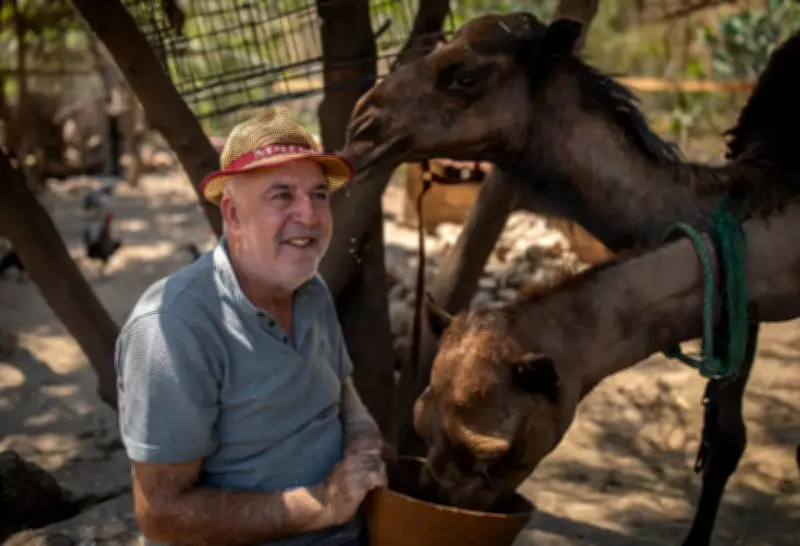
On a recent morning, Hamze strolled through his small farm, checking fig trees as dogs followed. He opened an enclosure with two camels rescued from the Bekaa valley. “This is Jamoola and her son, Jamool. She is so sweet. When I don’t visit for more than two days, she starts to cry,” Hamze said, as the camel nuzzled him.

The donation-supported farm hosts about 200 dogs, some missing ears or tails, along with horses, chickens, geese, and ravens. Hamze was one of about 20 people who stayed in his village during the 2026 war that began on 2 March, forcing a quarter of Lebanon’s population to flee.
Daily rounds under drone surveillance
“Many people fled and left their animals behind – some left them tied up. We would go out, untie them and leave them water,” Hamze said. One rescued dog, Lulu, lost part of her tail in an airstrike. About 50 dogs came to the shelter on their own during the war.
Hamze made daily rounds in his truck, distributing dry food to abandoned animals. He often carried water long distances to remote dogs. Airstrikes hit buildings near him several times. Once he stumbled on a corpse from a drone strike. “By the end, all the dogs knew me. I would beep and they would come running,” he said.
He stuck a “Mashala” sign on his car roof so an Israeli drone could identify him, but drones still struck people regularly. “I wasn’t afraid for myself. I was only afraid for the animals. I kept thinking: if I die, who will look after them?” Hamze said.
Ceasefire brings new challenges
Since a ceasefire in June ended most fighting, life has returned to almost normal. Hamze now repairs irrigation tubing and gives tick treatments. His war efforts made him a minor celebrity; videos of him went viral, prompting donations, but those are now drying up.
Displaced people returning home have begun calling Hamze for animal rescues. He receives about 500 messages and calls a day. “The assistance is really not enough. But thank God, we made it through the most dangerous period. I felt completely drained,” he said.
Hamze hopes one day the shelter won’t be needed. “The conclusion is this: if you don’t have compassion for animals, you won’t have compassion for human beings. Believe me,” he said, kissing Jamoola’s head.