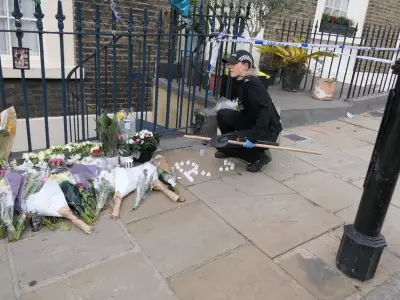
In late 2024, a 14-year-old boy stabbed an 80-year-old man using a walker in Hässelby, Stockholm, streaming the attack online. The video fed a global network known as 764, which extorts young people into acts of violence and self-harm—a phenomenon researcher Marc-André Argentino calls the “gamification of harm.”
The 764 Network and Its Reach
Founded by Texas teenager Bradley Cadenhead, now serving an 80-year sentence for child sexual abuse material, 764 targets youth on platforms like Roblox and Minecraft, as well as those struggling with mental health or sexual identity. Perpetrators and victims span dozens of countries. Bjørn Ihler, founder of security firm Revontulet, notes, “These are young people recruiting other young people. It is a youth phenomenon.”
Australian Federal Police Commissioner Krissy Barrett stated, “A worrying trend is how victims are becoming perpetrators to try to escape their online bullies who have befriended and groomed them, and then forced them to hurt themselves.”

Key Cases and Court Proceedings
In April 2025, a Swedish court ruled the 14-year-old stabbed the man but was too young for criminal responsibility. The investigation revealed an online username, “Chai.” In early 2025, an Australian girl contacted Swedish police about Chai. Linus Svensson, an investigative reporter at SVT, now knows of at least nine local court cases linked to “the Com,” the broader network including 764. He found dozens of Swedish members in chat groups. “It’s bigger than these few cases,” Svensson says. “I think it took a while for Swedish authorities and also the general public to actually understand this.”
Svensson identified a teenager in northern Sweden convicted in 2024 of trying to coerce a 13-year-old boy to take his own life. This is Chai, according to prosecutor Jenny Östling. The teen, whose name is sealed, is on trial for over 70 alleged offences, including encouraging self-harm and suicide, and creating child sexual abuse material. Most offences were against the Australian girl. He also allegedly induced a young man in Germany to self-harm severely, nearly killing him. His lawyer, Emily Töyrä, denies all allegations. The trial paused in late June for a forensic psychiatric evaluation, with “compelling evidence that [he] has committed several of the acts,” per court records. It resumes in August.
How the Network Operates
Östling explains that group goals include “to destroy the world,” while individual members seek status. Creating new material—often coercing victims into cutting or sexual acts—is a prerequisite for entry into closed chatrooms like “764 Inferno.” Östling alleges Chai was high-status in 764 and invited to that chatroom. Töyrä disputes this, saying her client only edited images and videos, and that “The Com environment is highly fluid. ‘764 Inferno’ was simply one group chat among many.”
A US Department of Justice indictment in April 2025 alleges two American men, Leonidas Varagiannis and Prasan Nepal, used “764 Inferno” to conspire in creating and distributing child exploitation images. Researchers have found at least 295 arrests linked to the Com network in 33 countries, including Australia.
Global Impact and Sentences
In New Zealand, Ronndog Keefe pleaded guilty in 2025 to 13 charges, including distributing “horrific and graphic” child exploitation material. He was sentenced to over five years in December. Keefe claimed he was also a victim of 764, which threatened to dox him, but the court found this “simply was not credible.”
In the UK, Cameron Finnigan, then 19, received a nine-year extended sentence in 2024 for possessing a terrorist “kill guide” and indecent images, and encouraging someone online to take their own life. The judge noted, “The intended victims are … vulnerable individuals: in particular, LGBTQI+ youth, racial minorities and those suffering from mental illnesses or disorders. They are targeted precisely because they are so obviously vulnerable.” In June 2025, another British teen, Elijah Palmer, was sentenced for encouraging serious self-harm, linked to 764, targeting his victim on Roblox and Discord.

Understanding the Ideology
The FBI uses “nihilistic violent extremism” to describe these activities, though some debate the term. Argentino notes ideology is “fluid, performative, and primarily symbolic,” with occult or neo-Nazi imagery serving as group markers rather than coherent political programs. Ihler prefers “misanthropic,” adding, “These are basically Discord servers. There’s channels upon channels upon channels.” The pursuit of sextortion material is about “power and control of the victim,” Ihler says, and sharing such content increases “clout,” the social currency. “Grappling with that is incredibly important from a victim-protection perspective.”
Raising Awareness
Independent researcher Becca Spinks, a mother in Texas, has tracked these groups for years. She spoke to the mother of Chai’s Australian alleged victim, who sought help for her child. “She’s very brave,” Spinks says of the alleged victim. “And her mum also is really just a powerhouse.” Spinks stresses raising awareness for parents and law enforcement: “A lot of times kids come forward and maybe [the police] don’t recognise the signs that it’s the 764 network, and so they don’t pursue it as aggressively as they should.” Warning signs include self-harm, withdrawal, and secretive online behavior. “One of the biggest, most dangerous misunderstandings is that this won’t happen to us, or this only happens to a certain type of kid, when in reality, it could honestly happen to anyone.”