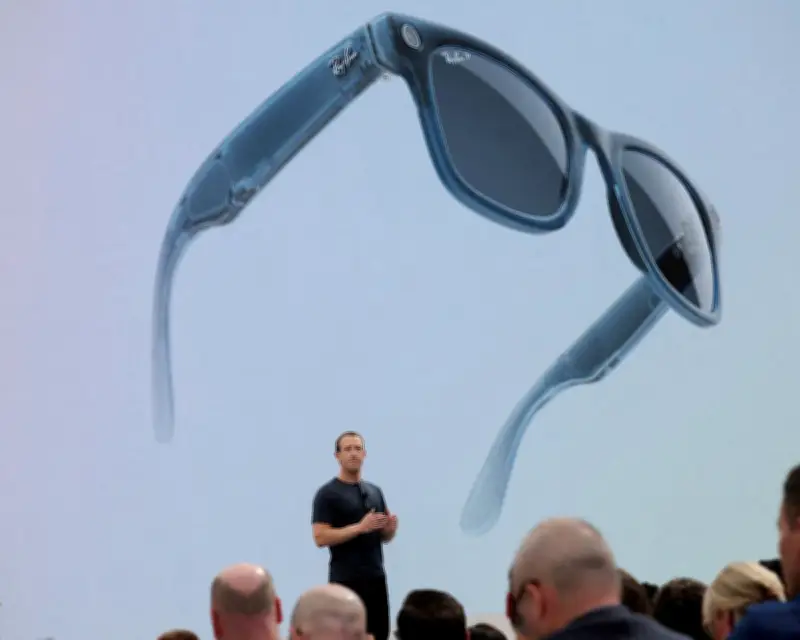
Meta's smartglasses, marketed as a must-have gadget, have triggered a fierce backlash over privacy and surveillance fears, leading content creators to lose followers and face a torrent of negative comments. The glasses, which can record video while worn, have been labeled “pervert glasses” due to concerns about filming people, especially women, without consent. Despite selling 7 million pairs in 2025 alone, the backlash has prompted some influencers to apologize for promoting them, and venues like Wetherspoons have banned them.
Content creators face backlash
Oliver Hooson, a home design and cycling enthusiast with 224,000 Instagram followers, filmed himself making a flat white during the Tour de France finale using the glasses. The footage, intended as a simple point-of-view shot, drew comments like “PERV” and “Out here pushing creep glasses.” Hooson admitted he lost “a good 50 to 100” followers after posting the video. He supports the backlash, saying, “It definitely caught me off guard. It was a real ignorant move,” and added that he hates that the glasses are used against “women mainly being filmed against their knowledge.”
Celebrity endorsements and apologies
The controversy peaked when Kylie Jenner collaborated with Meta to launch a pair, prompting a flurry of influencers to showcase the glasses. Rida Tharana, a content creator with 1.6 million Instagram followers, “took accountability” for participating in a Meta campaign, criticizing men who misuse the glasses to “record and harass women.” Self-described pickup artists have used the glasses to film themselves approaching women in public without their knowledge, sometimes making misogynistic comments.
Privacy violations and incidents
Multiple incidents have been reported. A woman told the BBC that a man recorded her and demanded money to remove the videos. Another woman described being recorded during sexual encounters without consent. In Scotland, police investigated a far-right TikToker who allegedly filmed himself making sexualized comments to young women and telling a Sikh shopkeeper about a plan to “breed out the white race” without their knowledge. Restaurants, theatres, and pubs, including Wetherspoons, have banned the glasses over privacy fears.
Influencers' experiences and regrets
Deena Lang, a parenting influencer, first used the glasses for a family trip to Europe, attracted by the translation feature. However, after wearing them to a cooking class, she was “horrified because I just kept catching people giving me dirty looks or side-eye.” She posted the footage to her 110,000 followers with faces blurred as a “cautionary tale” and received a flood of criticism. She said, “I still think they can be used for good,” noting that blind people have benefited, “but the negatives just far outweigh the positives.” She added, “I don’t believe that we are in an age where technology like this can exist without people with bad intentions making use of it.” The glasses now sit “in a drawer.”
Meta's response
A Meta spokesperson said: “We designed our AI glasses with privacy and safety features built in from the start – informed by engagement with safety experts, including women’s safety organisations. Our glasses have always had an LED light that activates whenever someone captures a photo or video for their gallery. They also feature tamper detection technology, and we are updating the glasses to disable the camera if they detect the LED was physically tampered with or destroyed. No other kind of camera has done this and we’re proud to lead the industry forward.”