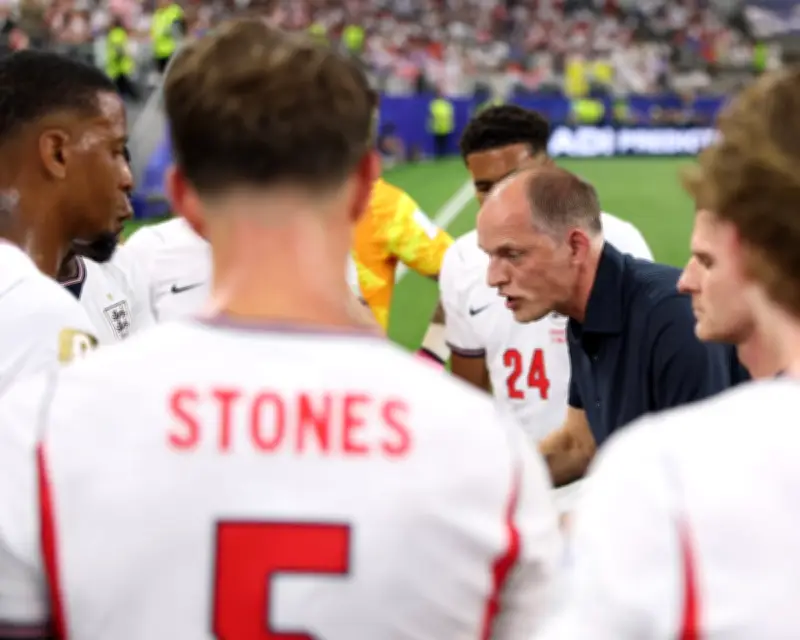
Emma Hayes, a prominent football coach, has shared her insights on the hydration breaks introduced at the 2026 World Cup, acknowledging their value for coaches despite her personal dislike for additional stoppages. Speaking on ITV, she noted that these breaks have often shifted momentum, suggesting coach involvement helps teams adjust tactics.
Hydration breaks: A necessary tool for coaches
Hayes compared the breaks to timeouts in NFL or NBA, where coaches influence momentum. In soccer, players typically solve problems on their own, but hydration breaks allow tactical tweaks. She stated, “I’m not a fan of the hydration breaks, but they’re here for now and it is fascinating from a coaching perspective because the momentum has swung straight after several hydration breaks.”
She emphasized the health and safety rationale, explaining that FIFA implemented breaks at all venues to ensure fairness. “If you only have drinks breaks in hot cities, you could be accused of giving certain teams an advantage,” she said. Ronald Koeman, Netherlands coach, echoed this, saying, “You can use it in different ways to your advantage and this is what we will be doing.”
Ball-in-play time and rule changes
Hayes supports Arsène Wenger’s push for more active play, wanting goal-kicks and throw-ins taken quicker to achieve at least 60 minutes of ball-in-play time. She noted that average ball-in-play time dropped about 40 seconds compared to 2022, which was 57 minutes and 22 seconds, but when excluding hydration breaks, the percentage rose slightly. She prefers these breaks over other stoppages, though she dislikes additional pauses.
On ITV, she used breaks for tactical analysis, simplifying complex ideas for viewers with varying football knowledge. “Viewers at home have a varying degree of knowledge; some are very knowledgeable, while others may only watch football when the World Cup comes around,” she explained.
VAR and other improvements
Hayes praised faster VAR decisions at this tournament, noting less disruption than in previous competitions. Changes allowing corrections for mistaken identity and corner decisions are welcome, as are rules limiting tactical information during goalkeeper treatment, though she acknowledged that information can still be passed from a distance.
Tournament expansion and quality
The expansion to 48 teams from 32 has not diluted quality, according to Hayes. “From Cape Verde to DR Congo, it has been great that so many nations started strongly. This is what opportunity provides: competition,” she said. She highlighted Cape Verde’s brave performance in their draw against Spain, commending their attacking intent and well-coached structure.
Hayes also lauded the stadiums, fan turnout, and the unifying atmosphere, particularly in New York, where fans wear shirts for every team. She noted that the United States is more equipped to grow the game than in 1994, with matches already showing on TVs in bars and restaurants.