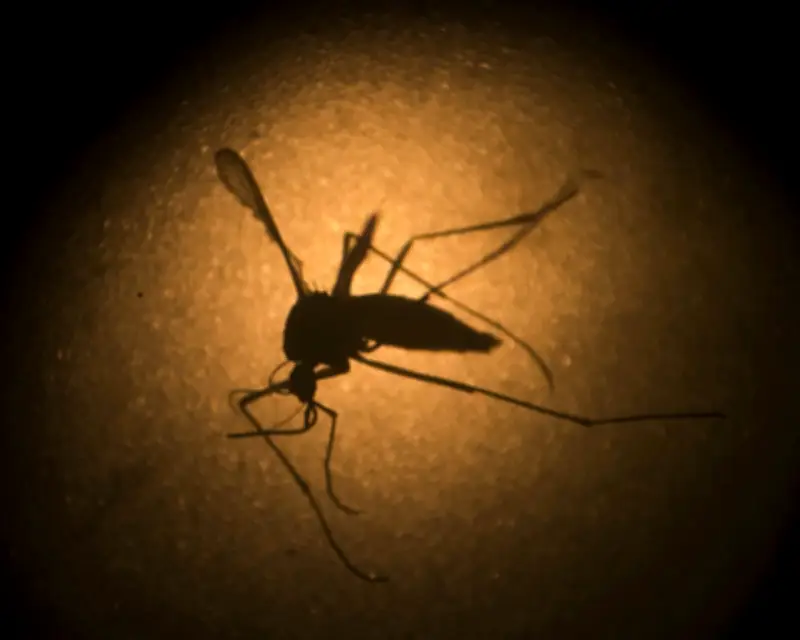
Google's parent company Alphabet has requested US federal permission to release up to 32 million sterilised male mosquitoes in California and Florida as part of its Debug initiative. The goal is to reduce populations of disease-carrying female Aedes aegypti mosquitoes by releasing males that do not bite but produce non-viable eggs when mating.
How the technology works
The strategy relies on Wolbachia, a naturally occurring bacterium that causes reproductive incompatibility. When Wolbachia-carrying males mate with wild females, the embryos fail to develop, leading to population decline. Male mosquitoes do not bite or transmit disease, making them a targeted biological control tool.
Professor Nigel Beebe of the University of Queensland, who led a similar trial in Australia, explained: "The released males are beautifully evolved to search and find the last females – their large bushy antennae are super-radars for this job."

Australian trial results
Between 2015 and 2018, Beebe's team released approximately three million Wolbachia-carrying male mosquitoes in three towns in far north Queensland's Cassowary Coast region. The results, published in 2021, showed mosquito populations began declining within four weeks. In one treatment town, suppression reached roughly 95% after 12 months, with only a handful of Aedes aegypti detected.
The project, known as Debug Innisfail, involved two years of community engagement and regulatory approvals before any releases. Control towns where no mosquitoes were released showed no such declines.
Addressing US public concerns
The US plan has raised questions about safety, scalability and ecological impact. Beebe's trial provides evidence-based answers. First, ecological risks are minimal because Aedes aegypti is an invasive species that lives exclusively around humans. Removing it from urban areas has little effect on ecosystems.
Second, the approach works at scale. Continuous releases of competitive males can substantially reduce populations across entire towns. Third, benefits can persist after releases end, as suppression effects carry over into subsequent seasons, though success depends on local ecology and community participation.
Industrial-scale engineering
Verily, Alphabet's life sciences division, developed bespoke technologies including machine-learning systems to separate male and female mosquitoes, ensuring only males were released. This industrial-scale engineering accelerated the transition from lab concept to field trial.
Beebe noted: "Combining scientific expertise with industrial-scale engineering accelerated the journey from laboratory concept to real-world field trial in an incredibly short time."
Future implications
As Aedes aegypti expands its range and insecticides become less effective, using mosquitoes against themselves will become increasingly important. The Queensland trials laid groundwork for programs now under way in the US, demonstrating that science, technology and community collaboration can solve pressing public health challenges.