German authorities have defended their decision to permit a high-risk rescue attempt for a stranded humpback whale, despite expert warnings that the operation was inadvisable due to the animal's injuries and slim chances of survival.
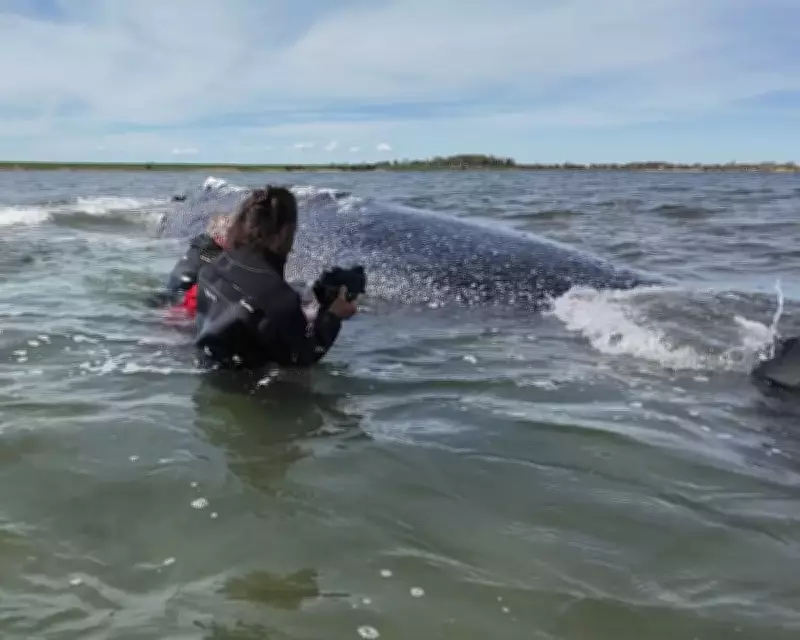
The whale, affectionately named Timmy, captured national attention after it was discovered stranded on a sandbank at Timmendorfer Beach in shallow waters near the German coast nearly two months ago. The humpback was described as lethargic, weak, and severely compromised.
On Saturday, Danish authorities confirmed Timmy's death, two weeks after a rescue operation transported the whale to the North Sea. Denmark's Environmental Protection Agency reported that a whale carcass was found Friday near the small island of Anholt in the Kattegat strait between Denmark and Sweden, and positively identified it as Timmy on Saturday.

The agency urged the public to avoid the carcass due to potential disease risks, though German newspaper Bild reported that two individuals apparently posed for selfies next to the remains on Sunday.
Till Backhaus, the Social Democratic environment minister for Mecklenburg-Vorpommern, defended his approval of the privately funded mission, stating it was perfectly human to seize even the slightest opportunity. He emphasized the difficult decision between watching the animal suffer a certain death or giving it one last chance, even at the risk of causing stress.
Initially, German officials had abandoned rescue efforts, believing the whale could not be freed from its stranding. However, public outcry prompted two millionaires to volunteer to cover all costs. The rescue, estimated at around €1.5 million, involved floating the whale off the sandbank into a water-filled barge, which was towed by a tugboat from Wismar Bay near Lübeck to deeper waters off Denmark.
The International Whaling Commission criticized the mission as inadvisable, noting that the juvenile male appeared severely compromised and unlikely to survive post-release. Experts from the Oceanographic Museum in Stralsund also recommended allowing the whale to die peacefully.
The young whale was lethargic, weak, and covered in blister-like blemishes after weeks in low-salinity water, with parts of its mouth possibly entangled in fishing net.
Jane Hansen, a division head at the Danish Environmental Protection Agency, confirmed on Saturday that the stranded whale near Anholt was the same one from Germany. She noted that a tracking device retrieved from the whale's back confirmed its identity. Hansen stated that Danish authorities have no immediate plans to remove the carcass or perform a necropsy, as it is not currently considered a problem in the area.