
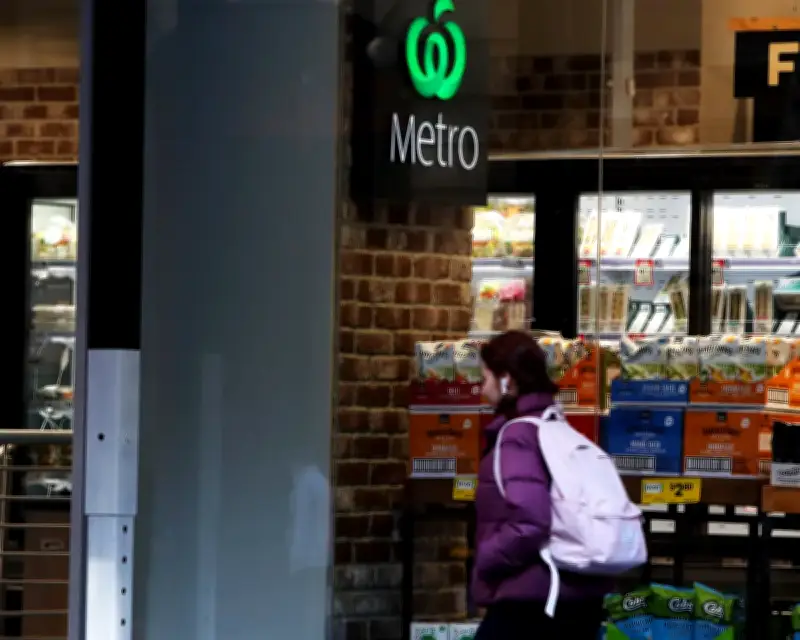
Coles and Woolworths have confirmed they are testing facial recognition technology that could be installed in their Australian supermarkets to record shoppers' biometric data, prompting alarm from consumer privacy advocates.
The supermarket giants said on Monday they had tested the technology and were considering using it to combat retail crime, including aggression towards staff. However, neither chain has made a final decision on a rollout, and both declined to identify the software provider involved in the trials.
Privacy experts raise concerns over 'security versus privacy dilemma'
Dr Jason Pallant, a marketing expert at RMIT University, described the trials as posing a “security versus privacy dilemma.” He noted that while retail staff safety is important, the technology means “every person who enters a supermarket is accepting their face being scanned.” Pallant stressed the need for transparency and consumer education about how the technology works.
The supermarkets' exploration follows a February decision by the Administrative Review Tribunal that allowed Bunnings to use facial recognition on customers, reversing a 2024 privacy commissioner ruling that found the hardware chain breached visitor privacy. The tribunal did agree that Bunnings failed to properly notify customers about the scanning.
How facial recognition works and its risks
Facial recognition technology captures images from video cameras, such as CCTV, to create a unique faceprint that can be stored and compared against other faceprints. Retailers may use it to match shoppers against a watch list of known aggressive or banned individuals to reduce violence in stores.
Beyond surveillance and data storage concerns, the technology is controversial due to evidence of misuse and higher rates of incorrect identification for people of colour compared to white people.
Tom Sulston, head of policy at Digital Rights Watch, called facial recognition “wildly inaccurate” and expressed concern that shoppers at Woolworths and Coles would not control how their biometric data is used. “It's grossly disproportionate for retailers, especially food retailers, to be using that technology,” he said, adding that supermarkets are “pretty safe places where ordinary people need to go in order to feed themselves and we shouldn't have to pay with our privacy to do that.”
Supermarkets respond to trial reports
A Coles spokesperson said the company had “not done a trial using this technology” but instead conducted a “small, one-off, controlled proof-of-concept test” that did not use customer or team member information. The spokesperson added, “We will always explore technology that will help us keep our team and customers safe.”
Woolworths, which tested the technology at its New Zealand offices, said it would “continue to trial a range of initiatives to ensure the safety of our team and customers.” The company acknowledged ongoing incidents of aggression and conflict in stores, including weapons being presented.
Dr Luke Munn, a research fellow at the University of Queensland's Centre for Digital Cultures and Societies, warned the technology could be used beyond its stated purpose. “Aggression towards staff is not OK, but I also see that as a way to shoehorn this technology into a lot of [retail] infrastructure at the core of everyday life for Australians, which is normalising surveillance,” he said.
If implemented, facial recognition would follow recent installations of anti-theft gates and self-service checkouts, which have already replaced human staff. Munn noted the major supermarkets have a history of “using technology to fix problems which creates more problems,” adding, “Theft would be mitigated if you were actually paying a worker for your groceries.”




