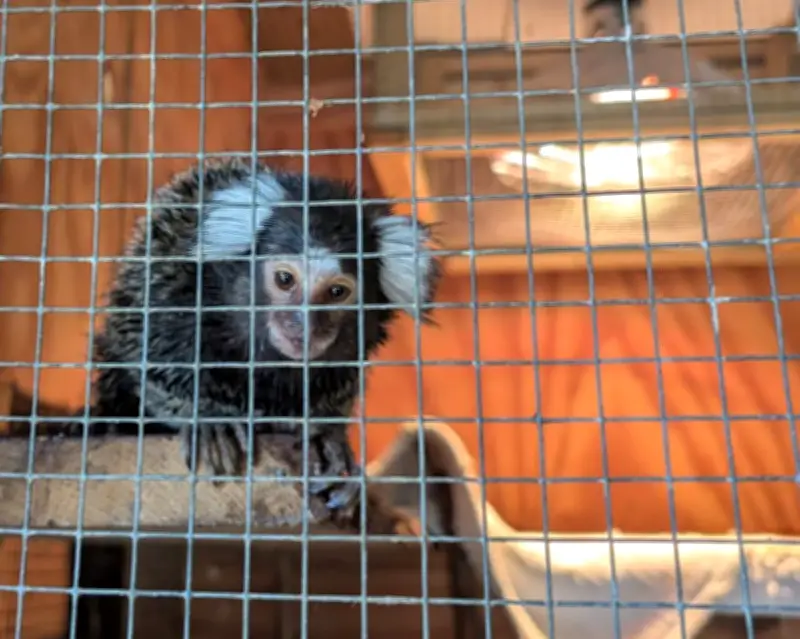
A female common marmoset, now named Oyster after London's transport payment system, was discovered abandoned in a laundry bag on a London bus on Friday. The monkey was found on a 302 bus waiting in Kensal Rise, north-west London, when a passenger's buggy was obstructed by the bag containing the monkey in a cage.
Rescue and naming
The bus driver contacted the RSPCA, which handled 238 reports of primate neglect and cruelty between 2021 and 2025. The monkey has been described as “stressed and dehydrated” but has since settled in “really well” at a sanctuary, according to the RSPCA. Oyster is now healthy and will be introduced to a male companion shortly.
New legislation and concerns
New legislation passed in April mandates that all primates kept in England must be licensed and microchipped. Owners who failed to obtain a license by 6 April risk an unlimited fine or jail. Alison Cronin, director of Monkey World and a contributor to the new legislation, said UK breeders were “making a killing” out of the misconception that primates make good pets, though she welcomed the law change’s requirement for suitable environments.

Clare Dew, RSPCA London’s chief investigator, said Oyster’s abandonment “was clearly intentional” and suspected it was “a direct result of the new legislation”. The monkey had not been microchipped. Dew described the “frightened marmoset” as well concealed in the bag, left with some apple but “understandably, very stressed and dehydrated.”
Wider implications
Evie Button, an RSPCA exotic animals expert, described primates as “highly intelligent and social wild animals who need a lot of space, mental stimulation and appropriate companions – needs that can’t be met by human company alone.” She added: “There is a real concern that keepers who cannot or do not want to license their pet may now instead abandon them.”
The government estimates that 5,000 primates are kept as pets in England. Chris Lewis, captivity research and policy manager at Born Free, called for greater awareness of the law change. “Primates are complex, intelligent animals whose needs cannot be met when kept as a pet,” he said. “Although not the complete ban which experts and primatologists advocated for, the introduction of the Animal Welfare (Primate Licences) (England) Regulations represented an important step towards protecting privately kept primates, but their success depends on effective implementation and strict enforcement.”