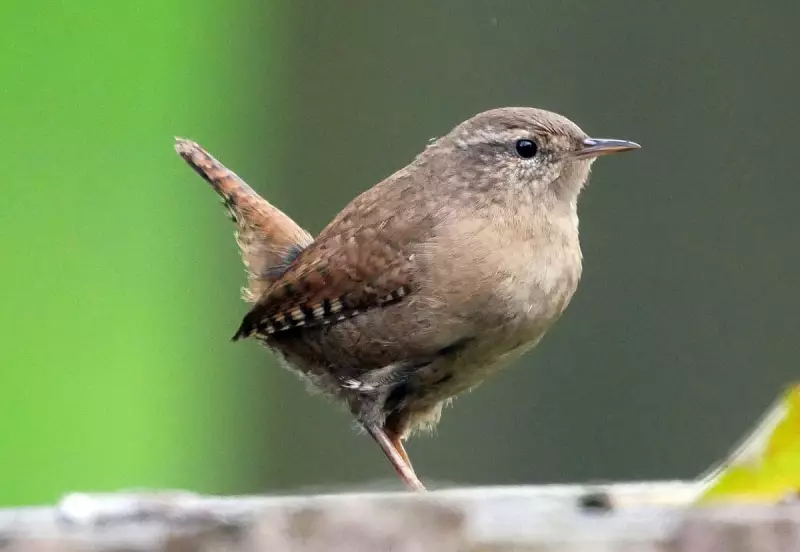
In the quiet chill of a County Durham winter, a tiny bird has claimed an unlikely sanctuary. The scene is a slightly dilapidated greenhouse in Crook, its frame bent from a past storm, offering just enough shelter from the frost.
An Unexpected Tenant in the Frost
The discovery began with a rustle. Pushing open a door stuck fast by overnight ice, the gardener entered the silent space, thinking the sound might be a mouse. Instead, from among a stack of old clay pots emerged a wren, its rotund body and characteristically cocked tail unmistakable.
The bird, seemingly unperturbed, hopped along a bench before vanishing into a pot of violas. Evidence suggested it had been roosting there for a couple of weeks, a fact betrayed by a small pile of droppings. After a brief, mutual moment of observation, the wren whirred away on stubby wings, exiting through a broken pane of glass the gardener had meant to mend.
The Remarkable Life of a Common Bird
This rickety structure, with its ill-fitting glass, has become a vital winter haven. The wren is a bird of great contrast. It is officially Britain's commonest breeding bird, a status that seems at odds with its solitary and often secretive nature.
For much of the year, they are quiet neighbours, fossicking under hedgerows or in woodpiles. The transformation comes in spring. Then, the males perch prominently and unleash an explosive courtship song of surprising volume and gusto, their entire bodies vibrating with the effort. This tiny creature was once deemed significant enough to feature on the old farthing, the smallest pre-decimal coin.
Leaving a Sanctuary Undisturbed
December is a quiet time in the garden, too cold for prolonged work. The visit to the greenhouse was brief: a check for dead leaves, a collection of old plant labels. Yet some things were deliberately left alone.
Tangled ivy-leaved toadflax and seeded Welsh poppies were left to their own devices. Pots laced with spiders' webs remained untouched. Crucially, the gardener resolved to leave the wren's chosen roost in complete peace until the days lengthened and the cycle of sowing began again.
With the door slid shut on squeaking runners, the story wasn't over. On the path back to the house, the wren was already back at work, pecking industriously among frost-covered mosses, a small but mighty presence enduring the winter cold.