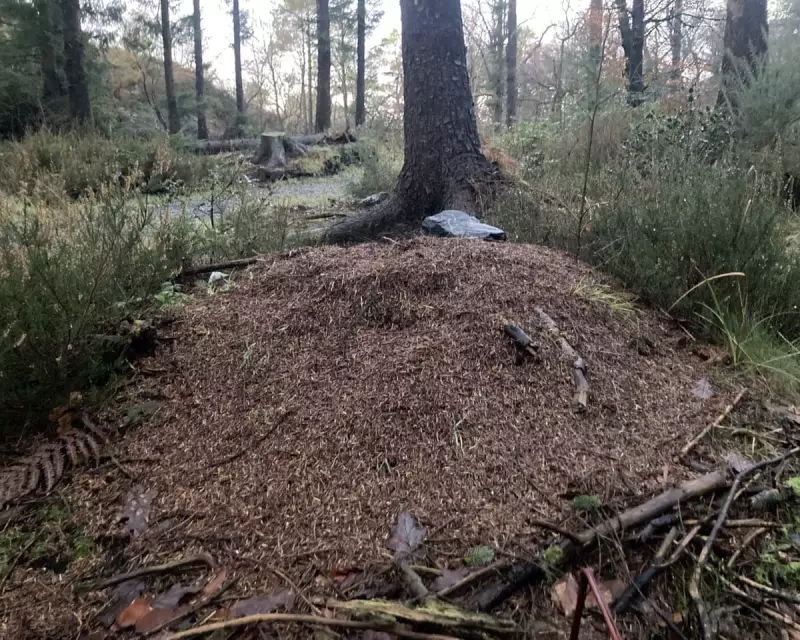
Winter Discovery: Wood Ants Huddle for Warmth in Devon Woods
On a crisp winter morning in Devon, a young naturalist made an unexpected discovery while exploring the frosty woods. The scene was set with tall oak trees standing like silent sentinels, their branches adorned with icy droplets that glistened in the early sunlight. As the sharp air awakened the senses, a remarkable sight unfolded along the woodland path.
A Surprising Find in the Silent Forest
Amidst the quiet solemnity of the winter landscape, massive mounds of soil and pine needles revealed themselves to be wood ant nests. These impressive structures, often overlooked during colder months, contained a surprising secret. While most ants were deep in hibernation at the bottom of their nests, a few drowsy individuals could be seen moving slowly around the exterior, perhaps roused by the morning sun's gentle warmth.
The Penguin-Like Hibernation Strategy
Wood ants employ a fascinating survival technique during winter months that remarkably resembles penguin behaviour. To conserve heat and energy, these social insects gather together in tight clusters at the base of their nests, sharing body warmth through collective huddling. This clever adaptation allows them to withstand freezing temperatures that would otherwise prove fatal to individual ants.
The occasional activity observed around the nest likely represents maintenance work, with awakened ants making essential repairs in preparation for spring's arrival. This contrasts dramatically with summer conditions when these same nests become bustling hubs of activity, housing hundreds of thousands of industrious individuals.
Britain's Surprisingly Large Ant Species
Despite their classification as ants, wood ants represent one of the largest ant species found throughout the United Kingdom. Their substantial size often surprises observers who expect all ants to be tiny creatures. These remarkable insects possess a distinctive defence mechanism when their nests face intrusion.
When threatened, wood ants can release a protective chemical spray from their abdomens that carries a distinctive odour often compared to fish and chips. This unique defence strategy helps protect their complex social structures and carefully constructed nests from potential predators and disturbances.
Developing a Keen Eye for Nature's Details
Once the initial discovery was made, additional wood ant nests became increasingly visible throughout the woodland area. This experience demonstrates how developing observational skills can reveal hidden aspects of our natural world, even during seasons when many creatures remain concealed or dormant.
The winter woods of Devon continue to host these fascinating insect communities, their huddled masses waiting patiently for spring's warmth while occasionally emerging to tend their elaborate nests. Such discoveries remind us that nature remains active and remarkable throughout all seasons, offering constant opportunities for learning and wonder to those who venture outdoors with curious eyes.