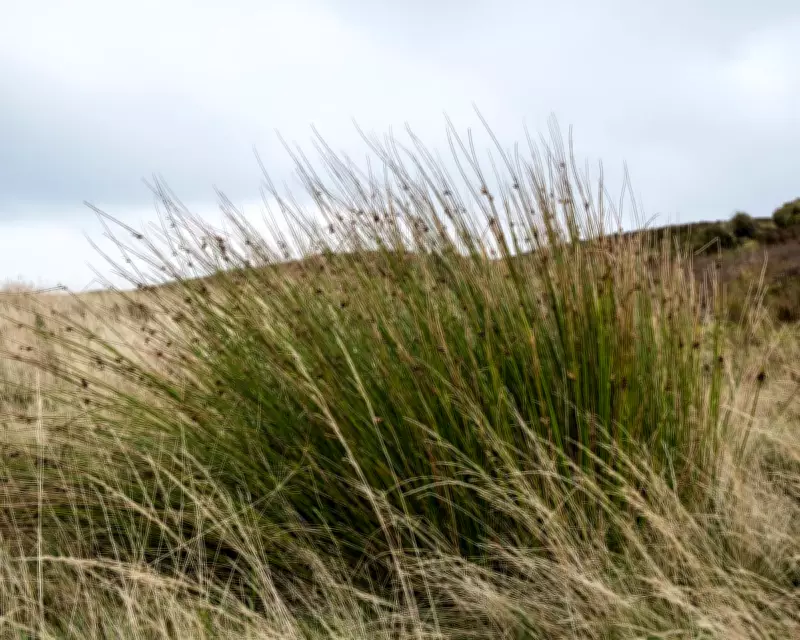
From a distance, with a touch of imagination, they resemble a prickle of porcupines. Up close, they reveal themselves as spiky clumps of soft-rush, scientifically known as Juncus effusus. These plants are prolific seed-setters and relentless invaders, with spreading rhizomes that creep further across pastures each year, thriving in our changing climate after mild, wet winters tip the balance in their favor on waterlogged grazing lands.
The Hidden Beauty of an Unassuming Plant
Superficially, soft-rush might seem like one of the least charismatic members of our native flora, with its bundles of long, olive green, quill-like leaves. However, splitting these open unveils a hidden beauty. Inside lies a pith packed with tiny silver star-shaped cells, their rays joined at the tips to form a three-dimensional lattice, referred to as Stellate parenchyma in botanical terms.
A Glimmer of Light in Historical Darkness
Two hundred years ago, before electric light at the flick of a switch, soft-rush pith brought a glimmer of light to the long hours of winter darkness. Illumination after dusk typically came from a fire in the grate, oil lamps, or candles for those who could afford them. From 1709 until 1830, successive governments imposed an ever-increasing tax on candles, which could only be legally purchased from authorised dealers. Consequently, the rural poor turned to rushlights as a practical alternative.
Soft-rush pith, spongy and absorbent, was encased in layers of animal fat to create wicks for rushlights. These sputtered for about 20 minutes with a smoky, smelly flame, producing roughly the same amount of light as a modern-day safety match, or twice as much if one "burned the candle at both ends."
The Labor of Light: A Task for the Vulnerable
Making rushlights was often a task assigned to "decayed labourers, women, and children," as noted by the naturalist Gilbert White in The Natural History of Selborne (1789). He calculated that 1,600 stripped rush piths could provide wicks to light 800 hours of winter darkness, highlighting the efficiency and necessity of this resource.
In an attempt to recreate this historical practice, one might pick a rush leaf and follow the instructions for preparing rushlights published by William Cobbett, a champion of the rural poor and campaigner for the abolition of candle tax. In his 1823 work, Cottage Economy, Cobbett advised, "Take off all the green skin, except of about a fifth part of the way around ... necessary to hold the pith together." However, this task often proves challenging, requiring nimbler fingers and sharper nails than many possess today.
Reflecting on Nature's Ingenuity
This exploration into soft-rush pith not only sheds light on a forgotten aspect of rural life but also emphasizes the ingenuity of using natural resources for survival. As we look again at these unassuming spiky bundles, we recognize them as firestarters that once played a vital role in illuminating the dark winter nights for communities in places like Deerness Valley, County Durham.