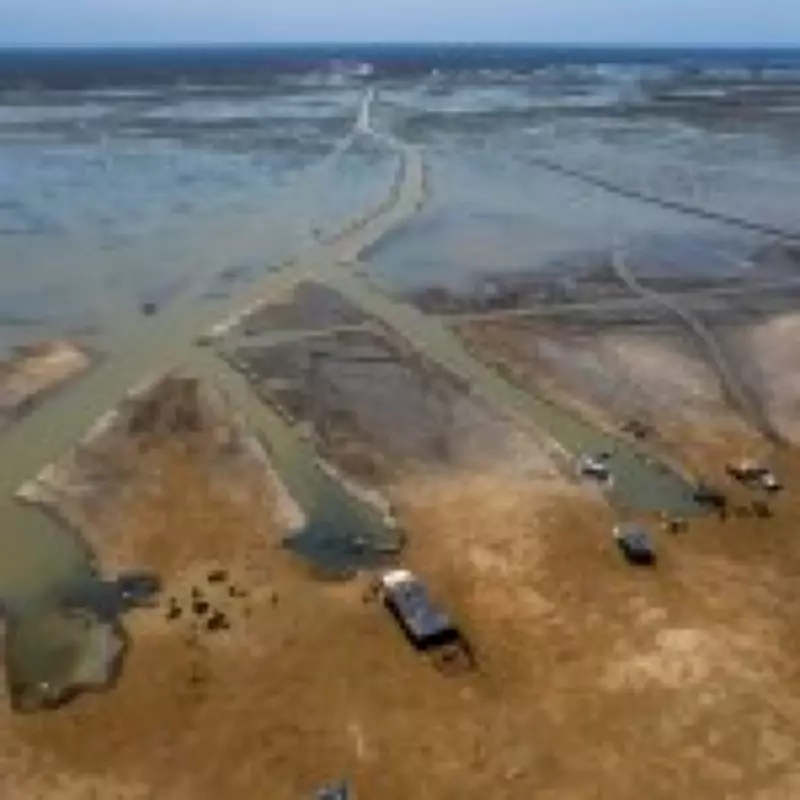
The Euphrates River, one of the most historically significant waterways in the world, is rapidly drying up, raising both environmental alarms and biblical prophecy concerns. Scientists warn that large sections of the river could disappear within two decades, a development that has profound implications for millions of people who depend on it for water and agriculture.
Historic River Under Threat
The Euphrates flows through Turkey, Syria, and Iraq, making it the longest river in Western Asia. For thousands of years, it supported civilizations, irrigated crops, and facilitated trade in the region often called the cradle of civilization. However, climate-driven droughts, rising temperatures, and increasing demand for freshwater have taken a severe toll. A recent study using satellite imaging revealed that the Euphrates basin has lost over 34 cubic miles of freshwater since 2003, with the situation worsening after a major drought in 2007.
Jay Famiglietti, a hydrologist at the University of California, Irvine, noted: "The rate was especially striking after the 2007 drought. Meanwhile, demand for freshwater continues to rise, and the region does not coordinate its water management because of different interpretations of international laws." If current trends continue, the Euphrates could effectively dry out by 2040.

Biblical Prophecy and the Book of Revelation
The river's decline has also reignited interest in biblical prophecies, particularly from the Book of Revelation. The text describes the Euphrates drying up as a precursor to the apocalypse, stating: "The sixth angel poured out his bowl on the great river Euphrates, and its water was dried up to prepare the way for the kings from the East." This passage has long been interpreted as a sign of the end times, with the river serving as a natural barrier against invading forces. Its disappearance would clear the path for a final conflict linked to Armageddon.
Scholars have debated whether this prophecy should be taken literally or symbolically, but the current environmental crisis has given it new urgency. Social media has amplified these fears, though scientists emphasize the immediate human impact over eschatological interpretations.
Real-World Consequences
Beyond prophecy, the river's decline is causing severe humanitarian issues, particularly in Iraq. Access to clean water has become increasingly difficult, leading to outbreaks of waterborne diseases. A report in the British Medical Journal found that conditions like diarrhea, cholera, typhoid fever, and measles are spreading due to the water crisis. Naseer Baqar, a climate activist in Iraq, told the BMJ: "Diarrhoea, chicken pox, measles, typhoid fever, and cholera are currently spreading across Iraq because of the water crisis, and the government no longer provides vaccines to its citizens."
The Euphrates also holds a prominent place in Genesis, where it is named as one of the four rivers flowing from the Garden of Eden. While the Tigris and Euphrates still exist, the other two rivers, Pishon and Gihon, have long vanished. This historical and religious significance adds to the river's cultural weight.
What the Future Holds
Scientists warn that without coordinated water management and climate action, the situation will worsen. The river's shrinkage is not just an environmental issue but a public health emergency affecting millions. While some look to the skies for signs of the apocalypse, the ground-level reality is one of scarcity, disease, and urgent need for intervention.