England's Red Squirrel Population Hangs by a Thread
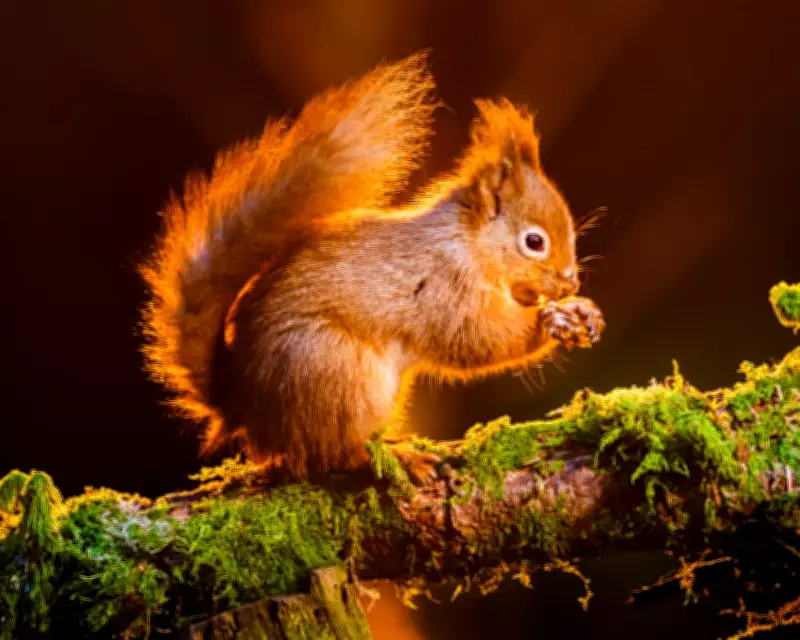
England's iconic red squirrel population has dwindled to a critical level, with conservationists estimating fewer than 40,000 individuals remain across the country. This dramatic decline represents a stark contrast to historical numbers, which once reached approximately 3.4 million throughout the United Kingdom. The species now faces an existential threat from habitat loss and competition with non-native grey squirrels.
The Grey Squirrel Invasion and Its Devastating Impact
The introduction of American grey squirrels in 1876 has fundamentally altered England's ecological landscape. These robust invaders have systematically outcompeted their native red counterparts for food resources while carrying squirrelpox, a disease harmless to greys but lethal to red squirrels. The consequences have been catastrophic for the indigenous population, pushing them to the brink of local extinction in many regions.
Matt Larsen-Daw, CEO of the Mammal Society, describes the current situation as "on a knife edge," particularly in northern England where remaining red squirrel populations face increasing vulnerability to grey squirrel encroachment. The historical responsibility for this ecological disruption traces back to aristocratic introductions, most notably by the 11th Duke of Bedford who released grey squirrels on his Woburn Park estate and distributed them to fellow landowners.

Government Conservation Strategy: A Multi-Pronged Approach
The government's recently published squirrel action plan for England represents a coordinated effort to address this conservation crisis. Nature Minister Mary Creagh outlined the strategy's dual focus: "We're stepping up action to tackle their threat while protecting our iconic, endangered red squirrels." The comprehensive plan includes several key initiatives:
- Expanding woodland habitats specifically suited to red squirrel survival
- Implementing grey squirrel population control measures in red squirrel strongholds
- Developing contraceptive vaccines to humanely manage grey squirrel reproduction
- Encouraging landowners to participate in conservation efforts through incentives
- Supporting pine marten reintroduction programs that naturally control grey populations
Grassroots Conservation and Volunteer Efforts
Across remaining red squirrel territories, dedicated volunteers and landowners form the frontline of conservation efforts. Lake District farmer Sam Beaumont exemplifies this commitment, working with local rangers to monitor red squirrel populations on his property while systematically removing invasive greys. "I feel very lucky to have them on the farm," Beaumont reflects. "It's an important thing to try and keep a healthy population of them. They are absolutely beautiful."
These community-based initiatives focus particularly on preserving ancient woodland ecosystems that provide essential food sources like hazel and larch. However, conservation groups emphasize that current volunteer efforts require substantially more government support and funding to achieve meaningful impact.
Conservation Challenges and Future Prospects
While welcoming the government's action plan, campaigners argue that stronger measures and faster implementation are necessary. Marie Carter-Robb of Save Our Reds cautions: "A policy paper is not the same as protection. The question now is whether these commitments translate into measurable delivery in the woods." Conservationists stress that England's remaining red squirrel habitats remain fragile and require urgent protection.
Innovative solutions offer glimmers of hope for long-term recovery. The development of grey squirrel contraceptive vaccines, though not immediately available, represents what Larsen-Daw describes as a potential "gamechanger" for population management. Similarly, pine marten reintroduction programs have demonstrated success in Ireland and Scotland, where these natural predators selectively target grey squirrels while sparing the more agile reds.

The road to recovery remains challenging, with England's red squirrel population concentrated primarily in northern regions and isolated pockets like the Isle of Wight. Scotland hosts approximately 75% of the UK's remaining 287,000 red squirrels, highlighting England's particular conservation urgency. As Larsen-Daw concludes: "Although it is hard to feel optimistic for the swift recovery of red squirrels in England, I do feel confident that the combination of research-driven solutions offers hope for the future."