
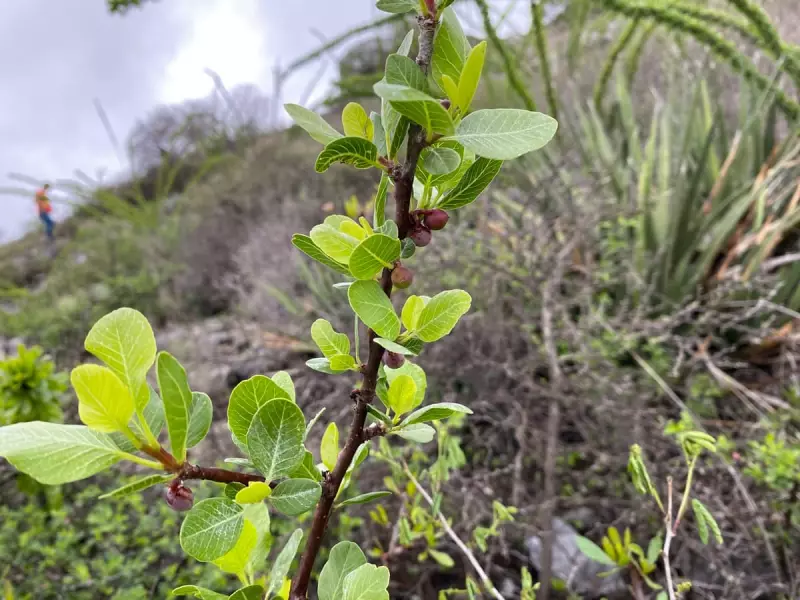
In the hidden battlefields of nature, a remarkable shrub engages in a high-stakes chemical war against its insect predators. The Bursera plant, found in various regions, has developed an extraordinary and violent defence mechanism that turns its leaves into powerful squirt guns.
The Leaf Squirt Gun: A Deadly Defence
When an unsuspecting insect takes a bite from a Bursera leaf, it triggers an alarming response. The plant shoots a high-pressure stream of liquid resin directly at the attacker, with this toxic jet capable of reaching distances of up to 1.5 metres. This isn't just an inconvenience for the insect – it's often a death sentence.
The liquid contains thoroughly repellent and poisonous chemicals that can drench smaller insects in deadly secretions. For those unfortunate enough to survive the initial assault, the plant has another trick: the resins in the liquid can turn solid when exposed to air, effectively sealing a small insect in a resin tomb.
Anatomy of a Chemical Weapon
The secret to this defensive capability lies in the plant's sophisticated internal architecture. The Bursera stores its deadly chemicals in a network of canals within the leaf structure. When an insect's bite punctures one of these canals, the built-up pressure causes the liquid to erupt with surprising force.
Larger insects that manage to survive the toxic shower don't escape unscathed. Research shows these survivors suffer from reduced growth and shorter life expectancy, demonstrating the effectiveness of the Bursera's chemical warfare even against more resilient opponents.
Millions of Years of Evolutionary Warfare
This represents one of nature's longest-running arms races, with the conflict between Bursera plants and insects playing out over millions of years of evolution. In that immense timeframe, some species of beetle have developed counter-strategies to neutralise the plant's defences.
These ingenious insects have learned to carefully nibble a series of small notches in the leaf, effectively disarming the squirt-gun mechanism before feeding. This delicate operation can take up to an hour as the beetle methodically renders the leaf safe to consume.
However, even with this sophisticated approach, the beetles pay a price. Those that successfully disarm and consume Bursera leaves still experience slow growth and premature death, suggesting that trace chemicals or the energy expended in the disarming process takes its toll.
This ongoing battle between plant and insect demonstrates the incredible complexity of evolutionary adaptation, where every defensive innovation eventually meets a corresponding offensive strategy in nature's endless dance of survival.



