Wild Rhino Strolls Through Nepali Village as Human-Wildlife Conflict Escalates
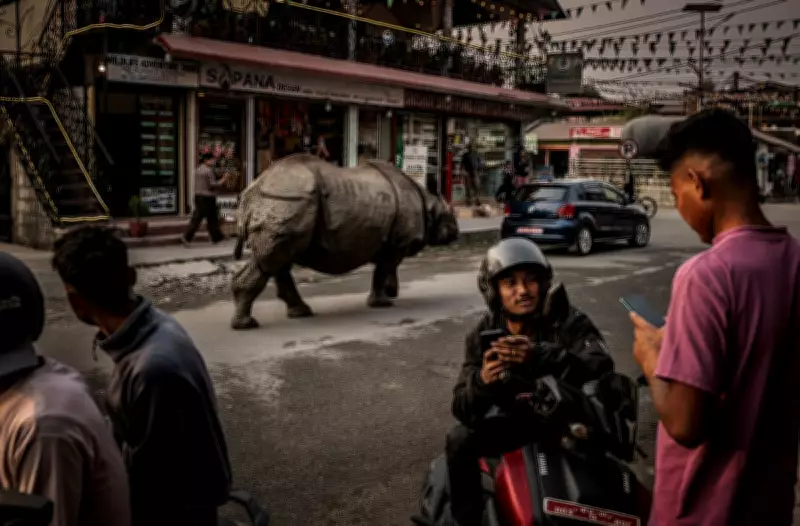
In the twilight hours, tourists in Sauraha, Nepal, buzzed with excitement as a wild Indian rhinoceros grazed near the village embankment. The massive creature then climbed to the main street, ambling down the road as locals warned onlookers to keep their distance. Vehicles slowed and passed cautiously, with the rhino turning its horn at a cyclist who ventured too close, eliciting gasps from the crowd.
By nightfall, the rhino reached a local hotel, illuminated by headlights. The hotel manager used a strobe torch to guide it away from the parking lot, successfully directing it onto a garden footpath where it disappeared into the darkness. This close encounter ended without harm, but it highlights a growing challenge in Nepal: rising incidents of human-wildlife conflict as megafauna populations rebound.
Conservation Success Leads to New Challenges
Nepal has become a victim of its own conservation achievements. By the early 1970s, only about 100 rhinos remained, primarily in Chitwan National Park. Thanks to effective anti-poaching measures and community support, that number has surged to nearly 700. Similarly, tigers and other species once near extinction are now increasing. However, this success has led to more frequent encounters between humans and wildlife, particularly around park edges and buffer zones.

In 2024 alone, eleven people lost their lives in megafauna attacks, with eight fatalities attributed to rhinoceros charges. The influx of tourists and expanding human settlements further complicates the situation, as animals like rhinos and tigers increasingly venture into fields and villages.
Education and Training Initiatives for Safer Coexistence
To address this crisis, Doma Paudel, Nepal's first female trail guide and founder of the Wildlife Victim Fund, is leading efforts to educate communities. In February, she conducted a seven-day immersive workshop for 21 emerging environmentalists, focusing on strategies to teach safer coexistence with megafauna. Paudel's personal experience underscores the urgency: in 2004, her mother was killed by a rhino while gathering firewood in the forest.
Women are especially vulnerable, as traditional roles often involve collecting resources from forests. Paudel's initiative includes visiting villages to speak with women and schoolchildren, using roleplay to simulate encounters with animals like rhinos or tigers. The goal is to prepare communities to respond effectively during wildlife interactions, reducing fear and anger while protecting livelihoods.
Personal Tragedies Highlight the Human Cost
In the Madi valley, near Chitwan National Park, farmers like Balkrishna Bhattarai report rhinos frequently entering their fields, sometimes passing close to homes. Tragically, Bhattarai's son, Ashok, was killed by a rhino while trying to protect his mustard seed crop. Similarly, Juna Bote lost her husband, Bhanu, to a tiger attack while he was fishing. Left to raise five children, she continues to enter the forest for firewood despite her fears, highlighting the economic pressures that force people into risky situations.
Paudel remains hopeful, emphasizing that space must be shared with wildlife. "If we love nature, nature will love us back," she says. Through continued education and community engagement, Nepal aims to balance conservation success with human safety, fostering a future where both can thrive side by side.