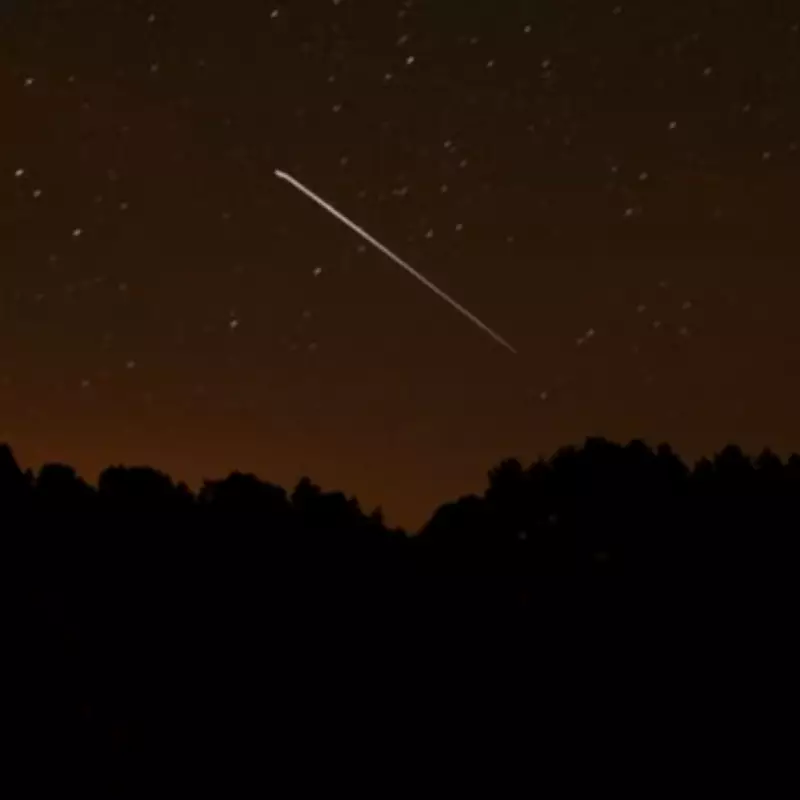
Lyrid Meteor Shower 2026: A Celestial Spectacle Over London
The Lyrid meteor shower is set to illuminate London's night skies for a week, offering a breathtaking display of bright meteors traveling at an astonishing 50 kilometers per second. Activity will occur nightly until Saturday, April 18, 2026, with the potential to spot up to 18 swift meteors per hour. According to Royal Museums Greenwich (RMG), the peak viewing night is expected to be Wednesday, April 22, continuing until Saturday, April 25.
Optimal Viewing Times and Conditions
For the best chances of witnessing this natural wonder, stargazers should aim for the early morning hours of April 22 into April 23. After midnight, when the radiant point in the constellation Lyra rises in the East, visibility peaks. RMG confirms that the ideal window is after 2 a.m., when the moon sets, eliminating lunar light pollution and creating perfect dark-sky conditions. However, observers must act before sunrise to avoid interference from dawn light.
Jessica Lee, an astronomy expert at Greenwich Observatory, emphasizes that while viewing from London is possible, optimal conditions are essential. She explains, "You can see meteor showers from cities, but it's fainter and more chance-based. To improve your odds, find a darker spot like a park, let your eyes adjust to the darkness for 10-15 minutes, and avoid light sources such as mobile phones."

Prime Locations for Stargazing in London
To combat London's pervasive light pollution, elevated vantage points are recommended. Excellent spots include:
- Primrose Hill in West London
- One Tree Hill Park in South East London
- Shooters Hill in South East London
- Greenwich Observatory
- Blythe Hill Fields in Lewisham, highlighted by GoStargazing and DarkSkyLondon for its southward views over Kent and Surrey, away from the city's illuminated center.
These locations help mitigate light interference and provide clearer views of the meteor shower.
Understanding the Lyrid Meteor Shower
Meteor showers occur when Earth intersects debris trails left by comets. The Lyrids originate from Comet Thatcher, with records dating back to 687 BCE, making it the oldest observed shower still visible today. As these meteors enter Earth's atmosphere at high speeds, air compression heats them to up to 1600°C, causing a bright glow that appears as streaks of light.
RMG clarifies the viewing perspective: "Meteors travel parallel like lanes on a motorway, but from our vantage point, they seem to diverge from the radiant in Lyra and streak across the sky in all directions."
Weather Forecast and Additional Information
Clear skies are crucial for observation, as clouds can obscure the event. Current forecasts from the Met Office and BBC Weather predict a clear night for April 22, 2026, offering hopeful conditions for dedicated stargazers. For more details, visit the Royal Greenwich Observatory website.