
Venice's Mose Barrier: 154 Floods Prevented, But Plan B Already Needed
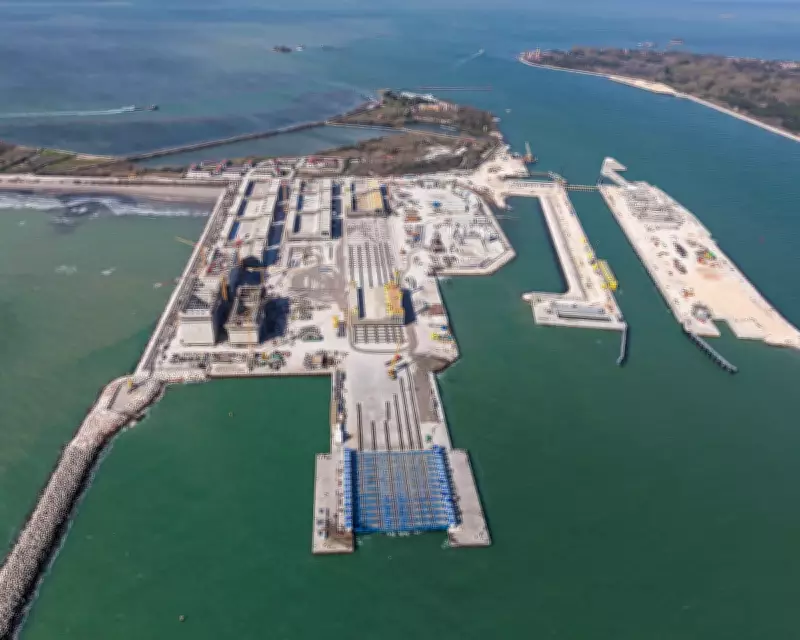
Venice's ambitious flood defense system, known as Mose, has successfully prevented potential flooding an impressive 154 times since its official launch in 2020. This experimental electromechanical module, named after the biblical figure who parted the seas, represents a technological marvel that has kept the historic city dry during storm surges that Venetians call acque alte. The massive, brightly colored barriers are strategically sunk into the seabed at three critical inlets between the Venetian lagoon and the Adriatic Sea, creating a formidable defense against rising waters.
The Urgent Need for a Successor System
Despite the Mose system having been operational for only five years, Venetian authorities are already actively searching for a Plan B. The accelerating climate crisis has dramatically increased sea levels, forcing engineers to raise the flood barriers with alarming frequency. This constant activation comes with severe consequences for the delicate lagoon ecosystem that surrounds Venice.
Andrea Rinaldo, head of the scientific committee for the newly appointed Lagoon Authority, warns that projected sea level rise represents a "death knell for the city." Current estimates suggest an additional meter of sea level rise by the century's end, which would require closing the Mose barriers approximately 200 times annually. "When this happens, the lagoon loses its nature of being a transitional environment," Rinaldo explains. "It would become a filthy pond."
Ecological Consequences of Frequent Barrier Use
The natural tidal exchange between the Venice lagoon and the Adriatic Sea creates essential water and sediment movement that sustains marine life. When the Mose barriers are raised, this natural flow is blocked, leading to excessive algae growth. As these algae die and decompose, they consume oxygen from the water, creating dead zones that kill fish and other marine organisms.
Rinaldo emphasizes that the Mose system itself is not poorly designed but rather faces challenges from a climate future that arrived decades earlier than anticipated. "You won't have a lagoon. You won't have a city," he warns. "And all of this could happen in a timeframe that is comparable with the time that we had to design and build the Mose. We can't wait."
Historical Context and Operational Challenges
The Mose project represents five decades of planning and implementation, initiated after Venice suffered its worst flood in history on November 4, 1966. The concept for flood barriers emerged in the 1970s, with construction beginning in the 1980s, but bureaucratic delays and environmental concerns postponed completion. A major corruption scandal in 2014 involving then-Mayor Giorgio Orsoni revealed extensive cronyism and bribery that inflated the project's budget by millions of euros.
Inside the Mose operations center located in Venice's historic Arsenale shipyard, technicians monitor meteorological conditions around the clock. The control room features a curved wall of screens displaying satellite imagery and weather data, with an identical backup facility maintained elsewhere in the complex for emergency situations.
Giovanni Zarotti, the Mose technical director, explains that barrier closure decisions must be made three hours before anticipated flooding, relying on statistical probability with a 10-centimeter margin of error. "We're relying on God, statistically speaking," he acknowledges.
Economic Impact and Changing Public Expectations
Each activation of the Mose system carries significant financial consequences:
- Direct operational costs exceeding €200,000 per closure
- Disruption to maritime traffic through the Malamocco inlet to Marghera port
- During the 2024 Venice Carnival alone, 26 barrier activations in three weeks cost over €5 million
Zarotti notes that Venetians have grown accustomed to the protection provided by Mose and have become less tolerant of even minor flooding. "Venetians now take the Mose for granted," he observes. "Many don't even own waders any more. Imagine, if you're six years old, you've never heard the sound of flood sirens."
Envisioning Venice's Future Defense
The Lagoon Authority faces the monumental task of defining what comes after Mose. Rinaldo plans to issue a global call for innovative ideas from leading thinkers across multiple disciplines including art, economics, history, and science. Selected expert groups would receive grants and one year to develop proposals, which would then undergo rigorous scientific review before implementation.
"Venice is a test bed for how we cope with these systems in the future," Rinaldo asserts, emphasizing that climate adaptation requires more than just engineering solutions. He believes Venice must fundamentally reimagine its economy, reducing dependence on tourism that threatens the city as much as rising waters. "Over my dead body!" he declares regarding the potential loss of what he calls a jewel of artistic heritage.
The Mose system has proven remarkably effective in its short operational history, but Venice now confronts the urgent reality that even successful technological solutions require evolution in the face of accelerating climate change. The search for Plan B represents not just an engineering challenge but a comprehensive rethinking of how historic cities can survive environmental transformation.



