New Guidebook Exposes Overlooked World of Female Birdsong
For centuries, the beautiful melodies emanating from treetops have been almost universally attributed to male birds—singing to claim territory or attract mates. However, as the spring dawn chorus reaches its peak, a revolutionary new guidebook is urging bird enthusiasts to reconsider everything they thought they knew about avian vocalizations.
Correcting Historical Oversights in Ornithology
The Sound Approach to Birding 2 represents a seismic shift in how we understand bird communication. Historically, female birdsong has been dramatically underrepresented in scientific literature and field guides. A startling 2016 analysis revealed that just 0.01% of recordings in the global Xeno-Canto sound library were labeled as female vocalizations. Another 2018 study found only 0.03% female representation in a different major sound archive.
"We've been operating under a completely false narrative regarding female bird sounds," explains Lucy McRobert, a writer and researcher who contributed to the new guidebook. "The common assumption that males sing to compete for territory and female attention represents an oversimplification of reality. Female birds absolutely do sing, and many species feature distinct female song repertoires that can be differentiated from male vocalizations."

Global Patterns Challenge Western Assumptions
The book's research reveals that male European ornithologists exported their regional assumptions about male-dominated birdsong worldwide, despite the fact that male song predominates primarily among songbirds of the Western Palearctic region (encompassing Europe, North Africa, and most of the Middle East). Globally, the reality is dramatically different—up to 70% of female bird species sing.
Among tropical bird populations, females sing just as vividly and frequently as males, engaging in duets for pair bonding, warding off competitors, supporting territorial defense, and advertising their availability. The Sound Approach project, founded in 2000, has confirmed female recordings for 41% of species found in the Western Palearctic region alone.
Surprising Revelations About Specific Species
The guidebook accompanies its text with an extensive library of 300 sounds from 200 species, accessible via web or app. These recordings have yielded numerous surprising discoveries about female bird behavior:
- Alpine accentor females sing irresistible songs when alone, swiftly attracting male company and copulation. Older females who lay the largest clutches of eggs possess the most elaborate songs, identifiable by prominent rattling sounds strung in sequence.
- Tawny owls challenge the popular "tu-whit, to-who" characterization attributed to Shakespeare. The Sound Approach team discovered that both male and female tawny owls can produce either call, with their actual vocalizations sounding more like "ker-wick" followed by a quavering "woooo."
- Female robins sing during specific winter periods, as confirmed by researchers who ringed female birds and recorded their vocalizations.
- Barn swallows feature females who sing alongside males during courtship, with both sexes employing continuous twitter-warbles and rapid-fire whirrs lasting up to 20 seconds.
Female Influence on Avian Musical Trends
Perhaps most intriguingly, the research suggests female birds may actually drive evolutionary trends in birdsong. Studies indicate that males who sing in the latest styles receive rewards including superior territories and mates.
"The female bird essentially conducts the orchestra," says Mark Constantine, author of the new book and co-founder of Lush cosmetics. "She determines what male birds will sing—a truly mind-boggling realization. This represents a refreshing reconsideration of avian communication. As people delve deeper into bird sound analysis, they can no longer ignore distinctions between male and female vocalizations."

Addressing Historical Sexism in Field Guides
Constantine was inspired to investigate female birdsong by Jasmine Donahaye, author of Birdsplaining, which highlights sexist depictions in field guides from the 1950s through 1980s. Donahaye noticed that male birds were typically illustrated in "upright, bold, declarative" positions, while females appeared "bent over, submissive and demure," often half-obscured in the background.
"Female birds are consistently described in relation to males in these guides—always 'paler' or 'duller,' some negation of him," Donahaye observes. "Sometimes the guides don't even specify when females are actually larger than males."
Constantine asked McRobert to "Donahaye" the new book, ensuring female bird sounds received comprehensive consideration. The resulting revelations challenge centuries of ornithological assumptions.
Notable Examples of Female Vocalizations
The guidebook provides specific examples that illustrate the diversity of female birdsong:
- Mallard ducks feature quacking females, while males produce quieter rasping calls—contrary to the popular Donald Duck characterization.
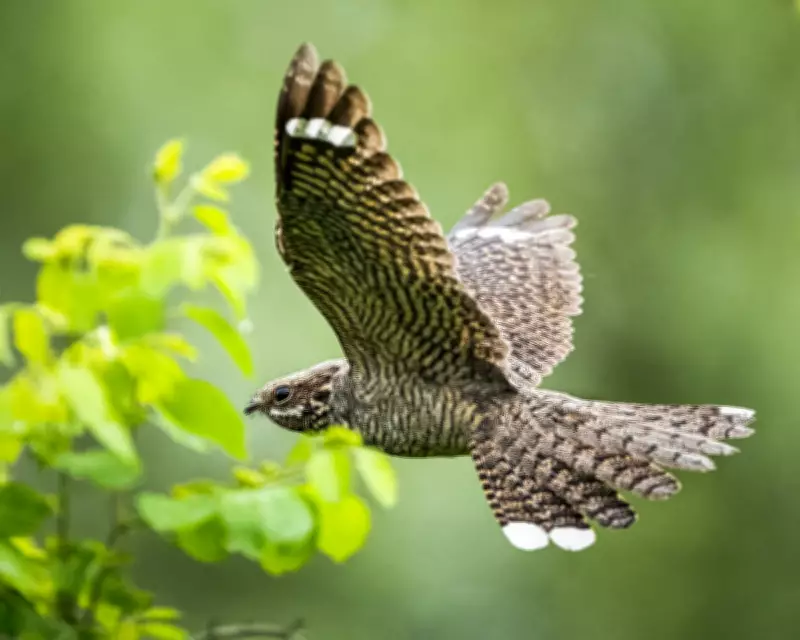
- European nightjars produce distinctive nocturnal "churring" sounds from both sexes, though females typically churr only occasionally, such as when moving nest sites.
- Barn swallows demonstrate complex intersexual communication, with females sometimes singing over their mate's song to "jam his signal" and prevent him from advertising to other females.
Future Implications for Avian Research
Donahaye expresses hope that recognizing female birdsong will lead to deeper insights into avian behavior complexities. "How much have we missed because we never asked certain questions, assuming males sing for all these reasons while females don't?" she questions. "It will be fascinating to see what further research reveals."
The new guidebook represents more than just corrected representation—it opens entirely new avenues for understanding avian communication, challenging assumptions that have shaped ornithology for generations while revealing a richer, more complex soundscape in the natural world.